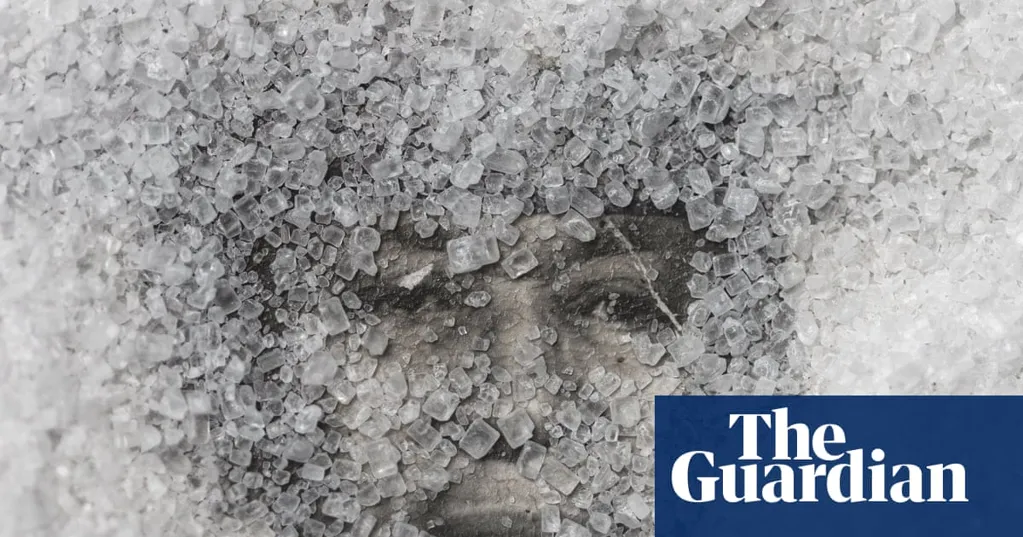
From the remnants of my great-grandparents' Cuban home near the sugar plantation that is part of Unesco's Slave Route programme - where they were once enslaved - to personal artefacts, each piece reconstructs an uncertain past.
Gathering information on our origins that might help with constructing self-identities could be a beautiful endeavour.
Unfortunately, for millions of people worldwide, retracing a past filled with unfinished stories is like trying to nurture a tree whose roots have been severed.
Several years ago, a teenage relative was presenting the entire family tree at a reunion in Belgium. At a given moment, an elder turned to me and asked if I had ever traced my ancestry back in Cuba. I looked at her with a mix of irony and cynicism then briefly explained that trying to put together my genealogy would be like assembling a puzzle that is missing most of the main pieces.
The reason? Some of my ancestors are included in the statistics related to the slave trade, that shameful process in which millions of human beings were trafficked and deprived of any connection to their environment of origin. The first step was to change their names.
That brief exchange was the catalyst that led me to begin working on Sweet Thing, a multidisciplinary attempt to reconstruct an uncertain past where I use sugar as a symbolic motif by adding it to a fragmented family album from what remains. It includes archival photographs, contemporary images from my visits to the places my parents were born and conceptual self-portraits I've created in my studio.
The visuals are often blurred - not as a technical fault but as an honest mimicry of how recollection falters and softens at its margins.
Unlike traditional genealogical records, my process is non-linear. Missing documents and eroded narratives force me to construct memory through place and imagery.
My research spans two remote Cuban communities tied to the sugar industry - one with just over 1,200 residents, the other nearly abandoned, where, even in 1998, Creole remained a spoken language.
Both places have suffered population decline due to economic hardship and the collapse of the industries. Through this series, I want to explore displacement, survival and the fragile nature of inherited memory.
In this project, I try to reflect on the impact that certain mass social phenomena, such as slavery, wars, the Holocaust, and/or meteorological events of great magnitude, have had on the loss of historical memory, either by selective amnesia, lack of references, or omission.
The title is inspired by passages from Nina Simone's well-known song Four Women, not as a direct reference per se to the content of the song, but rather as a play on words that I use to try to address one of the essential causes that make it difficult in my case, and millions of other people, to draw a coherent imaginary line to our origins.
This work refers to a tiny fraction of a not-so-sweet chapter on the history of humankind that took place not so long ago. Each image is an attempt to translate absence into presence, and to insist that remembering is itself an ethical act: a refusal to consign those lives to silence.