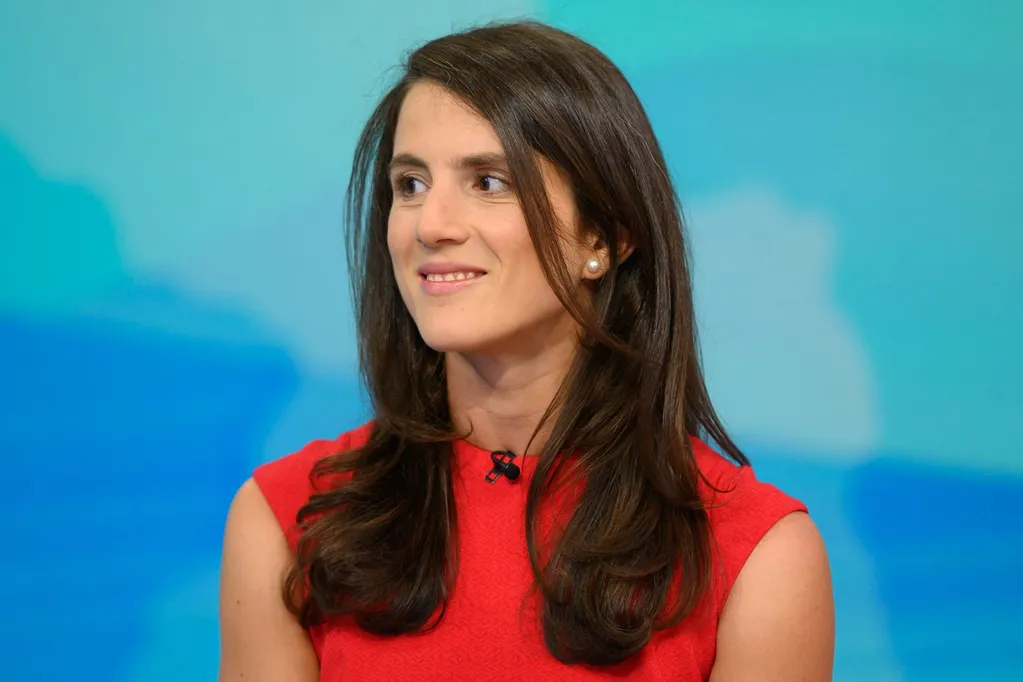
Schlossberg died at age 35 on Dec. 30, 2025, about a month after her Nov. 22 essay was published in The New Yorker.
Weeks before Tatiana Schlossberg died, she wrote about her diagnosis of acute myeloid leukemia in a heart-wrenching essay for The New Yorker. Now the magazine's top editor, David Remnick, is praising her bravery days after her death at age 35 on Dec. 30.
"Tatiana's loss is tragic in countless ways, and yet she found the strength to write the most honest essay imaginable," Remnick, 67, tells PEOPLE, commending the environmental journalist's powerful voice.
"Everything about her expression -- her clear-eyed view of her illness and the time she had left, her boundless love for her family, her regret that her children might not remember her, her frank anger about her close relative, [Robert F. Kennedy Jr.] -- all of it is so passionately written, so clear and urgent," Remnick continues.
Schlossberg's New Yorker essay publicly revealed her terminal diagnosis for the first time and chronicled her journey of internally processing the news as the mother of two young children in a family that has been repeatedly struck by tragedy.
"I'll be forever grateful that she found the resolve to share this with the readers of The New Yorker and well beyond," Remnick says.
In an interview with The New York Times, Remnick said he hadn't assigned or expected an essay from Schlossberg, the daughter of Caroline Kennedy and Edwin Schlossberg, when she submitted it in November.
Remnick said he was so touched by her writing that he immediately accepted the piece, which was only lightly edited before it was published online on Nov. 22 and included in the magazine's Dec. 8 print issue. The essay's online publication date marked exactly 62 years after JFK's assassination.
Remnick told the Times, "It was such an extraordinary, extraordinarily honest, in a thousand ways, piece of writing."
"It was so loving and generous that obviously it was a privilege to publish it," he said, adding, "It just had so much heart and intelligence and honesty. On every level."
Schlossberg's essay not only covered her own experience with cancer but also criticized the fringe health advocacy of her cousin, Health and Human Services Secretary RFK Jr., whom Schlossberg wrote had never "worked in medicine, public health or the government" before President Donald Trump offered him oversight of medical and scientific funding.
She wrote of one particularly painful action taken by her cousin, saying he "cut nearly half a billion dollars for research into mRNA vaccines, technology that could be used against certain cancers."
Schlossberg said in her essay that she was first diagnosed after the birth of her second child, a daughter, in 2024, and was told she would need to undergo months of chemotherapy and a bone-marrow transplant.
"I did not -- could not -- believe that they were talking about me. I had swum a mile in the pool the day before, nine months pregnant. I wasn’t sick. I didn’t feel sick. I was actually one of the healthiest people I knew," she wrote.
"I had a son whom I loved more than anything and a newborn I needed to take care of," she wrote.
She and husband George Moran, who wed in 2017, shared a 3-year-old son, Edwin, and 1-year-old daughter, Josephine.
After receiving a bone-marrow transplant at Memorial Sloan Kettering and undergoing chemotherapy at home, Schlossberg took part in a trial of CAR-T-cell therapy, a type of immunotherapy used to treat certain blood cancers. She was later told by her doctor that she had one year left to live.
The social media accounts for the JFK Library Foundation shared the news of Schlossberg's death on behalf of her extended family on Dec. 30.
"Our beautiful Tatiana passed away this morning. She will always be in our hearts," they shared in a post signed by "George, Edwin and Josephine Moran, Ed, Caroline, Jack, Rose and Rory."