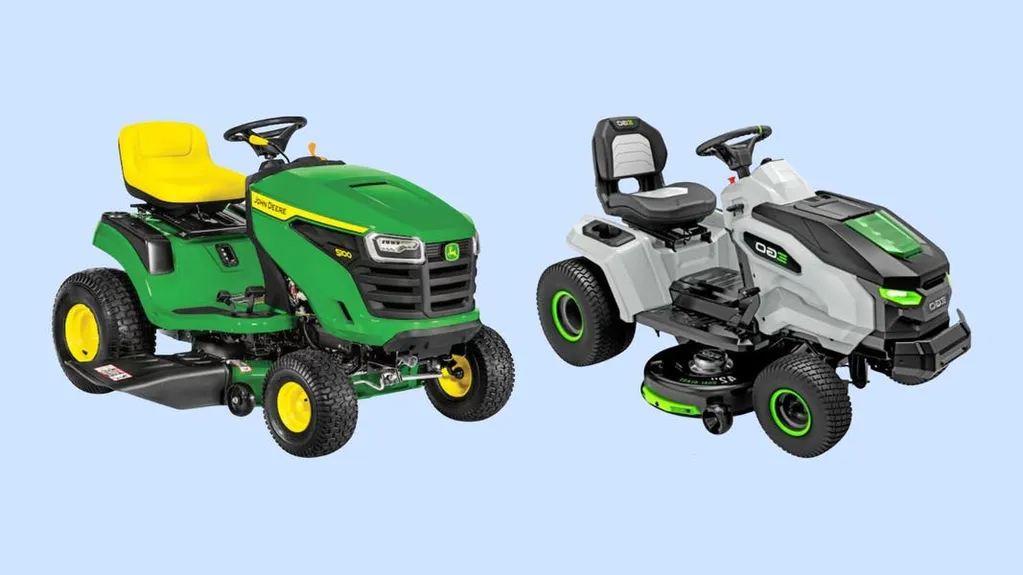
A reliable riding lawn mower can significantly cut down on the time and effort it takes to maintain your yard, especially when it's appropriately matched to your lawn's size and terrain. Our top pick, the John Deere S120 Lawn Tractor, stands out for its durability, versatility and ease of use. It strikes a strong balance between performance and price, without adding unnecessary complexity -- a point echoed by the lawn and landscaping experts we consulted. To help you find the right fit for your own backyard, we've rounded up the best riding lawn mowers for a range of needs and spaces.
Why We Named It Best Overall
The John Deere S120 earns our top spot because it has enough power for big yards, works on different terrains and doesn't have a steep learning curve -- all qualities that make it a great fit for most homeowners.
Corey Welch, CEO of Mow & Snow Technologies, specifically recommends lawn tractors like the S120 because they can handle more than just mowing. Many models, including this one, support attachments like carts and aerators, which makes yard maintenance easier year-round.
Feature-Rich For Intuitive Performance
The 42-inch cutting deck covers a lot of ground efficiently, and the spring-assisted hand-grip lever makes adjusting the height simple. Plus, John Deere's proprietary 30-second oil change system takes the hassle out of maintenance.
Its 22-horsepower V-twin engine and hydrostatic transmission provide smooth and reliable performance on yards up to 2 acres, while the side-by-side foot pedals make it easy to control.
Why We Named It Best Electric Riding Mower
For homeowners who want a low-maintenance, quieter alternative to gas, the EGO Power+ TR4204 is one of the best electric riding mowers available. Its dual brushless motors provide the equivalent of 21 horsepower, and it can mow up to 1.5 acres on a single charge using six 56V ARC Lithium batteries -- the same ones that power EGO's other tools.
The TR4204 offers a smooth, quiet ride, a 42-inch stamped steel deck and 12 cutting height settings. It also comes with convenient features like cruise control, a digital LCD display and even a USB charging port.
May Not Suit More Demanding Jobs
That said, electric models -- even high-quality models like the EGO Power -- still don't fully match gas-powered mowers in long-term power output. If you need a mower for larger properties or more demanding terrain, a gas-powered model like the John Deere S120 (our top pick overall) may be the better fit.
Why We Named It Best Small Riding Lawn Mower
The Cub Cadet CC30H is small enough to fit in tight spaces and storage sheds but still gets the job done faster than a push mower. The 30-inch cutting deck makes it easy to navigate around trees, garden beds and other obstacles, while the hydrostatic transmission means no shifting is required -- just press the pedal and go.
Powerful, Feature-Rich Design
Even though it's compact, the 10.5-horsepower engine provides plenty of power for residential mowing, and the five-position height adjustment lets you customize your cut from 1.5 to 4 inches. It also comes with LED headlights for better visibility, a mulch kit and a deck washing system to make cleanup easy.
Why We Named It Best Zero-Turn Riding Lawn Mower
The Ryobi Brushless 42-Inch Electric Zero-Turn Riding Mower takes the agility and efficiency of a zero-turn mower a step further with joystick steering, so it's even easier to control.
The mower's four brushless motors provide the equivalent of 31 horsepower, and it can cut up to 3 acres on a single charge. The LCD screen displays battery life and runtime, while the Riding Mower app lets you monitor charging remotely. Other features include 12 deck height settings, LED headlights and USB charging ports.
Not Ideal For Hilly Yards
Instead of a steering wheel, zero-turn mowers use a control system that allows them to pivot in place, which typically cuts down on wasted movement. "Zero-turn mowers are the best choice for lawns with tight turns," says Steve Corcoran, CEO of Lawn Love. "As the name suggests, they have a 0-inch turn radius."
All that said, this style performs best on flat terrain and isn't ideal for hilly yards, where it can tend to slide. If you have slopes to manage, a consider a riding mower like the Husqvarna TS354XD.
Why We Named It Best Riding Lawn Mower For Hills
Mowing hills and uneven terrain can be tricky without the right traction and control. Enter the Husqvarna TS354XD, which is built for sloped yards with an electric locking differential that helps the rear wheels maintain grip when mowing on inclines. It also has large 20-inch rear tires and a commercial-grade hydrostatic transmission so you can adjust speed smoothly without worrying about shifting gears on a slope.
Comfortably Tackle Both Flat And Hilly Areas
Unlike smaller mowers that can struggle on uneven ground, this model’s weight and wide stance help keep it stable on hills. The 54-inch cutting deck is designed to prevent scalping, with six anti-scalp wheels that help keep the deck level. And the deck height can be adjusted from 1.5 to 4 inches, which makes it easy to switch between cutting short grass on flat areas while leaving longer grass on slopes to reduce erosion.
Since hills can take longer to mow, the high-back seat with armrests helps long sessions feel more comfortable. Meanwhile, the foot-operated drive system and soft-touch steering wheel let you control the machine smoothly, which is especially useful when mowing downhill.
How We Chose The Best Riding Lawn Mowers
- To find the best riding lawn mowers, we researched highly rated models, analyzed their features and consulted lawn care experts to determine the best options for different yard sizes and mowing needs.
- We focused on top-rated mowers from reputable brands like John Deere, Husqvarna, Cub Cadet, Ryobi and more.
- We factored in key considerations like engine power, cutting width, transmission type, maneuverability and maintenance requirements. Since performance on hills, tight turns and uneven terrain varies by model, we selected a range of mowers suited for different types of properties.
- We consulted three industry experts in the lawn and landscaping field who provided insight into mower types, the benefits of gas vs. electric models and what features matter most for homeowners.
- We factored in real-world feedback from lawn mower owners to gauge how these models perform over time, prioritizing riding mowers that perform well over time and consistently positive reviews.
What To Look For In A Riding Lawn Mower
The best riding lawn mower for your yard depends on how much space you need to cover, what kind of terrain you have, and whether you want a gas or electric model. Here's what to keep in mind as you shop.
Lawn Size
"If your property is over half an acre, it's best to use a riding mower," says Ward Dilmore, founder of Petrus Landscaping. Simply put, push mowers are only practical for very small yards or areas with tight corners that ride-on models can't reach.
"When buying a riding lawn mower, understand that there are three main types: rear-engine riding mowers, lawn tractors and zero-turn riding mowers," says Corcoran. "You want to be sure to choose the right one for your specific yard."
- Less than 1 acre: A rear-engine mower is a great option because they're typically compact, easy to store and more affordable.
- 0.5 to 2 acres: A lawn tractor is typically the best choice because they offer a balance of power and maneuverability.
- Larger than 2 acres: A high-powered lawn tractor with a wider deck or a zero-turn mower will save you time by covering more ground in fewer passes.
Power
The amount of power you need also depends on your yard size and terrain. Gas-powered mowers are more powerful, typically ranging from 10 to 30 horsepower. This makes them the best option for large yards, thick grass or rough terrain. Electric models are catching up in performance, but they may struggle with larger properties unless you have extra batteries on hand.
For hilly terrain or uneven ground, power is especially important. "Lawn mowers with a good amount of horsepower, around 20, are a good start for hills," says Dilmore. Traction and stability matter just as much as raw power, so choosing a model with strong rear-wheel drive or a locking differential can help maintain control on slopes.
Deck Size
The wider the deck, the faster you can mow -- but bigger isn't always better.
- Smaller decks (30 to 42 inches) work well for maneuverability, especially if you need to fit through gates or navigate tight spaces.
- Larger decks (48 to 60 inches) are better for big, open yards, as they cut more grass with each pass and reduce overall mowing time.
Deck height is another factor to consider. Some mowers let you adjust the deck down to just a few inches, which is useful for switching between shorter cuts for flat areas and longer cuts for slopes or uneven terrain. If you want to leave grass clippings on your lawn as fertilizer, look for a model with mulching capability.
Terrain
For flat, open yards, most standard lawn tractors will get the job done. But if your yard has trees, garden beds or other obstacles, a zero-turn mower will give you better precision. Unlike traditional mowers, zero-turn models pivot in place, making it easier to mow around tight spaces.
For hilly or uneven terrain, traction is key. A locking differential ensures both rear wheels move at the same speed, improving grip on inclines. Larger rear tires and hydrostatic transmissions also help maintain stability by allowing smoother speed adjustments without the need to shift gears manually.
"Zero-turn mowers have much more maneuverability than standard riding mowers," says Dilmore. They're great for smooth, flatter lawns, but on steep hills, a lawn tractor with all-wheel drive will be the more stable option.
Gas Vs. Electric
- Gas-powered mowers remain the best option for large yards and tough mowing conditions. They provide steady power without needing to recharge but also require regular maintenance including oil changes and air filter replacements. These are ideal for larger properties thicker grass or hilly terrain.
- Electric mowers are improving greatly; they're quieter require almost no maintenance and can be easily refueled with the change of a battery. That said electric models still don't match gas mowers in long-term power output. If your yard is under an acre and you don't want to deal with maintenance an electric mower can be a great option.