When Venezuelan strongman Nicolás Maduro was abruptly removed from power in January, some Republicans touted it as a template for confronting other adversarial regimes.
Texas Republican Senator Ted Cruz said last week it was "entirely possible" regimes in Iran and Cuba could fall and that we are at "an extraordinary moment in history."
President Donald Trump claimed on Monday that General Dan Caine, the chairman of the Joint Chiefs of Staff, told him a conflict against Iran would be "something easily won."
However, behind the scenes, Caine has warned shortfalls in munitions and a lack of support from allies make the operation far riskier than the Venezuela success, with a potentially high risk of American casualties, sources told the Washington Post.
As Trump plots Tehran's downfall, the situation within Iran makes a "Maduro moment" far more complicated than in Caracas. Here's why:
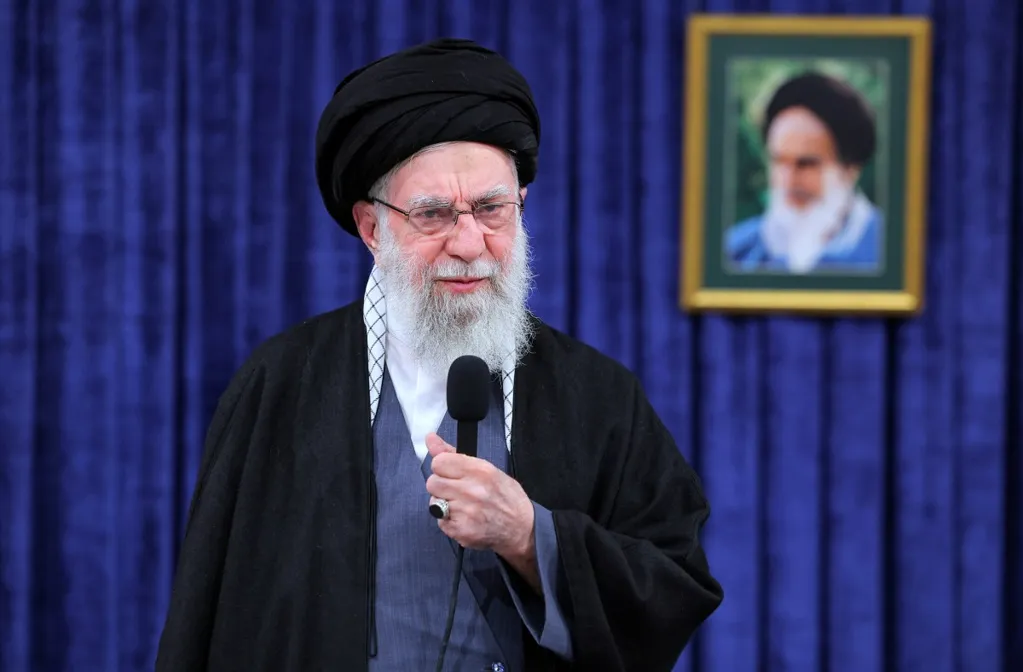
Unlike Maduro, Ayatollah Ali Khamenei is not a leader who could plausibly be cornered and taken into custody. Iran's Supreme Leader is protected by an elite Islamic Revolutionary Guard Corps (IRGC) security unit, surrounded by a hardened security architecture designed precisely to prevent decapitation or capture.
During past escalations, he has retreated to secure locations with communications tightly restricted to trusted aides. At 86, and widely viewed as physically frail, Khamenei is unlikely to surrender or endure detention; any serious attempt to seize him would almost certainly trigger lethal resistance from loyalists or end in his death, rather than capture.
Maduro's military and inner circle were divided, hit by sanctions and lacking strong support from major global powers. That made it easier for a rapid operation -- helped by defections -- to remove him from power.
Iran, by contrast, has a much stronger system. Its political, military and religious institutions are deeply entrenched, making it far harder to weaken or topple with a single strike or covert mission.
As the risk of direct confrontation with the United States and Israel has grown, Iran's Supreme Leader has focused on regime survival.
Khamenei has instructed Ali Larijani, the powerful head of Iran's Supreme National Security Council, and a small circle of trusted political and military aides to ensure the Islamic Republic can withstand not only sustained bombing but also potential assassination attempts targeting its top leadership -- including Khamenei himself, six senior Iranian officials and members of the IRGC told the New York Times.
He has established four layers of succession for every key military and government post, the sources stated. Senior officials have also been ordered to designate four replacements for their roles in the event of their own death. Critical decision-making powers have been reduced to a tight inner circle to ensure continuity if communications are severed or if the Supreme Leader is killed, the report stated.
During last June's 12-day war with Israel, when he was forced into hiding, Khamenei is said to have identified three potential successors.
Earlier this month, the IRGC said it would revive its so-called "mosaic defense" strategy, a doctrine that decentralizes command and allows local commanders to act independently. The approach is intended to ensure the Islamic Republic can continue fighting and governing even if senior leadership or central communications are disrupted by foreign strikes.
Unlike Venezuela, Iran has been preparing for months for the possibility of new U.S. military strikes -- even as nuclear talks continue and leaders clearly want to reach a deal that avoids conflict.
Tehran has placed its armed forces on the highest level of alert and is operating on the assumption that conflict could break out at any moment.
Larijani said last week: "We reviewed our weaknesses and addressed them. If war is imposed on us, we will respond."
Ballistic missile launchers have been repositioned along Iran's Western border with Iraq and along the Persian Gulf coast. Tehran has an estimated 2,000 midrange ballistic missiles capable of reaching Israel. It also has a large stockpile of shorter-ranger missiles that could strike U.S. bases in the Gulf and ships in the Strait of Hormuz. There have been several reports of recent massive weapons deals with both Russia and China.
Recent satellite imagery, published last week by Reuters, show that Iran has been quietly repairing and fortifying key facilities, suggesting Tehran is preparing for conflict even as diplomacy continues.
Analysts reviewing commercial satellite imagery from Planet Labs and other providers say Iran has been rebuilding and reinforcing key nuclear sites, including Natanz and Isfahan. New roofs and cover structures appear to shield damaged facilities, possibly to hide activity and protect surviving equipment or enriched uranium from further strikes. Some tunnel entrances have been strengthened, and missile bases hit in previous attacks show signs of repair.
Iran closed the Strait of Hormuz for live-fire drills last week, the first announced shutdown of the vital waterway since the 1980s. Roughly 20 percent of global oil flows through the strait. Though brief, the move signaled Tehran's ability to disrupt energy markets and impose global economic costs in any conflict.
The regional stakes are dramatically higher with Iran as compared to Venezuela. Tehran has spent decades building a network of allied militias and proxies across the Middle East that extend its influence and complicate any military confrontation. These groups -- most prominently Hezbollah in Lebanon, Iraqi Shiite militias, the Houthis in Yemen, and Palestinian factions -- mean that multiple fronts could be opened up against U.S. and Israeli interests if conflict escalates.
A collapse of Iran's central government could unleash power vacuums, destabilizing the entire region.
Finally, striking Iran is far harder logistically than Venezuela because of distance, geography and a lack of support from key U.S. allies.
Venezuela lies close to the U.S. mainland and within easy reach of U.S. bases in the Caribbean and southern U.S.
Iran, by contrast, lies deep in the Middle East, requiring U.S. forces to operate across a vast theater from bases in Europe or the Gulf under United States Central Command (CENTCOM).
This was further complicated by the U.K. government refusing to grant the U.S. permission to use RAF Fairford in Gloucestershire or the crucial Diego Garcia base in the Chagos Islands for potential strikes on Iran without clear legal justification -- a stance that has angered Trump and even led him to publicly withdraw support for the Chagos sovereignty deal.
Meeting Iran's air defenses and terrain in and around the Strait of Hormuz adds another layer of difficulty. That makes any strike on Tehran considerably more challenging than the operation near Caracas.
For Trump, the lesson of Venezuela may be tempting but could be misleading.
Iran is not a weak strongman state that can be toppled with a quick strike. Despite the internal unrest, it is a hardened system built to survive, with backup leadership plans, decentralized military command and forces ready for a long fight.
Any push for regime change would carry far greater risks, including regional war and shocks to global energy markets. The Maduro comparison may work as political rhetoric, but it ignores a basic reality: Iran is more entrenched, more prepared and far more capable of making any conflict costly far beyond its borders.