As individualistic as this place often is, I thought there still existed minimum standards when it came to how we see each other.
In the daily horror of this year's news cycle, it's difficult to be shocked.
But all yesterday I couldn't stop thinking about Bikram Lama, with both horror and sadness.
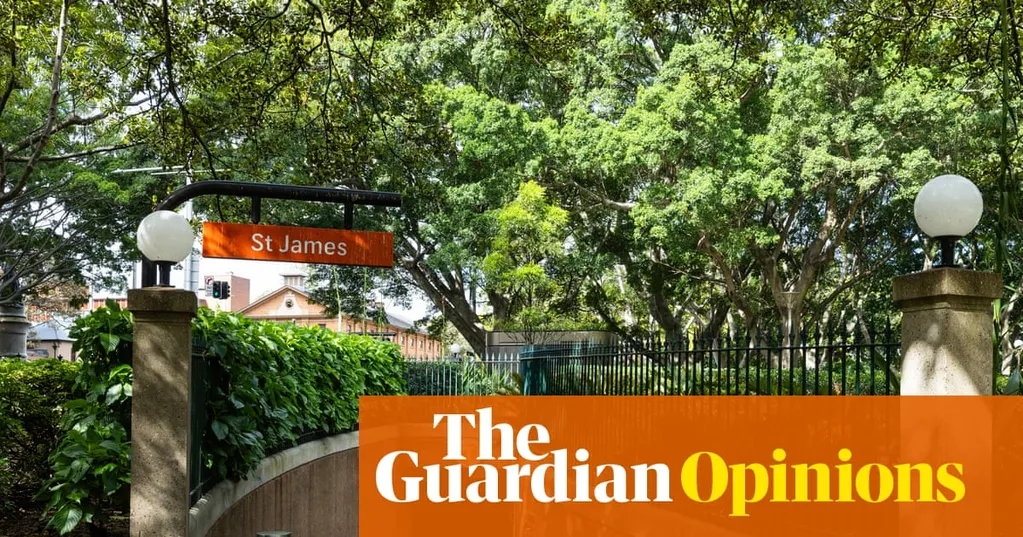
Could it really happen here in Sydney, that a man could lie dead, in his sleeping bag, on the ground, for six days, near St James station, as thousands of commuters streamed past his decomposing body?
I guess it could happen here, because it did.
A Guardian investigation revealed that a former international student, 32-year-old Lama, had died at central Sydney's St James station in December where he had been sleeping rough. Up to 100,000 people transited through the station in the days before his body was found. He had been unable to access any services due to not being an Australian citizen.
Lama's death seems to point towards some Rubicon being crossed for this city.
There's an unwritten contract that I had assumed was still intact in Sydney. That is, we are all human beings, we acknowledge each other as such - and we see each other. We may not always help each other but at least there is some level of recognition.
People aren't so invisible that they are literally left to rot beside one of the busiest thoroughfares in Sydney.
(Or as Arthur Miller wrote of this social contract in Death of a Salesman, "He's a human being, and a terrible thing is happening to him. So attention must be paid. He's not to be allowed to fall in his grave like an old dog. Attention, attention must finally be paid to such a person.")
But what seems to have happened to Lama is that attention was not paid.
The only true register of his existence were the birds he fed each day in Hyde Park. There is something almost unbearable about this detail, about how the pigeons knew his routine, that they would congregate before he arrived and fly inside to wait for him. They registered him, they organised themselves around his presence and they noticed his absence in a way that no human did.
But other than the pigeons, Lama wasn't seen for a few reasons. Despite being in one of the most highly dense and busy places in Sydney, technically in view of thousands of people - most of those people would have been looking at their phones, not at him.
And then he wasn't seen in a bureaucratic sense, because the system to support homelessness is designed not to see him.
According to the Guardian: "Experts say non-residents are a growing cohort, trapped in homelessness because they cannot be given temporary or social housing, cannot legally work but also cannot get Centrelink payments or, in most cases, access public healthcare."
When a system is designed not to see someone, survival relies on private charity and churches, as well as the decency of fellow citizens passing by to see and assist, and perhaps form relationships with - however surface-level those relationships are. That is what it means to be part of a society.
I live in an area where there are consistently high amounts of rough sleepers, as well as homeless shelters and services.
Built into the fabric and rhythm of Kings Cross and Potts Point are years-long, regular, neutral and often positive interactions between residents, shopkeepers and homeless people, even if it's just eye contact, a nod and an acknowledgment as you pass people when you’re exiting the station.
It may not seem like much (it’s really the bare minimum) but eye contact, a nod, a hello – clocking people – is a way of saying, “Hi, I see you, you exist, you are my neighbour.”
As individualistic as this city often is, I thought there still existed minimum standards when it came to how we see each other.
I understand and also have experienced the apprehension that to start acknowledging the humanity of rough sleepers might be to start a cascade of care where more and more is asked of you and before you know it the rough sleeper is tucked up in your spare bedroom.
But as a society to pull back from any form of care or acknowledgment of others particularly others having a hard time has terrible consequences.
Do we really want to end up like the US? And by that I don't mean we end up with huge unmanageable homeless populations. I mean we end up so hard-hearted and nasty about homeless people that we can no longer call this thing we live in a "society."
To live in a society implies some sort of social relationship between everyone in the place even with the poorest.
But I have noticed a new dehumanising (and frankly sociopathic) kind of language creep in when people talk about the homeless populations of San Francisco and LA.
The sheer numbers of homeless people the lack of public amenities the paucity of support and the new and powerful drugs such as the tranquilliser xylazine that some homeless people take (the drug itself being known as "the zombie drug") have led to a hardening of rhetoric and othering.
It's common practice now for some US media to talk about homeless populations as "zombies". According to them these people are not quite human with their bad hygiene and endless bottomless need. They are halfway between the living and the dead.
Jesse Watters on Fox News captured the dehumanising tone when he described one homeless area as "drugged-out zombies chasing barefooted babies through piles of garbage with hypodermic needles and fire everywhere. It was the most depraved and disgusting thing I've ever seen in my life."
Of course the real zombies here are actually us and the xylazine is our phones.
That's what it may have looked like from Lama's end all of us streaming past him as we stream something ... dissociating digitally the algo feeding us slop eyes glued to our tiny screens ears blocked by white buds or massive headphones like the undead - walking past a dead body. Just as a zombie would.