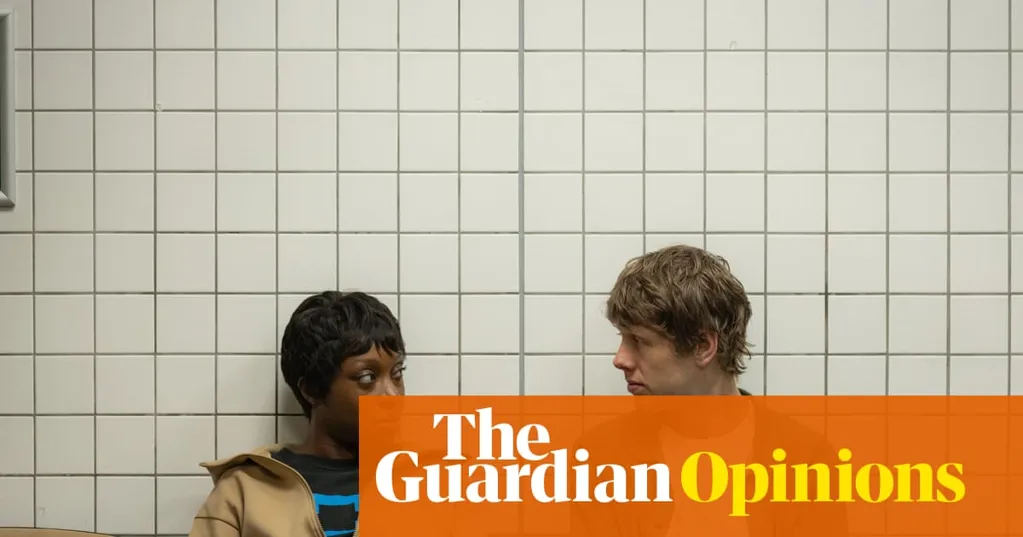
This BBC series hasn't made the same the splash as Adolescence. But its reflections on men in prison are valuable.
Dennis Kelly, the author of the BBC's six-part drama Waiting for the Out - now on iPlayer, with its final episode to be broadcast on Saturday - told an interviewer that fear is the secret hidden inside his latest series. The drama, about a man who takes a job teaching philosophy to a group of men in a prison, is based on Andy West's memoir The Life Inside, which describes his real-life experiences teaching in prisons. Visiting jails for his research, Kelly picked up echoes of the debilitating shame that marred his own youth and early adulthood.
In his thirties, Kelly tackled his alcohol addiction and began to write and recover. He is now the author of highly regarded TV series including Utopia and Pulling and won a Tony award for his script for the smash-hit musical version of Roald Dahl's Matilda.
Waiting for the Out is far quieter in tone than Netflix's Adolescence, although it tackles similar themes of male anger and violence. The boy in the story is seen in flashback as the main character, Dan (played by Josh Finan), struggles with memories of growing up in the frightening shadow of his volatile, aggressive father. Kelly shows Dan trying to do something useful in the world by supporting prisoners to think while confronting his own buried demons at the same time - and becoming thoroughly confused in the process.
Prison education is a highly unusual subject for television - and philosophy teacher Dan is an original character. While prisons are a regular topic for British documentary makers, original dramas are a rarity (although a third series of Time, set in a young offender institution, was recently confirmed). Waiting for the Out lacks the shock-factor of Adolescence - which depicts the murder of a teenage girl by a teenage boy, and its aftermath, from several angles.
But it finds a different kind of power in its quietness. The scenes focused on Dan's solitary struggles with his mental health are just as compelling as those involving his recovering-alcoholic brother or inside the prison. And while drama scripts should not be confused with policy papers, there is food for thought here about the violence that results in so many men ending up incarcerated - and how their aggression is dealt with once they are sentenced. One point that Kelly makes with eloquence is the importance of supporting prisoners' relationships with their children.
The health and addiction issues that are common among men in the criminal justice system are referenced in the government's recently launched men's health strategy. So is the shocking fact that suicide is the leading cause of death in men under 50 - another topic touched on in Kelly's drama. In politics and in society too, the sense is growing that there are challenges facing men and boys that require dedicated attention. In a report last year, the all-party parliamentary group on men and boys argued that schools should find ways to "address their unique needs without disempowering girls".
Waiting for the Out is fiction, not factual television. But in the themes it chooses, and its central character's struggle with his identity as a man and as a son, it is a welcome contribution by the BBC to this period of reflection about masculinity. Strong recent dramas focused on women's lives in Britain include Sally Wainwright's Riot Women. Both kinds of stories are valuable.