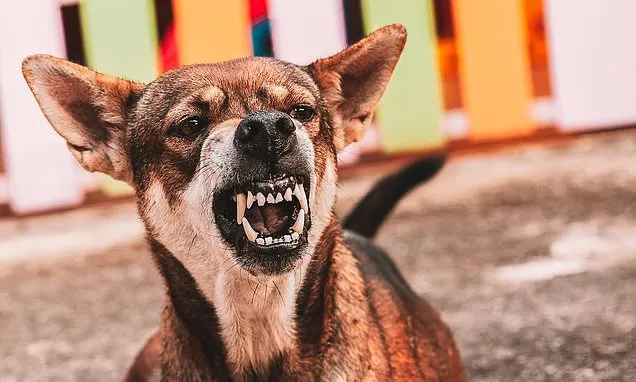
Dogs are often referred to as 'man's best friend'.
But vets have revealed how your innocent-looking pet could turn into a killer if affected by certain health conditions.
From pain-related problems like arthritis to hormonal disorders like hypothyroidism, a range of hidden health conditions can increase aggression in dogs.
Speaking to the Daily Mail, Shauna Walsh, PDSA Veterinary Nurse explained: 'It can be very upsetting and worrying if your dog shows aggressive behaviour, especially if this feels out of character for them.
'It's important to remember that aggression is often a sign that something doesn't feel right for your dog, it doesn't make them a "bad dog".
'There are a few different causes of aggressive behaviour in dogs, but they often start with your dog feeling afraid, unwell, or uncomfortable.'
So, is your dog about to turn on you?
Here's a look at the hidden health conditions that increase aggression - and the early signs to look out for.
From pain-related problems like arthritis to hormonal disorders like hypothyroidism, a range of hidden health conditions can increase aggression in dogs.
1. Neurological conditions
Several conditions that affect your dog's brain or nervous system can change their behaviour.
If your dog suffers from epilepsy, they may become more aggressive after a seizure, according to vets at Southfields Veterinary Specialists.
'A very small number of dogs might become aggressive after a seizure,' they explain on their website.
'If your dog is aggressive after his/her seizures: STAY AWAY! Make sure they are in a safe room/area and give them space until they are fully recovered.'
As scary as it sounds, a sudden spike in aggression could also indicate that your dog has a brain tumour.
'One of the first signs of a brain tumor in dogs is a noticeable shift in behavior,' explain the team at Apex Vets.
'Dogs may display aggression, confusion, or anxiety that was not present before.'
Conditions commonly linked with changes in dog behaviour include:
- Itchy skin and ear conditions
- Traumatic injuries, such as wounds, broken bones, or even a broken claw
- Seizures and other neurological conditions
- Arthritis and other painful joint conditions
- Hormonal conditions such as hypothyroidism
- Dental disease
- Any illness causing a high temperature, tiredness, or lethargy
'These behavioral changes occur because the tumor affects brain function, altering how your dog processes information and emotions.'
And if your dog is a bit older, a surge in aggression could be a sign of dementia.
'Cognitive dysfunction could make them feel threatened or anxious in previously normal scenarios,' YuMove says on its website.
2. Pain-related conditions
One of the most common causes of aggression in dogs is pain.
Ms Walsh highlights several conditions linked to pain, including traumatic injuries such as such as wounds, broken bones, or even a broken claw, arthritis, and dental disease.
'If your dog is showing any changes in their behaviour, especially if they have started showing aggressive behaviour suddenly, you should contact your vet as soon as possible,' she advised.
The loss of certain senses can make dogs feel threatened, leading to a surge in aggression. For example, cataracts are a clouding of the lens in a dog's eye, which can make it difficult for them to see clearly
'Behaviour changes are sometimes one of the earliest signs that a dog may be feeling unwell or in pain.
'Your vet will be able to check your dog for any medical causes to explain the change in behaviour.
'Any health problem that causes pain, discomfort, confusion, or general illness can lower a dog's tolerance and make them more likely to react aggressively.'
3. Hormonal imbalances
Just as we see in humans, hormonal imbalances can increase irritability in dogs.
One of the most common conditions that causes hormonal imbalances in dogs is hypothyroidism - a condition where the thyroid gland does not produce enough hormones to regulate the body's metabolism.
'Hypothyroidism in dogs can lead to changes in behavior, including increased irritability and aggression,' Jefferson Animal Hospital explains on its website.
'This can manifest as uncharacteristic growling, snapping, or even biting towards people or other animals.'
4. Infectious diseases
Several infectious diseases can cause sudden or increased aggression in dogs.
The most-well known disease is rabies, which can develop in two ways.
'Dumb rabies' causes dogs to become quiet and withdrawn, while 'furious rabies' can cause a spike in aggression.
'Sadly, there is no treatment for rabies, and it's nearly always fatal once symptoms have developed. If your vet suspects your dog has rabies, the kindest option is to put them to sleep,' the PDSA advises.
As the name suggests, Canine Distemper can also cause drastic personality changes in dogs.
This virus invades the brain, causing behavioural changes like sudden aggression, fear, or confusion.
5. Vision or hearing loss
The loss of certain senses can make dogs feel threatened, leading to a surge in aggression.
For example, cataracts are a clouding of the lens in a dog's eye, which can make it difficult for them to see clearly.
'Dogs with cataracts may become more anxious or confused due to their reduced vision,' Lakeshore Road Animal Hospital explains.
Meanwhile, deafness can happen in dogs of any age and for a variety of reasons.
6. Medication side-effects
If your dog is on certain medications, aggression may be an unwanted side-effect.
The early signs to look out for
According to Ms Walsh, one of the most important steps in preventing aggression is learning what's normal for your dog.
'Dogs rarely bite without warning, but some of the warning signs are very subtle so can be easily missed,' she explained.
'You know your dog best, so it's important to watch them closely for any signs they're not comfortable especially in new situations, with new people or if their behaviour seems to be changing.'
Subtle signs your dog is feeling uncomfortable include yawning when not tired, turning their head away, licking their lips, looking away from you or showing the whites of their eyes, a tense, lowered body, their tail tucked underneath their body, lifting a front paw, or trembling or shaking.
'If these signs are missed, they may progress to signs of aggression which may include: lifting their lip or baring their teeth; staring intently; growling or snarling; snapping; or lunging,' Ms Walsh added.
If you do notice any of these signs in your dog, it's important you respond accordingly according to Bryony Francis Head of Clinical Behaviour at the RSPCA.
'Respond accordingly by removing the cause of the fear - particularly if it's a child another person or another pet - or by encouraging the dog to move somewhere they'll feel safe and calm,' she told the Daily Mail.