Hi everyone. This week, the people behind a world-famous band are trying to make a world-famous video game, but first...
This week's top gaming news:
- Microsoft Corp. is preparing to lower the prices of Xbox Game Pass, new Xbox head Asha Sharma hinted in a memo this week
- The PlayStation 5 had its best week of the year in early April as buyers stocked up ahead of a hefty price increase
A Long Shot
Dan Reynolds has already conquered near-impossible odds in pursuit of his dreams. Two decades ago, he started Imagine Dragons, which would go on to become one of the most successful rock bands in the world, touring stadiums and selling more than 75 million albums.
Now he's trying to do the one thing that might be even less plausible: launching a hit video game in the year 2026.
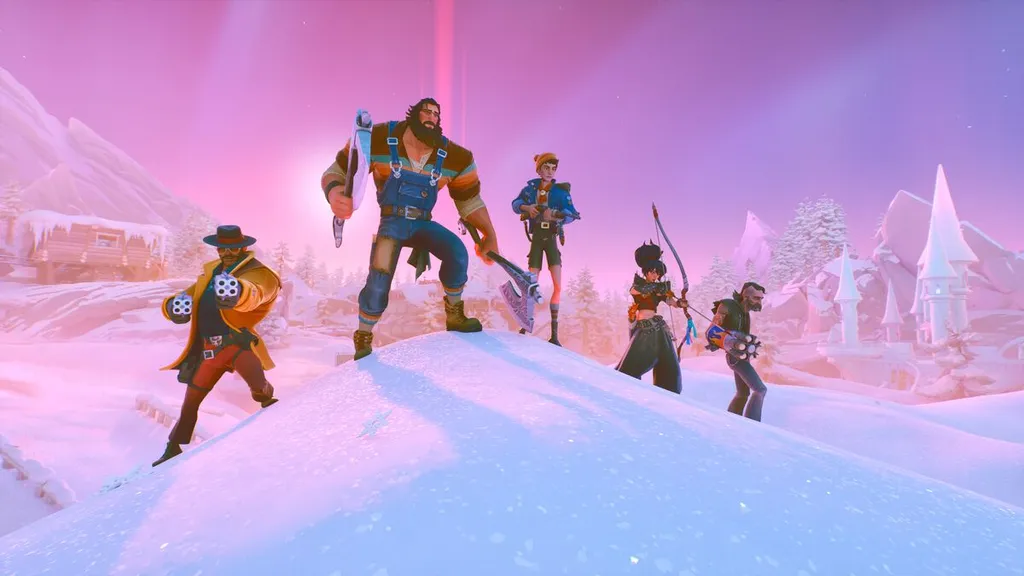
Five years ago, Dan and his brother, Mac Reynolds, founded a video-game studio called Night Street Games. This week, they put out their first title: Last Flag, a capture-the-flag shooter game featuring colorful, Fortnite-like aesthetics and a cast of varied heroes.
Unfortunately, they're launching Last Flag into one of the most oversaturated video-game markets in history, where they'll compete not just with the plethora of new games released every year, but with all of the online shooters that have kept people hooked for decades, from Counter-Strike to Overwatch.
Since releasing on Tuesday, Last Flag has peaked at just over 550 concurrent players on Steam. A spokesperson for Night Street wouldn't comment on whether they considered the sales numbers successful but said the company was happy with the critical reception and that they hope to "build a sustainable community and nurture and grow it over time."
The fear is that they might recreate the trajectory of Highguard, another online shooter that launched into the crowded market earlier this year. It lost its funding and shut down just weeks after it came out.
"I hope people will give the game a shot," Mac Reynolds told me in an interview a few weeks ago. "I don't know any other hide-and-seek games out there, and I'm really proud of the fact that we're making something that plays and feels differently."
Mac, the manager of Imagine Dragons and chief executive officer of Night Street, said that he and his brother have been talking about making video games for years.
There are plenty of celebrities who have jumped into gaming to make a quick buck. The Reynolds brothers aren't among them. Dan is a lifelong video-game fan who programs his own small games and has even quietly released a few in between worldwide tours.
"Dan gets off the stage," Mac said, "and he goes and codes."
"We grew up talking about games constantly."
When they first decided to make a game together, they figured they'd develop it on their own -- Dan would code while Mac drew the art -- but they soon realized that their ambitions were too large for that to be a viable approach. So they went online and looked for potential outsourcing partners, eventually landing on a small Ukrainian team that impressed them. For a while, they only talked through text chat, leading to one delightful moment when they saw each other for the first time on a Zoom call. "They were like, 'You look like that Dragons guy,'" Mac recalled.
With the Ukrainian team, the Reynolds brothers self-funded a prototype, then began looking for investors, bringing in venture capital firms like Bitkraft and 1Up Ventures and even taking money from some unexpected sources, like the ticket-selling company Live Nation Entertainment Inc.
Development took a long time, in part because of what Mac calls some "risky decisions" like switching their engine from Unity to Unreal and in part because the game evolved in different directions over the years. "It's kind of like songwriting," Mac said. "You have to let the art tell you what it's meant to be."
Today they have 25 full-time staff and an outsource team, which is small for a game studio but bigger than the Reynolds brothers ever thought their company would be. The big question is how much runway they have to keep everybody employed as they add updates to the game and try to bring in more players.
"Raising money is one of the hardest and worst things to be doing in 2026 for any studio," Mac said. "So runway is going to be a challenge for everybody. Our focus was: Can we put out a game that represents the core of what we think it needs to be? And there's more to come."
Last Flag costs $15, which gives it a lower potential playerbase than its free-to-play rivals, but also means that the developers can keep adding new content without finding ways to nickel-and-dime players. In the coming weeks, they plan to add more heroes and maps to the game, and there are no microtransactions at all.
Can they compete in this market? It has certainly helped to be part of a world-famous band capable of reaching 10 million Instagram followers with posts about the game. But even that kind of publicity hasn't boosted Last Flag to the top 100 sellers on Steam.
It's tough out there, especially for multiplayer games that aren't getting rave reviews. But Mac Reynolds is optimistic that they can find a path forward. "For us, success is not measured by having 100,000 players at launch," he said. "It's measured by having a sustainable community that grows."
What to play this weekend
I'm really into Pragmata, the new sci-fi game from Capcom Co., that feels like a vestige from the Xbox 360 generation. You play as Hugh, an astronaut stuck on a space station, who teams up with Diana, a young android, to try to escape. To take out enemies, you have to juggle between standard combat fare (dodging and shooting) and Diana's hacking ability, which asks you to solve a series of small grid-based puzzles. It seems overwhelming at first, but in practice it's quite nice.
Got a news tip or story to share? You can reach Jason at jschreier10@bloomberg.net or confidentially at jasonschreier@protonmail.com.