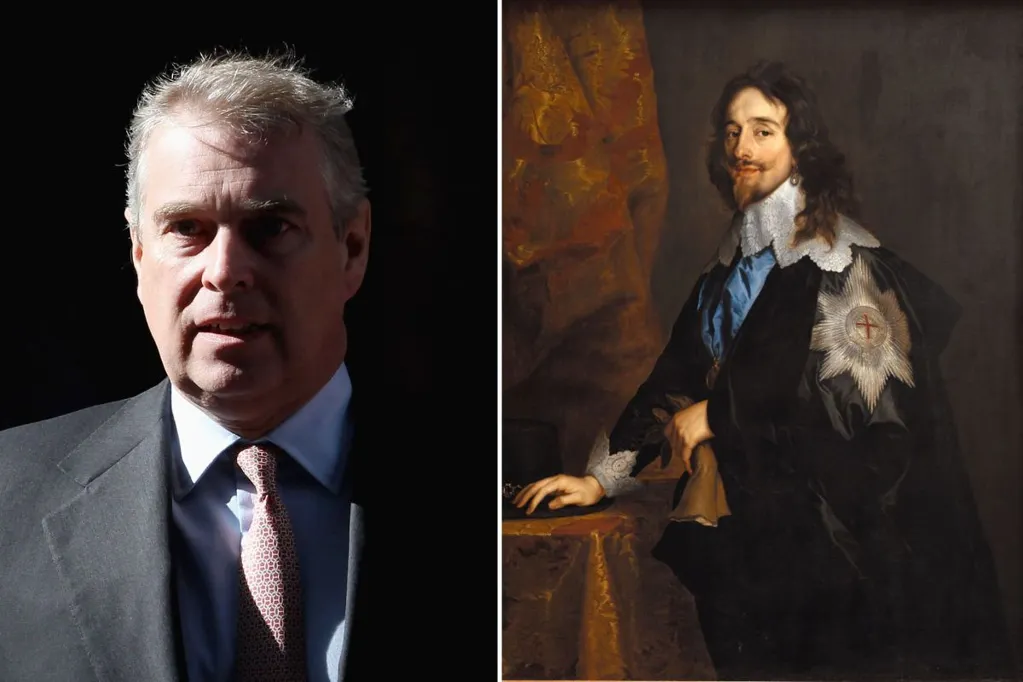
Police have arrested Andrew Mountbatten-Windsor, formerly Prince Andrew, on suspicion of misconduct in public office. Reports from U.K. news outlets showed multiple vehicles at Wood Farm, his residence on the Sandringham estate, Norfolk.
Royal arrests are extraordinarily rare in modern Britain. Confirmed detentions of reigning or former senior royals have largely been confined to periods of civil conflict and rebellions.
The modern police have, up until this point, never arrested a member of the modern royal family. That makes this arrest extremely significant when viewed in historical context, even without the full context and official comment on the circumstances of his arrest.
To find the last British royal arrested before Mountbatten-Windsor, you'll have to go back to before the United States was formed as a nation.
Mountbatten‑Windsor's arrest took place shortly after 8 a.m. on his 66th birthday and followed newly released Epstein‑related files that appeared to show him forwarding sensitive information to Jeffrey Epstein -- allegations he has consistently denied.
Police have not immediately commented in detail, and the investigation remains ongoing.
The incident comes against the backdrop of years of reputational damage linked to Andrew's association with Epstein, including his loss of titles and honors and a 2022 out‑of‑court settlement with Virginia Giuffre, made without admitting liability.
"I continue to unequivocally regret my ill-judged association with Jeffrey Epstein," Andrew said in a later statement as he quit official royal duties.
During the English Civil Wars, Charles I surrendered to Scottish forces at Southwell in 1646, was handed to the English Parliament in 1647, and remained in custody before his trial and execution in 1649, events that constitute the most famous instance of a British monarch being seized and held by state authorities.
Forced to abdicate the Scottish throne, imprisoned in Lochleven Castle, escaped, fled to England. Imprisoned by her cousin Elizabeth I for 19 years across multiple English castles. Tried for treason over the Babington Plot and beheaded at Fotheringhay Castle.
Imprisoned in the Tower by her half-sister Queen Mary I on suspicion of involvement in Wyatt's Rebellion. Held for two months before being placed under house arrest. Released due to lack of evidence.
Proclaimed queen for nine days (Britain's shortest-reigning monarch, and installed against her wishes to prevent a Catholic succession) before being deposed by Mary I. Imprisoned in the Tower and beheaded at age 16 after her father joined a Protestant rebellion.
Fifth wife of Henry VIII. Imprisoned in the Tower on charges of adultery and treason. Beheaded on Tower Green at roughly age 20.
Second wife of Henry VIII. Arrested on charges of adultery, incest, and treason. Imprisoned in the Tower and beheaded by a French swordsman on Tower Green.
Known as the 'Princes in the Tower'. Ages 12 and 9. Placed in the Tower by their uncle Richard, Duke of Gloucester, who then seized the throne as Richard III. The boys were never seen again and are presumed murdered.
Brother of King Edward IV. Imprisoned in the Tower for treason. Privately executed in 1478 -- legend says he was drowned in a barrel of wine.
Captured during the Wars of the Roses and held in the Tower of London. Briefly restored to the throne in 1470, then re-imprisoned. Found dead in the Tower in 1471 -- almost certainly murdered on Edward IV's orders.
In 1399, Henry Bolingbroke, later Henry IV, forced Richard II to surrender after the king was taken at Flint Castle and subsequently deposed and imprisoned, representing a medieval precedent of a reigning monarch being seized and removed.
Edward II was captured amid a rebellion led by Queen Isabella and Roger Mortimer in 1326, deposed in 1327, and imprisoned, marking another early example of a monarch taken into custody during a constitutional and dynastic crisis.
Queen consort of Henry II. Imprisoned by her own husband for 16 years after supporting their sons' rebellion against him. Only released when Henry died and their son Richard the Lionheart freed her.
After fleeing London during the Glorious Revolution, James II was intercepted and brought to Faversham in December 1688 before being allowed to depart into exile, an episode often described as his capture or detention amid the regime change that placed William III and Mary II on the throne.
James Scott, Duke of Monmouth, was arrested on 8 July 1685 near Ringwood, Hampshire, captured hiding in a ditch disguised as a shepherd after the failed Monmouth Rebellion. He was Charles II's eldest illegitimate son, a duke, and had actually declared himself king. He was beheaded on Tower Hill on 15 July 1685 -- infamously taking between five and eight axe blows because the executioner Jack Ketch botched the job.
Barring Mountbatten-Windsor, no member of the modern British Royal Family has been arrested, despite brushes with the law.
The most recent incident involving police and the British Royal Family was Prince Phillip's 2019 car crash that flipped his Land Rover and injured another driver. Police did investigate the crash, but there was no arrest or charge. Phillip voluntarily surrendered his driving licence following the collision.
Princess Anne was fined £400 in 2001 for speeding, and in 2002, became the first member of the current royal family convicted of a criminal offence -- pleaded guilty under the Dangerous Dogs Act after her bull terrier bit two children. Fined £500 plus compensation. This was not a formal arrest.
Zara Tindall, Princess Anne's daughter has had multiple speeding convictions and was banned from driving in 2009 for six months after accumulating too many points. This was not an arrest either.
Norfolk Constabulary did not immediately comment on Andrew's reported arrest, and further official statements from police or prosecutors would clarify next steps on any potential charges or release conditions.
Given the rarity of modern detentions involving senior royals, legal proceedings -- if any -- would unfold under intense public and historical scrutiny, while Andrew's previously documented loss of titles and standing underscores the reputational stakes surrounding any investigation outcomes.