By LUKE CHAFER, HEALTH REPORTER and EMILY JOSHU STERNE, US SENIOR HEALTH REPORTER
Exposure to toxic mould can have a decades-long impact on the lungs, concerning new research has revealed.
A team based at the University of Bristol found that childhood exposure to mould can decrease lung function into adulthood.
As part of the Children of the 90's research project, they followed children over three decades and found that ten years after exposure aged 15, the participants had five per cent less function in their lungs.
Living in mouldy properties is known to cause a range of health problems including respiratory infections like aspergillus, asthma and allergies.
Mould, a microscopic fungus, causes these conditions by releasing thousands of microscopic toxic particles into the atmosphere.
Signs that you may be affected by household mould include a prolonged cough, wheeze or feeling short of breath.
Other symptoms include worsening of asthma and other respiratory conditions or those that involve the inflammation of the airways.
Dr Raquel Granell, one of the authors of the new University of Bristol study, told the Daily Mail that there are steps that people can take to keep their home mould-free, or at least reduce the risk of it taking grip.
Kitchen appliances like dishwashers, fridges and microwaves are 'prime mould zones' due to constant moisture and water exposure.
Yesterday, we shared the story of Schayene Silva developed kidney cancer after unwittingly using a mouldy ice machine.
The mother-of-two had the tumour surgically removed in April 2025, but she was determined to find the root cause to keep it from coming back.
After researching potential causes online, Ms Silva decided to have her home tested for mould, which produces toxins linked to organ damage and some forms of cancer.
Initial testing came back clear until Ms Silva thought to investigate her ice machine. After pulling the outer case apart, she discovered the machine was 'covered in mould.'
Further testing revealed Ms Silva had ten times the normal amount of Ochratoxin in her body, a toxin produced by Aspergillus (green) and Penicillium (blue) moulds.
When kitchen appliances are not regularly inspected or dried, 'lingering dampness' can cause mould to spread to other areas, leading to allergic reactions and irritation for people with asthma and other breathing issues.
Robert Weltz of mould inspection agency RTK Environmental Group previously told the Daily Mail: 'Mould can spread from these devices to other parts of your home, and that can be detrimental to your health.'
And it's not just the kitchen - bathroom sinks, lofts, basements and even wooden floors aren't safe from mould.
Mould typically takes just one to two days to begin growing, though it can take weeks or months for more obvious signs like odours and visible stains to appear.
Mould spores have been shown to trigger severe allergic reactions in about five to 10 percent of the population, leading to congestion, sore throat, coughing or wheezing, burning eyes and skin rashes.
However, there are several types of mould that are more dangerous than others.
The most severe form, black mould, produces dangerous chemical compounds called mycotoxins that, when inhaled repeatedly, cause cognitive impairment, mood changes, asthma-like symptoms, headaches, coughs, muscle aches and autoimmune responses.
When the body detects toxins, such as spores in the air, the immune system launches a massive defense, sending out a storm of inflammatory chemicals called cytokines that act like emergency alarms.
Inflammatory cytokines can travel throughout the body via the bloodstream and reach every organ system, including the endocrine system and the brain.
Mould then triggers inflammation, damages tissues and attacks vital cells and neurones.
In addition to dishwashers, Weltz pointed to spots behind sinks and refrigerators as other common culprits, as well as dark and poorly ventilated areas like lofts and basements.
He said: 'These areas are constantly exposed to moisture from cooking, washing dishes, and taking showers. Common mould-prone spots include behind sinks, under dishwashers, around toilets, and in shower stalls.
'These areas trap moisture [such as] leaks, condensation [and] poor ventilation, so growth can remain out of sight until odours or damage appear.'
The loft, for example, falls victim to the 'stack effect,' which occurs when warm air rises to the highest point in your home, bringing moisture with it.
Two-year-old Awaab Ishak died from a respiratory condition caused by black mould at his home in Rochdale, Greater Manchester, in 2020
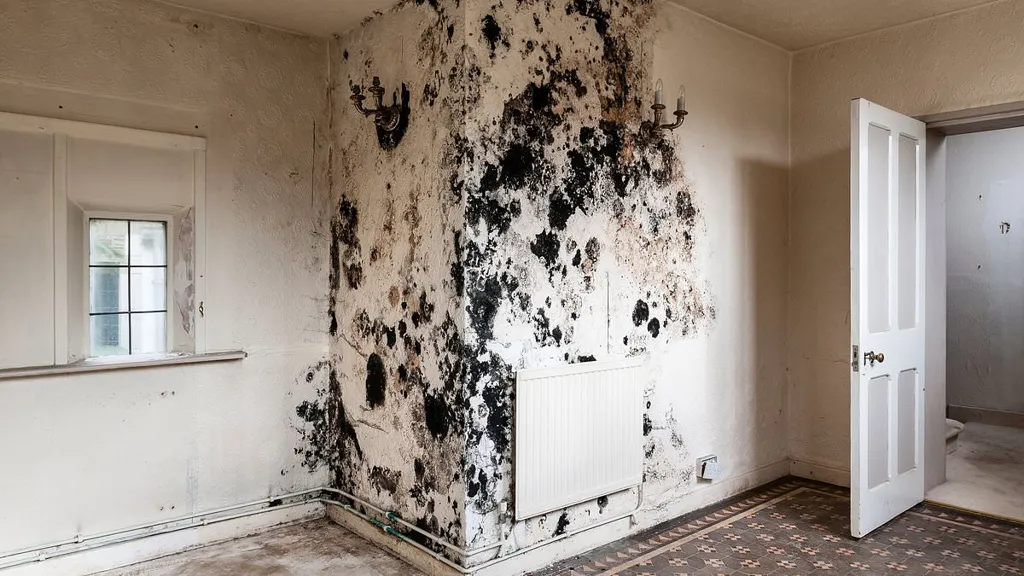
Shocking images reveal the extent of the black mould spores in the flat where tragic Awaab Ishak lived. The toilet was leaking because of defective plumbing and continuously discharging
Mould in the flat contributed to Awaab developing a continuous cough that meant he couldn't breathe through his nose in the final weeks of his life
This 'can cause moisture to accumulate, creating an ideal environment for mould growth,' Weltz said.
Basements are also the most common area of the house for flooding, which brings high levels of moisture. Weltz advised checking the walls, underneath floorboards and inside insulation materials in basements for mould every few months.
Laundry rooms are also prone to high humidity due to the washers and dryers, so Weltz suggests checking inside washing machines and underneath laundry room sinks.
If signs of mould appear in your house, Weltz suggests washing the area with water and detergent. Dehumidifiers and vent fans can also help reduce moisture and dry an area.
However, if the area is larger than two by two feet, 'a commercial cleaning or remediation company is your best bet.'
Weltz said: 'Because mould is often hidden, growing on the back sides of walls and sheetrock, and under carpets and floorboards, the only way to be sure is to have a mould inspection performed by a certified professional.
'Do-it-yourself testing kits are generally unreliable.'
'Mould spores are lightweight and tiny and spread easily, so it's very easy for someone not accustomed to working with mould to cross-contaminate 'clean' areas of their home with contaminated areas.'
Your browser does not support iframes.
Government figures show that in 2019, roughly 5,000 cases of asthma and approximately 8,500 lower respiratory infections among children and adults were linked to household damp and mould in England.
It's thought that between one to two per cent of new cases of hayfever are caused by damp and mould every year.
Professor James Dodd, Professor of Respiratory Medicine at Bristol Medical School said: 'Exposure to mould most commonly effects the lungs though breathing in spores triggering an allergic, inflammatory response.
The severity depends on the dose, duration and vulnerability of the person. The fungal spores can act as aeroallergens (airborne triggers) which can cause breathing problems including cough,wheeze, chest tightness and runny nose (rhinitis).'
'There is a strong association with exposure and poor asthma control,particularlyin children.
'Mould exposure is a particular problem to those with pre-existing lung disease such as asthma and COPD often leading to flare ups of respiratory symptoms including asthma attacks.'
'Damp and mould are a preventable cause of respiratory disease,health inequalityand NHS cost. Failure to address housing conditions undermines clinical care,widens inequalities,and drives avoidable admissions.'
In December 2020,two-year-old Awaab Ishakdied after prolonged exposure to mould in his Rochdale home.
He lived in a one-bedroom flat with his father and stepmother.
The family reported the mould problem to the housing association that provided the flat -- Rochdale Boroughwide Housing (RBH) -- three years before the little boy's death, but was advised to 'paint over it'.
In June 2020,Awaab's father hit the landlords with a legal claim over the recurring mould,but repairs had to wait until the case was settled.
Last year a 32-year-old man developed a life-threatening blood infection caused by mould,after living in a fungus-riddled property where spores were 'covered up' with paint.
Matthew Langsworth,from Leamington Spa,Warwickshire spent a decade flagging black mould in his bathroom,kitchen and bedroom to his landlord but has claimed it was 'redecorated over'.