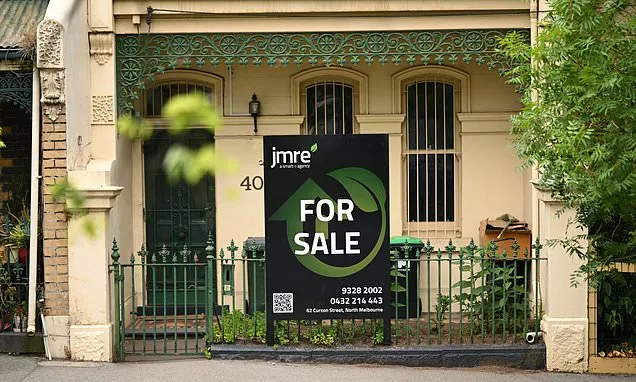
Aussies splashing their cash on popular weight loss drugs could be unknowingly hindering their borrowing capacity in the eyes of lenders.
Australians are spending hundreds of dollars a month on popular weight loss medications like Ozempic, Mounjaro and Wegovy.
And while their eyes are focused on the scales, they may not be considering the impact the drugs are having on their ability to buy a home.
Research from Money.com.au has shown the average Aussie using GLP-1 medications, like Ozempic, is spending $610 a month.
And it could mean they're slashing their borrowing power by as much as $100,000.
About 17 per cent of Australians currently take GLP-1 medications, but only seven per cent take the drugs to manage a health condition like diabetes.
The platform's mortgage expert Debbie Hays said lenders were taking regular spending on GLP-1 medications into account when reviewing borrowers.
She said the monthly spend may be factored into the Household Expenditure Measure (HEM) assessment, a benchmark used by Australian lenders.
Aussies using certain weight loss drugs may be in for a shock when applying for a home loan
Many borrowers aren't taking into account their weight loss drug spending when applying for a home loan
The benchmark gives lenders a minimum expected level of household spending and is often used alongside or instead of the borrower's self‑reported expenses.
Ms Hays warned if the drugs were being used for medical weight loss, they may be classified as a discretionary expense like health insurance or private school fees.
She said lenders would ask questions if bank statements revealed hundreds of dollars were being spent on GLP-1 medications each month.
'When you submit your bank statement to a lender it is their obligation to go through them, and if they find a regular direct debit of $700 they will question what it is,' Ms Hays told the Daily Mail on Thursday.
'It's a higher expense than private health cover for a single applicant so a lender can determine it reduces their borrowing capacity by $80,000 to $100,000.'
Ms Hays said hopeful homeowners on the drugs could be in for a rude shock.
'They don't even think about it and as a borrower you must think everything is against you with the current cost-of-living,' she said.
'They're grappling with two different things.
Drugs like Ozempic could impact the size of a loan for a borrower
'If someone is overweight and starts taking these drugs and they're also wanting to save for a home, it impacts their borrowing ability.'
An example of a child-free couple earning a combined $220,000 annually, with an additional $610 monthly expense on GLP-1 medications, when considered outside the HEM, could see their borrowing capacity reduced by $100,000, depending on the lender.
Modelling shows their maximum borrowing capacity could plunge from $1.2million to $1.1million, based on a 30-year owner-occupier loan with principal and interest repayments and a Loan to Value Ratio below 80 per cent.
For the average Australian spending $610 a month on GLP-1 medications, it's equivalent to about 15 per cent of the typical $4,180 monthly mortgage repayment.
And younger Aussies are expected to be hit hardest, with 18 per cent of Millennials spending up to $760 a month on weight loss drugs.
In contrast, only eight per cent of Gen X and two per cent of Baby Boomers reported using the medications for weight loss.