The Super Bowl 2026 is just days away from airing which means the country will soon feast upon a smorgasbord of big budget commercials in-between the hotly anticipated game.
This year, billion-dollar brands have shelled out on average an eye-watering $8 million for just 30 seconds of airtime.
These marketing campaigns will no doubt include out of the box ideas and A-list celebrity cameos as businesses attempt to capture attention, make their mark and recoup their money.
In the past, some companies have managed to succeed in creating an ad for the ages - but not all have been so lucky.
As the Seattle Seahawks prepare to take on the New England Patriots at Levi's Stadium, Santa Clara, California, on Sunday, the Daily Mail reveals the commercials that ignited outrage and sparked conversation for all the wrong reasons.
Here are the most controversial Super Bowl commercials of all time.
Just for Feet's 'racist' ad prompted lawsuit and bankruptcy
Just for Feet's 1999 Super Bowl advert was so bad the company sued its advertising agency and never recovered from the damage it caused.
Deemed 'racist' by furious viewers, it showed a barefoot Kenyan runner being hunted down by mercenaries, who drugged him and knocked him out cold.
When the runner woke, he had Just for Feet shoes on him.
A spokesperson for the brand claimed it was trying to communicate that their consumers would do anything to get their hands on a pair of shoes.
However, the ad was met with fierce outrage, especially because it showed four individuals hunting down a Black man.
Just for Feet sued the advertising agency, Saatchi & Saatchi, for $10 million but the lawsuit was dropped when the shoe company filed for bankruptcy.
Hims and Hers accused of shaming obese Americans
Hims and Hers was slammed last year by fans who claimed it admonished Americans for being obese and shamed the healthcare industry before the brand then promoted its own weight loss drugs.
The 60-second commercial, set to rapper Childish Gambino's hit This is America, showed a parade of overweight Americans.
It then called out the healthcare system for profiting off people's ill health before promoting its Ozempic-alternative weight loss drug.
At the time, Super Bowl viewers blasted the brand's hypocrisy on X (formerly Twitter), with one writing: 'The most anti-America Super Bowl ad?
'Easily the Hims & Hers spot -- pretending to critique the broken food system while pushing sketchy, unapproved Ozempic knockoffs.'
'You're part of the system,' another said. 'You're selling drugs and profiting off of failure!'
84 Lumber used immigration as a marketing ploy
The 84 Lumber commercial saw a Spanish-speaking mother and daughter face a giant wall as they tried to reach the US
In 2017, 84 Lumber sparked a furious debate with its nearly six-minute ad that depicted a Spanish-speaking mother and daughter's journey to the United States.
The commercial, which aired weeks after President Donald Trump's inauguration, showed the duo traveling until they reach the border, only to be met with a wall.
Audiences couldn't hide their anger as they blasted the company for using immigration as a marketing ploy.
In a statement to the Wall Street Journal, 84 Lumber's president and owner, Maggie Hardy Magerko, said: 'Even President Trump has said there should be a "big beautiful door in the wall so that people can come into this country legally."
'It's not about the wall. It's about the door in the wall. If people are willing to work hard and make this country better, that door should be open to them.'
Groupon poked fun over political unrest in Tibet
Groupon sparked outrage in 2011 when it made light of the political turmoil in Tibet.
The Super Bowl commercial, which was deemed 'tasteless,' featured Timothy Hutton.
'The people of Tibet are in trouble, their very culture in jeopardy,' Hutton said in the ad.
'But they still whip up an amazing fish curry. And since 200 of us bought on Groupon.com we're getting $30 worth of Tibetan food for just $15 at a Himalayan restaurant in Chicago.'
Shortly after it aired, Groupon CEO Andrew Mason issued a statement in which he said the ad was intended to be a 'spoof' of celebrity-endorsed public service announcements.
'Groupon takes the suffering of Tibet seriously and intends to raise money for the Tibetan people,' he said.
Focus on the Family promoted anti-abortion
One of NFL's own was heavily criticized by women's groups in 2010 after he pushed viewers to celebrate life and avoid abortion.
Then college football star Tim Tebow appeared in Focus on the Family's commercial, which told the story of Pam Tebow’s pregnancy in 1987 with the theme of ‘Celebrate Family, Celebrate Life.’
After falling ill during a mission trip to the Philippines, the mom ignored her doctor’s recommendation to abort her fifth child and gave birth to Tim.
The commercial was met with fierce outrage from women who said it should have never been approved to air in the first place.
At the time, the New York-based Women’s Media Center coordinated a protest with backing from the National Organization for Women, the Feminist Majority and other groups.
‘An ad that uses sports to divide rather than to unite has no place in the biggest national sports event of the year - an event designed to bring Americans together,’ Jehmu Greene, president of the Women’s Media Centre, said.
Snickers ad slammed for being 'homophobic'
In 2007, a Snickers ad sparked furious backlash and was later pulled from the air for being homophobic.
The ad showed two men eating a Snickers bar Lady and the Tramp-style and accidentally kissing.
After the two kissed, they immediately screamed and demanded they do something ‘manly.’
Many viewers claimed the commercial was promoting the idea that gay men couldn’t be manly and fueling anti-gay bullying.
The ad was criticized by the Human Rights Campaign and the Gay and Lesbian Alliance Against Defamation.
In a statement, Human Rights Campaign president Joe Solmonese said: ‘This type of jeering from professional sports figures at the sight of two men kissing fuels the kind of anti-gay bullying that haunts countless gay and lesbian school children on playgrounds all across the country.’
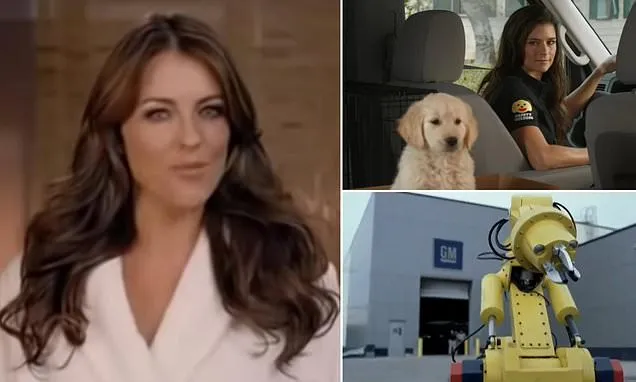
General Motors featured a robot suicide
During the 2007 Super Bowl, General Motors ran an ad that saw a robot take its own life
General Motors also caught flack for its 2007 Super Bowl ad.
The commercial showed a robot killing itself after it was fired from the company's factory for committing a minor error on the job.
After the robot was let go, viewers saw it struggle to find meaningful work before throwing itself off a bridge in the middle of the night.
And while the robot didn't actually die and the story was all a dream, many viewers had an issue with the explicit suicide imagery.
A spokesperson for the automotive manufacturing company claimed the ad was meant to showcase the company's obsession and commitment to making quality automobiles.
But the American Society for Suicide Prevention made its objection to the commercial very clear.
GoDaddy appeared to promote puppy mills
Website domain company GoDaddy angered animal rights activists in 2015
GoDaddy pulled its Super Bowl commercial in 2015 after getting an earful from furious animal rights activists.
The domain name company's ad was roundly criticized for seemingly making light of puppy mills.
The advert opened with a nine-week-old dog riding in the back of a truck before being thrown out.
After facing a treacherous journey home across train tracks and bridges and through mud and rain, the puppy found its way home and ran into his owners’ arms.
But in a cruel twist, the owners were only happy to see their puppy because they had sold him on a website they set up with the help of GoDaddy.
The dog was then promptly put in a van and driven away by GoDaddy spokesperson and racing star Danica Patrick.
At the time, GoDaddy CEO Blake Irving posted a statement on the company's blog addressing the firestorm and argued that the goal was to 'increase awareness' of the company's commitment to helping small businesses build an online presence.
'However, we underestimated the emotional response,' Irving conceded.
Nationwide Insurance focussed on dead boy's missed milestones
That same year, Nationwide Insurance brought on vicious criticism when it aired a 'dark' and 'depressing' commercial about a young boy who died in an accident.
The 2015 advert opened with a young boy discussing the various milestones he will miss throughout his life including learning to ride a bike, receiving 'cooties' from a girl and getting married.
'I couldn't grow up,' he said. 'Because I died from an accident.'
The advert showed a haunting image of an overflowing bathtub that makes viewers presume the child died by drowning, alongside the words: 'The number one cause of childhood deaths is preventable accidents.'
Within seconds of airing, thousands of football fans took to social media to express their disgust.
Dodge branded sexist for showing men complaining about their wives
Car company Dodge sparked fierce outrage and was branded 'sexist' in 2010 after it aired an ad that featured men listing various annoyances they had with their wives.
The commercial featured multiple men blankly staring into the camera claiming they would attend work meetings, take their wives’ call, wash the sink, put the seat down, and other complaints they had with their partners.
At the end of the list, one of the men said: ‘And because I do this, I will drive the car I want to drive. The Charger, man’s last stand.’
The commercial was slammed by viewers, especially women, who claimed the ad was aimed solely at men and attempted to convince men to buy the car to feel more ‘manly.’
It was also said to be offensive because it emphasized the idea by purchasing the car, men will be protesting against women.
Groupon compared rainforest deforestation to waxing
Coupon company Groupon came under fire for an ad that compared the deforestation of the Brazilian rainforest to a Brazilian bikini wax.
In the ad, which aired in 2012, actress Elizabeth Hurley said that ‘not all deforestation is bad.’
She continued: ‘And since 100 of us bought on Groupon.com, we’re all saving 50 per cent on a Brazilian wax at Completely Bare in New York City.’
The commercial was met with so much criticism that Groupon’s co-founder Andrew Mason issued a statement on the site explaining the about-turn.
‘We hate that we offended people, and we’re very sorry that we did - it’s the last thing we wanted,’ he said.
Mason added that the ads would be replaced with ‘something less polarizing.’
PETA claimed 'vegans last longer' in bed
PETA aired a NSFW commercial during the 2016 Super Bowl which left viewers at a loss for words.
The ad attempted to convince football fans that those who don't eat meat last longer in bed than those who do and raised eyebrows for showing two scantily-clad couples in between the sheets.
It was soon banned for its explicit content.
PETA's Senior Vice President Lisa Lange said that banning the advert meant viewers were missing out on 'comedy and sex appeal.'
She said in a statement: 'Super Bowl 50 audiences will be missing out on comedy, sex appeal, and the lifesaving message that vegan meals can help clear clogged-up carnivores and get their blood pumping again.'
'PETA's edgy but crowd-pleasing TV spot shows that vegans may have a banana in their pajama pocket,