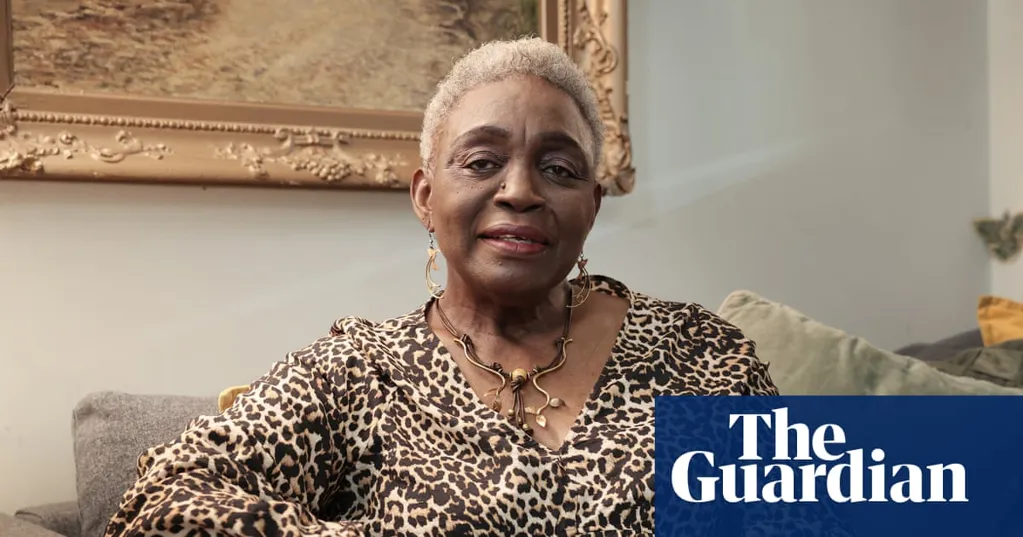
"I am fed up of being called names. I know I am Black. I was born Black. And I love being Black. So tell me something I don't know." Those words, uttered 50 years ago as a young nurse facing regular racial abuse from patients on a London hospital ward, were a turning point in Allyson Williams's life and career.
Williams had come to the UK in 1969 from the anglophile culture of the postwar Caribbean - where children of all ethnicities learned English literature, grammar and history by heart - only to be attacked in "the mother country".
She is now among those who, having dedicated their lives to the NHS, fear the UK still does not properly appreciate the outsize contribution made to UK healthcare by Black, ethnic minority and overseas-born or trained staff - decades after Windrush generation nurses held up the service in its earliest years.
Those professionals included Deloris James, who was born a British citizen in St Kitts and Nevis and moved to Cardiff as 10-year-old in 1964. She was "pushed" into a career in the NHS, following after her mother who was a midwife - 12 other relatives also worked in the health service.
"The stories I hear, it seems as if things have got worse than when I was in the NHS," said James, 71, who worked as a nurse and midwife. "I'm not saying there wasn't racism, but it seems so much more prevalent."
The number of overseas nurses and midwives coming to the UK is collapsing, with rising racism and changes to immigration rules blamed for the fall. In an interview with the Guardian, the chair of the Academy of Medical Royal Colleges, Jeanette Dickson, said the NHS was being put at risk because foreign health professionals increasingly saw the UK as an "unwelcoming, racist" country.
Between April and September, 6,321 nurses and midwives from abroad joined the register of those licensed to practise in the UK, compared with 12,534 who did so in the same period in 2024. In October, the Royal College of Nursing revealed the number of reports by nurses of racist incidents at work had risen by 55% over three years.
Meanwhile, overseas-trained doctors are leaving the UK in record numbers, with 4,880 doctors who qualified in another country leaving the UK during 2024, a rise of 26% on the 3,869 who did so the year before, according to the General Medical Council.
Williams, a writer who came to the UK in 1969 and spent 40 years in the NHS as a nurse, midwife, manager and clinical leader, said: "It's been over 50 years and nobody has learned any lessons. Nobody has seen fit to congratulate or to thank the multi-ethnic people who have come - in our generation to 'rebuild the country', that was how it was put to us.
"I came at a time of brain drain when so many English people had gone to Canada and America and Australia. When I got into the hospital, and in my class, there were 30 girls who were training. One was English, four Irish and the rest were West Indians and west African - of the West Indians, there were 14 of us from Trinidad alone.
"The training and the social life was amazing, but there was a lot of racism from the patients. They would slap you or hit you or push you away. I was called the 'N' word. I was told I was nasty. It was quite disturbing."
After a year, Williams told her mother "she couldn't take it any more", that she felt as if she was "walking on glass".
But her mother told her: "You have a dream. You have wanted to be a nurse since you were small. The racism is their problem. You just get on with your career and find a way to deal with them."
"It actually led me to make that big stand on the ward," Williams, who celebrated the moment in the title of her autobiography, Tell Me Something I Don't Know, said. "I don't know where it came from ... it was the most empowering statement I've ever made - from that point on, [racism] just never bothered me."
Williams would move on to midwifery, where there was much less racism and where she found "bringing life into the world was such a privilege".
She said: “Every now and then you would get a woman saying she doesn’t want to have a Black midwife. But the managers then were very strict. They would say ‘they’re all we have and they’re the best - you either have a Black midwife or you pack up and you go somewhere else’.”
Decades on, and not every Black, ethnic minority, or overseas-born or trained medic feels they can rely on colleagues for support.
The NHS's most recent workforce race equality standard report revealed Black or minority ethnic (BME) women (15.6%) were most likely to have experienced discrimination from other staff in the last 12 months, and 51% of NHS trusts reported BME staff were over 1.25 times more likely than white staff to enter formal disciplinary processes. At 80% of NHS trusts, white applicants were significantly more likely than BME applicants to be appointed from shortlisting.
Alison Hewitt is the second generation of her family to devote her working life to the NHS. Her aunt was a Windrush generation nurse and her mother was a children's nurse - but Hewitt broke the mould to train in radiography 35 years ago, when Black radiographers were a rarity.
She said: “I think a lot of the Windrush nurses kept their mouth shut. Whereas nowadays, you’re constantly battling HR.”
But despite the discrimination and disparities, 28.6% of staff in NHS trusts are Black or minority ethnic and about 20% non-UK nationals.
“There’s at least 27 countries represented where I work,” Hewitt said. “If the Black staff, the Asian staff and the foreign-born staff all went home, the NHS would collapse within hours. We’ve always been brought in to do the difficult work.”
Nonetheless, Hewitt believes that if anything is driving turnover of staff in the NHS, it is “economic betterment” - and Williams agrees.
“Where do you go in the world where there is no racism?” Williams said. “It’s a global, international problem. But what you might find [outside the UK] is that the wages are better or there’s something else to compensate for it.”
Saada Maida, a 41-year-old gynaecologist from Leamington Spa who came to the UK as a refugee from Syria, said NHS staff of all backgrounds shared the common challenge of coping with patients with diverse needs in a “systematically underfunded” system but stressed he had been made to feel welcome - and felt “the UK is one of the least racist nations”.
He added: “The common denominator between these people leaving is feeling somehow that they’re not appreciated in the NHS - if you take a contract in the Gulf, we know it’s systematically full of inequalities more so than the UK but the pay is better. I think all doctors or healthcare professionals leaving the NHS I think the incentive whether they admit it or not is to a great extent financial.”
Having seen so many members of her family devote their lives to the NHS James worries that the service she knew will be lost to cuts and privatisation as well as the pressures facing its “wonderful” staff.
“It makes me feel very sad,” James added. “Here we are again back to the 50s when people were invited to come to Britain to work and rebuild and when they do arrive then they face these hostilities.”