An Australian child safety expert has issued an urgent warning to parents, revealing the simple phrase she says can put children at risk if they haven't been taught how to respond.
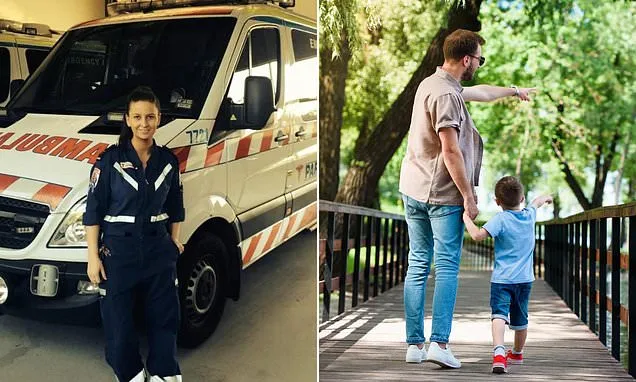
Nikki Jurcutz, a former paramedic and founder of Tiny Hearts Education, says one sentence in particular is commonly used to exploit children's instinct to be kind.
'Your child would willingly go with a stranger tomorrow with this sentence unless you teach them,' she said.
'Can you help me find my puppy?'
Jurcutz explained the phrase is effective because it taps into something parents actively encourage.
'To a child, this sounds like the right thing to do,' she said.
'We raise our little ones to be kind and helpful. And that's exactly what makes it work.'
Rather than appearing threatening, the request sounds harmless - even positive - which can make it difficult for children to recognise danger in the moment.
Nikki Jurcutz, a former paramedic and founder of Tiny Hearts Education, says one sentence in particular is commonly used to exploit children's instinct to be kind
'Safe grown ups don't ask kids for help,' she said.
'If an adult needs help finding something, they ask another adult. If they're asking a child, something is wrong.'
Jurcutz said teaching this distinction gives children a clear, easy-to-remember rule they can rely on under pressure.
Alongside recognising risky situations, she encourages parents to rehearse simple responses with their children so they know exactly what to do.
For example:
- If someone says, 'Can you help me find my puppy?' - children should know not to engage and to move away quickly.
- If someone offers, 'I've got lollies in my car, want to see?' - a child can respond: 'I'll go ask my mum.'
- If approached with, 'Your mummy sent me to pick you up' - they should ask: 'What's the code word?'
Rather than appearing threatening, asking for help looking for a lost pet sounds harmless - even positive - which can make it difficult for children to recognise danger in the moment
Jurcutz said preparation is key, because children often react instinctively in unfamiliar situations.
'Prepare for the just in case. You can't always be there, but your voice can be,' she said.
'Practice these words with your little ones until they become automatic.'
'Because in that moment, they won't have time to think. They'll fall back on what they've rehearsed.'
While the topic can feel confronting, Jurcutz says these conversations don't need to be frightening.
Instead, she encourages parents to approach them in a calm, practical way - focusing on empowerment rather than fear.
'Practising these scenarios at home takes the fear out of the conversation and builds their confidence so they know exactly how to respond,' she said.
Her warning highlights a broader challenge for parents - balancing the desire to raise kind, helpful children with the need to keep them safe.
'We spend so much time raising our little ones to be kind and helpful. This is a beautiful trait,' she said.
'But it means we also need to give them clear rules to keep them safe.'
By reinforcing one simple idea - that safe adults don't ask children for help - experts say parents can give kids a powerful tool to recognise when something isn't right.