Huge numbers and alarming predictions, generated by very human intelligence, are a sure sign of an inflating AI bubble. Like $1.7 trillion in spending on data centers worldwide by 2030.
With at least $670 billion to be spent by Microsoft, Amazon, Meta and Google this year alone, the data center buildout is bigger than the railroad expansion of the 1850s, or putting astronauts on the moon in the 1960s. Top tech and AI companies spent more than $100 million to influence government policy last year, the first time they exceeded that figure.
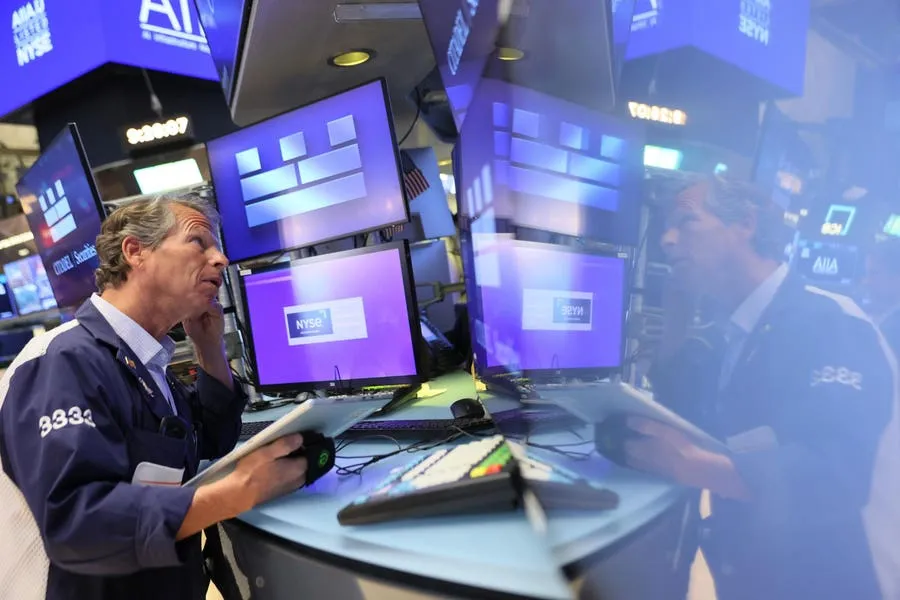
This may slow down AI regulation and calm anxious officials, but Wall Street is starting to worry about the potential impact of these millions and billions. A record share of fund managers now think companies are overinvesting, possibly indicating their rising concern not just about tech giants' capital expenditures on data centers but also about enterprises' spending on integrating AI into their existing IT infrastructure. A key question for investors watching this process of AI adoption is "to Saas or not to Saas"? With so much talk about AI replacing traditional software , components of the State Street software ETF have lost a combined $1.6 trillion in market capitalization this year.
Intelligent humans know how to exploit both irrational exuberance and mistaken anxiety. An AI doomsday scenario, published on Substack last Sunday by little-known Citrini Research, caused (at least in part) a $700 billion meltdown in the first hour of trading the next day. The Wall Street narrative "is no longer set by investment bank analysts... or by traditional business news outlets... Instead, it can be set by Reddit threads, or... by a post on X," writes Bethany McLean.
The viral success of Citrini's speculations about the future leads me to one of my own: Expect more future scenarios and alarming predictions from many more surprising sources, some produced by humans assisted by AI and others generated solely by "AI agents." This is what Richard Rumelt calls the "collapse in the cost structure of persuasion." It used to be that "authority was difficult to manufacture and expensive to sustain." But now the "appearance of that authority can be produced for the price of a sandwich." Rumelt cites an "entirely fabricated" YouTube video revealing billionaire investor Stanley Druckenmiller's playbook for navigating an impending market crash, and the experience of Amelia, a U.K., state-funded character, intended to deter right-wing speech, that was "captured, inverted, scaled, and weaponised using mainstream generative tools available to anyone."
And here's another prediction, going beyond the zero cost of persuasion: Relying on AI for writing means zero thinking. Reacting to a journalist telling other journalists to stop resisting AI, the Wall Street Journal's Matthew Hennessey writes: "Can [AI] spend $45 of the company's money getting drunk on salty margaritas with a government source?" Beyond the obvious importance of the human connection, Hennessey makes an important observation, apparently not obvious to boosters of AI in education: "I changed my mind several times about what I wanted to say. Writing is like that. It helps you think. Often I don't have an opinion until I try to write it."
"Damn the thinking, full speed AI" has become the prevailing mantra even at a company that for years has started each important meeting with everybody reading in silence a six-page document describing the product or project to be discussed. But now, Amazon's leadership is encouraging employees to let AI write for them.
"The worry within the company," writes Kristi Coulter, "is that Amazon is losing sight of writing's centrality in its deliberative, thoughtful culture as it pursues powerful, new tools. "Writing is thinking," Kristi quotes a longtime company veteran. "That was the whole point of Amazon's writing culture. I can't tell you how many times I changed my mind when writing a narrative. And even when I didn't, my arguments were more precise for having written them down. Now we have chatbots writing six-pagers to be summarized [for managers] by other chatbots."
Writing is thinking and thinking is understanding, clarifying, revealing, and distinguishing speculation and propaganda from reality and evidence. Like understanding that the AI bubble has been around for a long time and that it's better to call it the data bubble. "AI" provides new tools for processing data, especially of the letter, pixel, and audio sample variety.
The ability of enterprises to absorb and utilize these new capabilities will determine, to a large extent, the demand for the compute capacity of those $1.7 trillion-worth of data centers mentioned above, the future success of tech and AI companies, and how quickly AI will replace traditional software.
So consider this: A recent survey found that 83% of senior enterprise infrastructure executives said that without major upgrades to their data infrastructure, their systems will fail within the next two years. A third said it will happen in the next year. Data -- and the infrastructure supporting it inside and outside the enterprise -- is a crucial part "of the boring foundations that matter when the hype fades," one successful investor told me earlier this month.
A focus on data could also transform what is now considered the AI periphery. India produces 20% of global data and 62% of its citizens use generative AI tools from at least one tech firm. But the country houses only 3% of global data and its leaders aim to change it, putting hosting and servicing data, including local data, at the center of their AI strategy. Beyond business considerations, India also aims to put its unique stamp on AI. As prime minister Narendra Modi puts it: "The guiding spirit, 'Sarvajan Hitay, Sarvajan Sukhaye', reflects India's civilisational philosophy. The end goal of technology should be 'Welfare for All, Happiness of All'. Technology exists to serve humanity, not replace it."
Looking differently at AI, ignoring the hype around AGI and Superintelligence or the fortunes to be made or the millions of jobs to be lost, comes loud and clear from what I consider the AI story of the month: "To Stay in Her Home, She Let In an A.I. Robot," by Eli Saslow of The New York Times.
It's the story of ElliQ, designed by Israeli startup Intuition Robotics to serve as a friendly AI companion for the elderly. "There's nothing quite like her," says Intuition's founder Dor Skuler. "Other places are building the body of A.I. or, in some cases, the brain. We're building the heart."