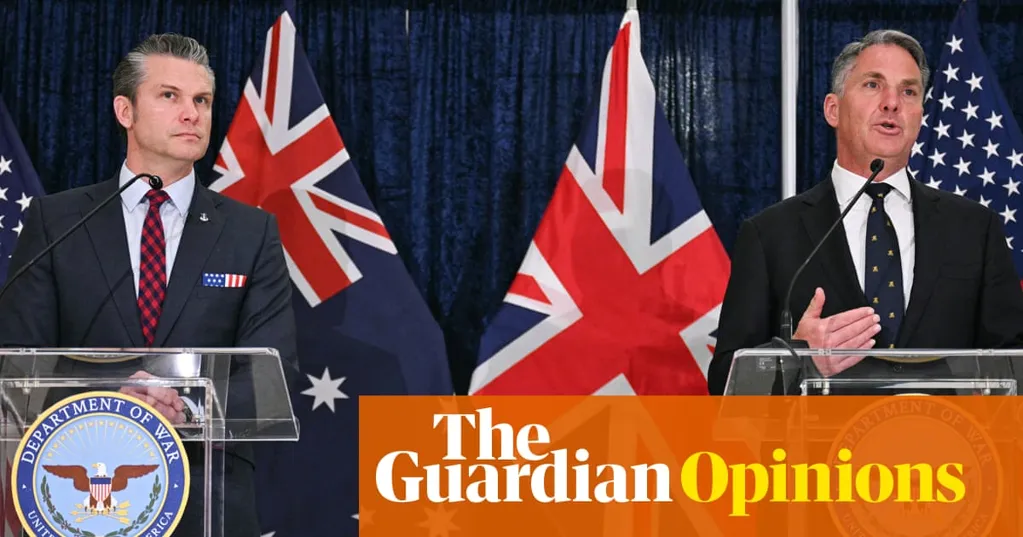
US conduct could become more assertive in the Indo-Pacific in the remaining years of the Trump presidency - with serious implications for Anzus and Aukus.
No matter how the Trump administration seeks to justify its actions in seizing Venezuelan President Nicolás Maduro and his wife in an audacious snatch and grab operation, this has been a gross violation of international law.
The United Nations charter makes crystal clear that all UN members are to refrain from the "use of force" against the territorial integrity or political independence of any state. The US violation of Venezuelan airspace, ensuing airstrikes in Caracas, the seizure of Maduro and his illegal removal from Venezuela are all egregious violations of this. Any suggestion it was justified as an act of US self-defence is not supported by the facts. The US had not suffered a Venezuelan armed attack, nor is there any evidence to suggest such an attack was imminent. Geoffrey Robertson KC has gone so far as to suggest that what occurred was an act of US aggression against Venezuela, which is one of the most serious violations of international law. Russian aggression against Ukraine in February 2022 and the ongoing war that resulted has had an ongoing legacy.
While Australia has been fierce in its condemnation of Russian aggression in Ukraine, the Albanese government's response to events in Venezuela has so far been muted. But there are significant implications for US allies and partners.
The Trump administration says it "will run" Venezuela (a claim top Republicans are already backpedaling). How it will do so is unclear without US boots on the ground. However, as the Trump administration has a narrative of the Maduro regime being intertwined with drug cartels responsible for a flood of drugs into the US, there is every prospect of the US also seeking to replace Venezuela's acting president, Delcy Rodríguez, with a more sympathetic regime.
The White House has also indicated it will seek to control Venezuela's vast oil reserves. Setting aside that US seizure of Venezuelan oil would be a further violation of international law, it is difficult to see how this could be achieved without US boots on the ground or a complicit Venezuelan government.
While there needs to be caution in reading US conduct in Venezuela too widely, given the very particular political and regional content, there are some concerning trends for US allies such as Australia. Those include the increasing willingness of the Trump administration to use military force to advance US national interests. That can be seen by how the US conducted airstrikes in June against Iran in support of Israel and against Islamic State in Nigeria in December, and airstrikes at sea against Venezuelan-linked drug trafficking small craft in the Pacific and the Caribbean. To date, this more assertive US defence conduct has not spread to the Indo-Pacific but there is no reason to suggest that it will not do so during the remaining three years of the Trump presidency.
The US has rarely encountered a robust military response from its recent adversaries but the Indo-Pacific is a very different region from the Caribbean and Latin America. Assertive US defence activity in the Indo-Pacific against drug cartels, so-called "shadow fleets" at sea carrying sanctioned oil, or the Chinese coast guard or PLA navy contesting the US freedom of navigation assertions will result in a heightened regional military response.
For Australia, given that it is deeply entwined in the US military and security framework through Anzus and Aukus, this has particular legal and defence implications. If US military action in the region was challenged, would that trigger Australia's Anzus treaty obligations, and how would Australia precisely come to the aid of Trump-inspired US military adventurism?
These are questions that Australia must ask itself. At their core they go to whether the Trump administration is truly committed to the rules-based international legal order that Australia as a middle power places so much store in. The postwar UN Charter framework has received ongoing bipartisan support in Australia. The Trump presidency may be proving even more of a test for the UN Charter and its values than even the 2003 invasion of Iraq.