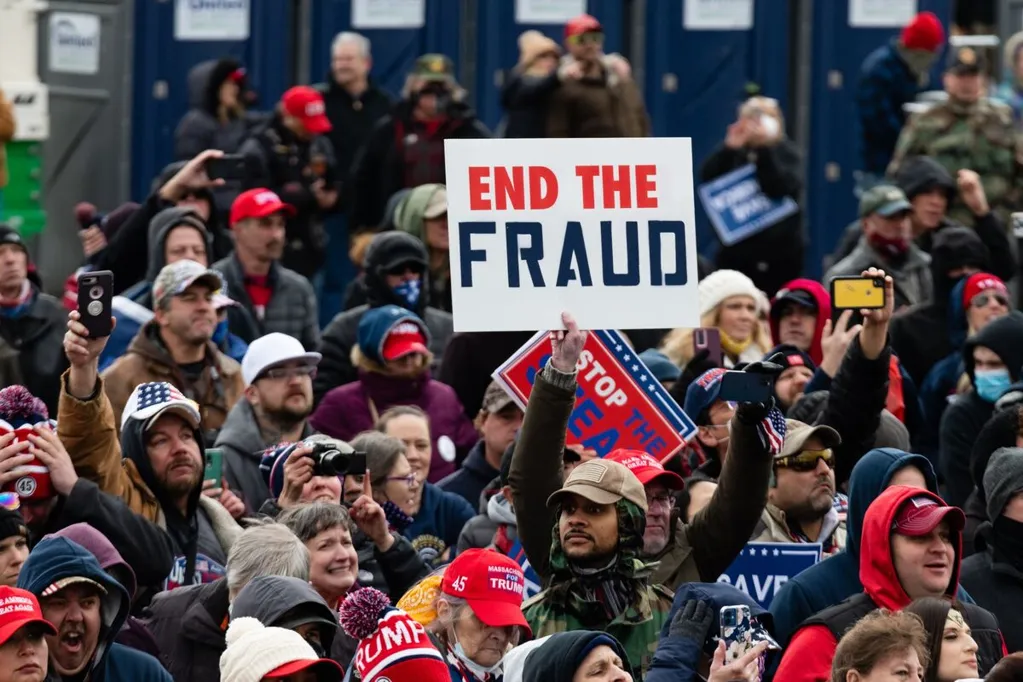
There is no guarantee that the administration won't use the voter list to undermine US elections, such as using insignificant discrepancies to question the validity of election outcomes or sending agents to polling places to verify voters.
The Department of Justice is assembling a first-ever national voter database. It has demanded that states turn over their complete voter registration lists -- loaded with private information such as driver's license and Social Security numbers linked to names, home addresses and dates of birth. It has also turned the federal immigration database into what it calls a national "voter verification" tool to remove large numbers of voters from the rolls.
Each of these moves evades federal privacy protections, but they might not seem objectionable to many Americans. After all, the government already knows much of this information, plus our TSA facial profile and our tax and business information.
But the nation's Founders gave authority over election administration to the states precisely because they were worried about centralizing too much power in the federal government. And in the context of the Trump administration's other activities -- such as the surge of federal immigration agents into blue cities and the president's unsubstantiated claims that "we have very dishonest elections" -- the data grab is downright frightening.
First, there are no safeguards against false matches that wrongly flag eligible voters as noncitizens. A county administrator in Texas warned in a court filing in October that nearly one-fourth of the voters in Travis County were incorrectly identified by the federal program as potential noncitizens.
Second, the DOJ hasn't said how it will keep the data safe from hackers and cybersecurity breaches, raising the risk that millions of Americans could be exposed to fraud and abuse.
Finally, there is no guarantee that the administration won't use the voter list to undermine US elections. Once the DOJ has nationwide voter information, it could use insignificant discrepancies to question the validity of election outcomes. (We saw how far President Donald Trump was willing to go down that path after the 2020 election.) And DHS could use the immigration database to send its agents into polling places to in the name of "verifying" voters. Naturalized immigrants or Hispanic citizens might decide to stay home rather than risk a confrontation. Trump ally Steve Bannon bragged on his podcast last fall that "since we're taking control of the cities, there's going to be ICE officers near polling places."
The federal government could use the database to go even farther, voting experts told me, and seize control of state voting operations or suspend voting in certain states, something that has never happened in US history.
Sound far-fetched? In a recent interview with The New York Times, Trump said "the elections in our country are rigged" and that he regretted not ordering the National Guard to seize voting machines in swing states after he lost the 2020 election. It was just the latest sign that he continues to harbor the long-discredited views that voting machines are dangerous and that the US election system is rife with fraud.
Such scenarios are why 23 states and the District of Columbia -- including the Republican-controlled state of Georgia -- have pushed back on the DOJ and refused to give it unrestrained access to their voter files. The DOJ has sued them all, and groups like the ACLU, Common Cause and other voting advocacy organizations have sided with the states.
Only eight states have either provided or said they will provide their full statewide voter registration lists, but a dozen others -- including the Republican-controlled state of Florida -- have only turned over what's already publicly available, according to the Brennan Center for Justice, which is keeping track.
I've spoken to many county and state-based election supervisors over the years and am often impressed that, no matter their party affiliation, they are committed to ensuring that our one-person, one-vote system stays honest. I've watched rabid partisans get into the job and mellow once they see the elaborate safeguards in place and the importance of maintaining the public's trust. They bristle at the president's unhinged claims.
"If Donald Trump were here right now, I would look at him and I would say, 'Mr. President, you need to get off of your darn social media and shut up. You are propagating more unrest,'" Alan Hays, a former Republican state legislator who became the supervisor of elections in Lake County, Florida, told me one week before the 2024 elections.
Hays said then that the public had undergone a "loss of confidence" in the elections system because of "just blatant lies that have been propagated across this country by a relatively small, but loudmouth group of people." He wanted Trump to "shut up," but the president has since kept talking -- and seeding doubt.
Trump's claims of fraud may be the predicate for the president, now underwater in the polls in every conceivable measure, to claim that if his party loses seats in the midterm elections it is because the voting was "rigged." What's worse, he could use such claims to pursue policies that preempt fair elections. The surge in ICE agents to Minnesota may be the dress rehearsal for November, when armed federal forces could be patrolling polling sites across the country -- and treating Americans like enemy combatants.
If Trump succeeds in undermining trust, intimidating voters and disenfranchising American citizens, he will have achieved what all authoritarians desire: Control of the people through the appearance of consent of the governed. It's the kind of stagecraft Trump might just be able to muster.
But our system is designed to check this kind of power. At least 35 states are resisting so far. Let's hope they prevail.