Dogs aren't straightforward pets, and they are often compared to children. At times, they may ignore cues or push boundaries, which can look like they are testing what they can get away with. But trainers say that assumption doesn't reflect what is really happening.
In human terms, testing is about probing limits -- the act of watching how someone reacts, how consistent they are, and whether they will follow through when it matters. Dogs, however, don't operate that way. They learn through outcomes, not rules, and if a behavior brought a reward before -- attention, food, freedom, or relief -- they are likely to try it again.
"Dogs do not 'test' in the sense that humans do, seeing if they can get away with something they know they're not supposed to do," Hayley Kenner, a New York‑based dog trainer, told Newsweek.
"Rather, they are opportunistic and will do things that have worked for them in the past, even things that only worked once. Dogs spend their whole day watching us, and they have learned how to read and anticipate us. Instead, we have to anticipate them."
Kenner, who is one of the owners of Revival Dog Training, has identified six moments when canines are most likely to be labeled as "testing" their owners -- and why understanding the motivation behind those behaviors can make training clearer, calmer, and far more effective for devoted dog lovers.
When canines rush through doors, it can look like they are trying to get ahead of their owners or make a break for it -- but Kenner said that is not what's happening. Instead, door dashing is usually driven by overstimulation and eagerness.
If a dog dashes and still gets to go on a walk, Kenner added, they learn that rushing is simply part of the process. Practicing calm waiting with the door open removes that opportunity in a controlled way. When the door only opens once the pup is settled, the dog learns a calmer, more appropriate way to ask to go outside -- often leading to a more-relaxed walk overall.
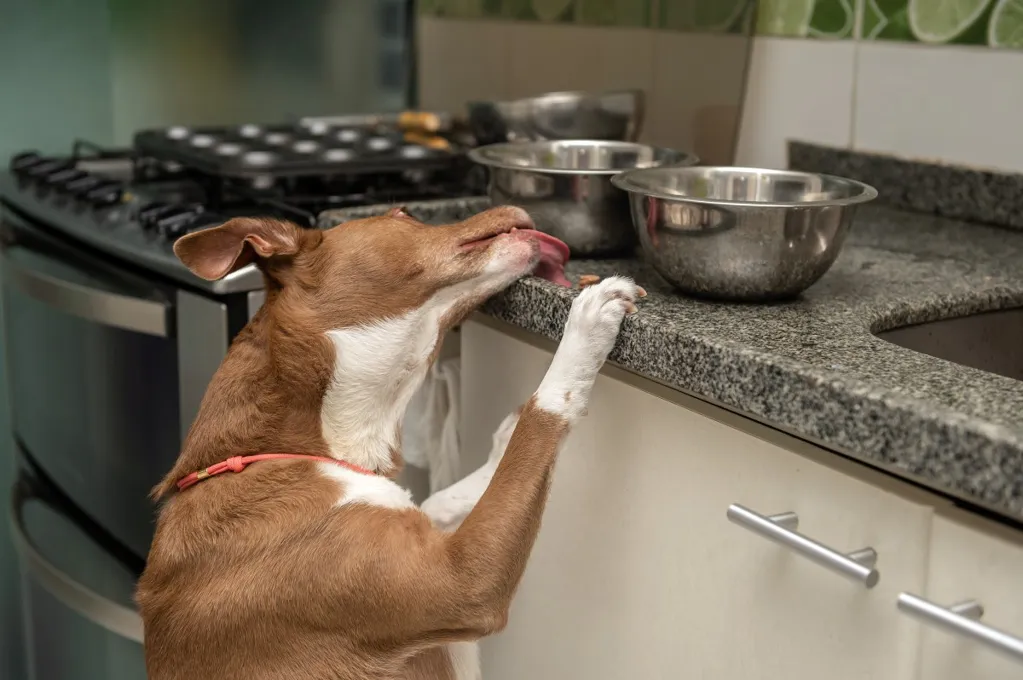
Counter surfing, Kenner said, is about opportunity -- not defiance. To canines, a counter with food is a high‑value reward, especially when it is something irresistible.
Kenner added: "Remove this opportunity entirely and train yourself not to leave food on the counter anytime you are out of the room. Your dog will eventually learn there is no food on the counter and stop looking there."
"Dogs naturally walk faster than us, and leashes are inherently unnatural," Kenner said. "Dogs have opposition reflex, so when dogs pull as we walk them, they learn to associate the natural leash pressure with going in the direction they are pulling."
When pulling results in forward movement, it reinforces the behavior. Kenner recommended pausing when tension appears and waiting for the pup to check back in before continuing. Slowing the pace of the walk can also reduce excitement and help the dog stay more engaged with their handler.
The classic scenario -- your pup darting off with socks while you chase -- is one Kenner said many owners unknowingly turn into a game. From the dog's perspective, this moment is about attention and play.
Kenner said: "Not only does moving toward them activate their 'prey' instincts, but they don't understand human language.
"When we talk to them and try to get our socks back, all they hear is human barking. That means play time!
"Use this as a training opportunity for one of the most useful and dynamic commands: 'Leave It.'
"Start with an exchange rather than taking something away. Exchanging helps dogs learn not to resource guard and teaches them that when you 'ask' for your socks back, it's not a game and socks are not a toy.
"They will learn that other toys will get them the kind of attention they want," Kenner said.
Kenner said these behaviors are a textbook example of "if it works once, it works forever." Barking is highly effective at getting attention, and even negative reactions can reinforce it.
Rather than responding, Kenner advised ignoring the barking entirely. She said: "This can be difficult and requires a lot of patience."
The key is rewarding calm behavior the moment it appears. When canines learn that silence, sitting, or settling earns attention, those behaviors begin to replace barking.
Kenner added that an owner's attention and ability to anticipate behavior are their greatest training tools. By predicting when a canine is likely to take an opportunity -- and removing that opportunity before it appears -- owners set their dogs up for success.
Canines repeat what works. When calm, appropriate behavior reliably leads to what they want -- or something close to it -- they are far more likely to choose it.
Anticipating those moments not only makes training easier, Kenner said, but strengthens communication and trust between dogs and their people.