You're reading The Brink newsletter.
You're reading The Brink newsletter.
You're reading The Brink newsletter.
Get exclusive coverage of corporate distress, bankruptcies and turnaround stories, delivered twice a week.
Get exclusive coverage of corporate distress, bankruptcies and turnaround stories, delivered twice a week.
Get exclusive coverage of corporate distress, bankruptcies and turnaround stories, delivered twice a week.
Bloomberg may send me offers and promotions.
Welcome to The Brink. We're Lars Paulsson and Giulia Morpurgo, and we've been reporting on the cash crunch at Stegra, a green steelmaker based in Sweden. We also have news on MFS, Conair, and confidential oil contracts in Venezuela.
Cash Crunch
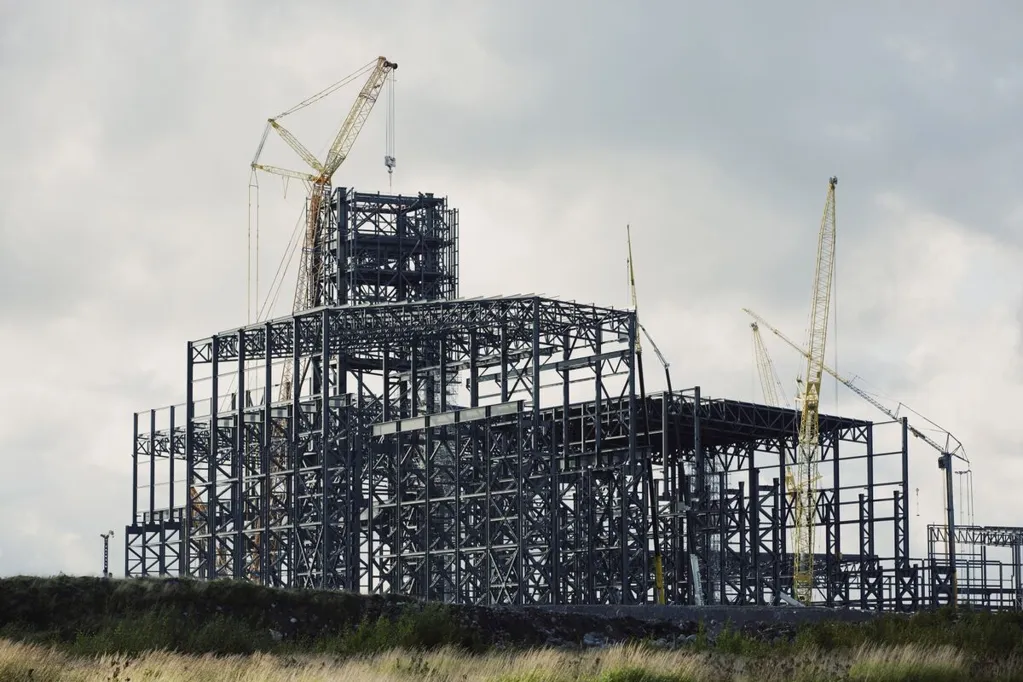
Time is running out for green steelmaker Stegra. The Swedish startup has just weeks before it runs out of cash, forcing it into an urgent search for roughly €1 billion in fresh equity while it seeks to unlock billions more in previously secured credit lines.
The six-year-old company needs funding to complete what it has billed as the world's largest green steel plant in northern Sweden. Without a solution by the end of March, the project risks stalling at a critical stage.
Stegra has been in talks with both existing shareholders and potential new investors since October, when it disclosed that it required additional capital to complete the project. While some current backers have agreed to participate in the latest funding round, commitments so far fall short of the target. The company is now widening its search for new equity partners to close the gap.
At the same time, the company is negotiating with banks to access more than €4 billion in credit lines that have been committed in recent years but not fully drawn. Those facilities are tied to specific conditions and construction milestones that the company has yet to meet. Discussions are ongoing, and the outcome remains uncertain.
The funding squeeze underscores a broader shift in investor sentiment toward capital-intensive green industrial projects. Sweden's Northvolt, once seen as Europe's best hope for building a domestic battery supply chain, went bankrupt last year after failing to secure sufficient backing, prompting criticism of the government for declining to step in.
Both companies are emblematic of Europe's push to build domestic industrial champions at scale, and both relied on a mix of equity injections, large debt packages and strong political backing to fund capital-intensive projects in their early stages. Northvolt's downfall last year exposed how quickly investor appetite can evaporate when costs rise, timelines slip and macroeconomic conditions tighten, leaving even strategically important green ventures vulnerable.
Whether the state should provide funds and grants to private firms like Stegra has become an issue ahead of Sweden's general election in September.
Finance Minister Elisabeth Svantesson has previously said the government has no plans to provide additional funding to Stegra, maintaining that companies must stand "on their own two feet." Officials reiterated this week that there is no change in that position.
High Alert
- Former First Brands Group Chief Financial Officer Stephen Graham pleaded guilty over a massive fraud that drove the auto-parts supply firm into bankruptcy, and he will testify against company founder Patrick James and his brother Edward at their criminal trial.
- Oaktree is considering a $300 million investment in a bankrupt biotechnology fund that Russian billionaire Dmitry Rybolovlev's family trust is seeking to shut down.
- Chinese officials pledged to stabilize the real estate sector at a crucial political meeting, but stopped short of announcing major policies some economists think are needed to turn around a yearslong slump.
- Troubled Brazilian sugar and ethanol producer Raízen said it could go into an out-of-court restructuring process as it looks for a solution for its debt woes.
Notes From the Brink
Venezuela and the US are scrutinizing dozens of confidential oil contracts signed during the reign of ousted strongman Nicolás Maduro.
The deals, conceived as a means of circumventing US sanctions to fund the socialist regime, involved oil fields across the Latin American nation.
The agreements known as productive participation contracts allowed investors to pump and trade crude while keeping their names secret to avoid economic reprisals by the US. The contracts also allowed the government to work with private companies despite legal restrictions on oil sales by non-state actors.
Now, under pressure from the Trump administration, the Venezuelan government is auditing the firms involved, while US officials inspect export paperwork. The inquiries may slow any recovery of the Venezuelan oil sector, especially if it makes other companies reluctant sign new contracts to drill for crude.
Meanwhile, Colombia's richest man Jaime Gilinski and his son Gabriel Gilinski invested $107 million in Latin America independent oil and gas producer GeoPark, Andrea Jaramillo reports.
While the Bogotá-based company operates in Colombia and Argentina, it's the possibility of going into Venezuela that excites the younger Gilinski the most.
"GeoPark becomes the vehicle for oil extraction in Venezuela," he said in a phone interview, adding that he speaks on behalf of himself and not GeoPark. "It's a market where you can easily see oil output triple."
The Latest on... MFS
Banco Santander Executive Chair Ana Botin likened hits from bad loans to jellyfish stings and suggested the lender’s exposure to failed UK mortgage-finance company Market Financial Solutions Ltd. falls into that category, Jorge Zuloaga and Dani Burger report.
“Jamie mentioned cockroaches,” Botin said Tuesday on Bloomberg TV, referring to JPMorgan Chief Executive Officer Jamie Dimon and his description of the risks lingering in credit markets. “I think of this as jellyfish on a beach.”
“You still go in the water,” Botin said, responding to a question about Santander’s exposure to the company known as MFS. “Sometimes you get stung a bit, but when you’re careful it doesn’t matter. You can still swim.”
Santander is owed between £200 million ($267 million) and £300 million by a company tied to MFS, according to Constantine Courcoulas and Donal Griffin’s reports.
Elliott Investment Management holds about £200 million of mortgage-backed facilities tied to the failed lender while Japan’s SMBC has about £100 million of exposure, people familiar with the matter said. Macquarie Group is among the investors in MFS with an exposure of less than £50 million, another person familiar said.
By the Numbers
The price of Conair loans has climbed in recent days after the maker of personal care and small home appliances reported better-than expected fourth quarter earnings last week, Soma Biswas and Reshmi Basu report.
The company posted a 30% year-over-year drop in earnings before interest, taxes, depreciation and amortization to $58 million, and a revenue drop of around 5% to $596 million in the fourth quarter of 2025, beating lenders’ expectations of double-digit declines, according to people familiar with the matter. It also guided for rising revenue and earnings in the coming quarters.
Even the drop in revenue was a significant improvement compared to steeper declines in prior quarters. The company was expected to post a significant fall in earnings because of discounting and increased ad spending during the holiday season, as well as costs incurred from shifting sourcing to low-tariff countries, the people familiar said.
A Conair spokesperson declined to comment.
The company’s $1.27 billion term loan took a plunge last year due to the impact of tariffs imposed by President Donald Trump last year. On Friday, the loan traded at about 59 cents on the dollar, up from 51 cents a week before.
Conair is among hundreds of companies suing the US government for refunds on tariffs. The outcome of the lawsuit and timing of any payment is murky, and isn’t something the company’s lenders are counting on, one of the people familiar said.
The company is set to hold an earnings call with lenders later this month, a person familiar said.
More From The Terminal
Thank you for reading The Brink, Bloomberg's twice-weekly newsletter on corporate crisis and distressed debt. Contact us for feedback and tips at debtnews@bloomberg.net.