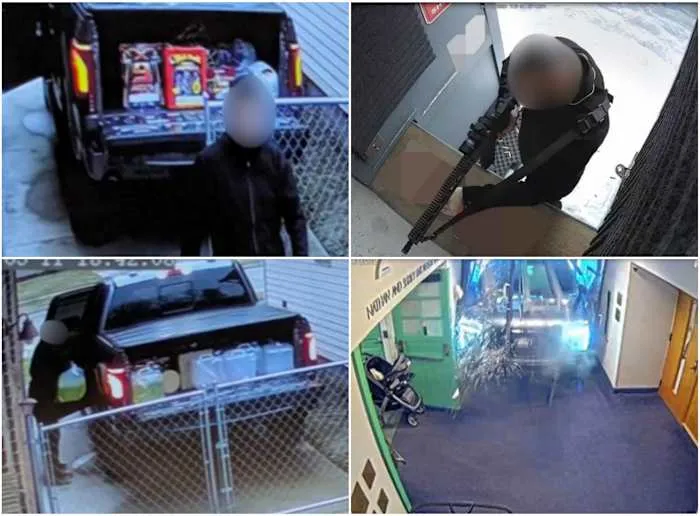
WEST BLOOMFIELD TOWNSHIP, Mich. - The FBI has released a detailed timeline of the March 12 attack on Temple Israel in West Bloomfield, concluding it was a Hezbollah-inspired act of terrorism deliberately targeting Michigan's Jewish community.
Jennifer Runyan, special agent in charge of the FBI Detroit Field Office, laid out the findings at a press conference on Monday, March 30, saying investigators processed hundreds of digital and forensic evidence items and conducted more than 100 interviews of witnesses, family members, and associates.
"Despite the fire in the truck and the assailant's attempts to delete his digital footprint, we have processed hundreds of digital and forensic evidence items," Runyan said.
The FBI defines terrorism as a violent criminal act by an individual inspired by or associated with a designated foreign terrorist organization. Runyan said agents did not make that designation lightly.
"In this case, the evidence shows the attacker was motivated and inspired by Hezbollah militant ideology," Runyan said.
Activity dating back to January 6
A review of his internet activity dating back to January 2026 revealed a consistent pattern of consuming pro-Hezbollah news channels, Iranian news channels, and videos about shootouts and bullets.
He regularly watched live coverage of Hezbollah Secretary-General Naim Qassem and followed news "about an Iranian fatwa calling for total jihad against the U.S. military," according to the FBI.
March 9: Weapons, ammunition, and target research
The attacker's direct planning began in the early morning hours of March 9, when he started searching the web for local synagogues.
By afternoon, he tried to purchase a weapon from two different people, both of whom FBI agents have since identified and interviewed. When those attempts failed, he went to a gun store in Dearborn Heights and bought an AR-style rifle, 10 rifle magazines, and approximately 300 rounds of .223 rifle ammunition.
While still at the gun store, he also placed an online order for a rifle magazine pouch and 40 collapsible 5.3-gallon water containers. He then began searching for local fireworks vendors, according to the FBI.
That night, he spent hours browsing websites for Jewish cultural, educational, and religious centers across the Metro Detroit area, including multiple pages covering upcoming events at Temple Israel.
March 10: Practice, fireworks, and more research
On March 10, the attacker continued searching online using specific phrases, including:
- "largest gathering of israelis in Michigan"
- "orthodox synagogues"
- "israeli near me"
- "what time is the trump rally in Michigan"
- "a center affiliated with the israeli embassy in Michigan"
He later tried to delete those searches. Investigators were able to recover them.
At about 1 p.m., he went to a local shooting range and practiced firing his newly purchased rifle.
An hour later, at about 2 p.m., he drove to the fireworks vendor he had researched and spent more than $2,200 on fireworks.
After leaving the fireworks store, he continued looking at web pages about Temple Israel, its clergy, and upcoming events.
March 11: "Vengeance" album, gasoline runs, and posts
In the early morning on the day before the attack, he created a Facebook photo album he titled "Vengeance" and began filling it with images that included photos of the late Iranian Supreme Leader Ayatollah Ali Khamenei and the late Hezbollah Secretary-General Hasan Nasrallah.
One image included Arabic text reading: "Burn their world, for we have a vendetta against them, and we will never forget."
He also posted photos of deceased family members, brothers, a niece, and a nephew, and exchanged messages with relatives that morning, according to the FBI.
The water containers that he had ordered while at the gun range arrived at 2:22 p.m.
By 2:45 p.m., he began loading and organizing his truck.
To avoid drawing suspicion, he made four separate trips to gas stations to fill the containers, spreading out the purchases rather than filling them all at once, according to the FBI.
While making those gas runs throughout the afternoon, he continued researching Temple Israel's events online. By 6:30 p.m., he was posting pro-Hezbollah propaganda to social media, including videos about his brother and content claiming Israel is "the most violent country in the world," the FBI said.
Among the posts he shared that day was a statement from the Islamic Resistance of Hezbollah announcing a military operation launched on March 11 called "Al-'Asf Al-Ma'kool," a Quranic term referring to the destruction of enemies and turning them into withered, dead leaves.
The post included the logos of the Military Media of the Islamic Resistance and Lebanese Hezbollah. He also shared a meme featuring the actual verse from the al-Fil chapter of the Quran which describes a similar theme of destroying one's enemies.
At approximately 9:40 p.m., he searched online for "what time is lunch at temple israel." He later deleted this from his search history.
By 10:50 p.m., he made one last stop at a gas station and bought two torch lighters. Investigators believe he used these to set his truck on fire during the attack.
March 12: The morning of the attack
During the early morning hours on the day of the attack, the attacker posted more photos of his deceased family members on Facebook and began leaving comments on random Facebook profiles.
Those comments, timestamped by investigators, included:
- 2:51 a.m.: "We will seek retribution for their sacred blood."
- 3:05 a.m.: "Simo, Heaven is fortunate to have you." (a reference to his brother)
- 6:24 a.m.: "Israel is a cancerous/malignant growth."
- 6:28 a.m.: "Israel is pure evil."
- 6:55 a.m.: "And the oppressors will soon know what kind of end they will meet."
At 6:56 a.m., the FBI said he searched online for additional rifle accessories.
At 7:20 a.m., he posted on Facebook and said: “You killed the Ali and Hussein of our time; we will avenge their blood.”
He also added more comments across various Facebook posts and continued uploading images to his “Vengeance” album.
Between 8:45 and 9:52 a.m., he went on the websites for a local firearms vendor and a sporting goods store, and also searched for a double magazine holster.
March 12: En route to Temple Israel
At about 9:18 a.m., the attacker left for Temple Israel.
He arrived at approximately 9:58 a.m.
At 10:01 a.m., he sent his sister a photo of a receipt and said, "$2,000 to dad."
By 10:12 a.m., while sitting in the Temple Israel parking lot, he posted four videos to Facebook that he had recorded while driving to the temple that morning.
In the background of each video, Arabic battle anthems played, with themes centered on resistance, military defiance, and "the impending dawn," according to the FBI.
One minute later, at 10:13 a.m., he posted a photo to his "Vengeance" album with the caption: "There is no need to learn Hebrew anymore."
March 12: Messages to his sister from the parking lot
Beginning at 10:34 a.m., while still parked outside Temple Israel, the attacker sent his sister overseas 19 videos, photos, and messages over the course of roughly 10 minutes.
The communications spelled out his intent clearly: he planned to carry out a mass terrorist attack, and his motivation was rooted in Hezbollah ideology.
Among the content he sent her:
- A meme reading: "Jihad is a gateway to heaven; one that God opens to his chosen ones."
- A Quranic verse overlaid on a photo: "For such He has written Faith in their hearts and strengthened them with a spirit from Himself. And He will admit them to Gardens beneath which Rivers flow, to dwell therein. God will be well pleased with them, and they with Him. They are the Party of God. Truly it is the Party of God that will achieve Felicity."
- A video of himself sitting in the vehicle holding his weapon while an anthem called "This People Sends You a Call" played in the background. The chant praised fighters from South Lebanon and those who die for the cause. At the end of the video, he displayed his rifle and said, "We rely on God."
- A second video with a chant encouraging followers to "bomb the enemies," "bring death upon them," and "invade and attack the enemies' fortresses."
- A video of him listening to Hezbollah Secretary-General Naim Qassem say "that listeners have one of two choices: victory or martyrdom." Arabic text in yellow on the screen read: "I remain committed."
- A video in which he recorded himself driving while a battle song played, one referencing "slaughter and bloodshed" and declaring "it's no time to draw back." During the recording, he yelled "Allahu Akbar" and declared total devotion to God, saying he was "answering the call to heaven."
- A photo with a verse from the Quran at the top saying: "the believers who are true to what they promised God; some have died for the cause, and some are still waiting but will never change." There was text at the bottom saying "Burn or ignite their world, for we have a vendetta that we will never forget."
- A meme in which he covered the Israeli flag with yellow paint and wrote the phrase "Party of God" or "Hezbollah" over it. Yellow is a color commonly associated with Hezbollah symbolism, according to the FBI.
His sister had asked him to stop sending the photos and videos. He continued anyway.
March 12: 10 minutes before the attack
About 10 minutes before the attack, the attacker sent his sister two final videos.
In the first, he said in Arabic: “This is the largest gathering place for Israelis in the State of Michigan in the United States. I have booby-trapped the car. I will forcefully enter and start shooting at them. God willing, I will kill as many of them as I possibly can.”
Shortly after sending that, he sent a brief three-second follow-up video and typed the message: “A special operation.”
During the same window of time, the attacker also exchanged five short phone calls with his ex-wife.
His ex-wife then called the Dearborn Heights Police Department and requested a welfare check for him.
March 12: The attack
At 12:19 p.m., the attacker drove his truck into Door 5 of Temple Israel.
The FBI said he hit it once, repositioned his truck, then accelerated at a high rate of speed, traveling about 200 feet down the hallway.
From 12:20 to 12:22 p.m., the attacker and Temple Israel security guards exchanged gunfire. At approximately 12:22 p.m., the attacker appeared to set off the fireworks from inside the vehicle.
By 12:30 p.m., the vehicle was on fire, and the hallway was filled with smoke.
Apart from the attacker, there were no other fatalities.
"We are very grateful that aside from the assailant there were no additional fatalities," Runyan said. "However this evidence makes very clear that attacker intended to cause significant harm to members and children present at Temple Israel that day."
What investigators found
The FBI said they found no evidence of co-conspirators and said there is no information indicating an active threat to the community.
Runyan also addressed several points of public concern and media speculation:
- At the time of the attack, the attacker was not the subject of any prior FBI investigation and was not on the terrorist watchlist.
- There is no evidence he visited Temple Israel or conducted physical surveillance of the synagogue before the attack.
- There were no additional improvised explosive devices beyond the fireworks.
- Based on the size of the water containers, investigators now believe the attacker used approximately 35 gallons of gasoline -- not the 20 to 30 gallons previously reported -- in an effort to amplify the fireworks he ignited inside the truck.