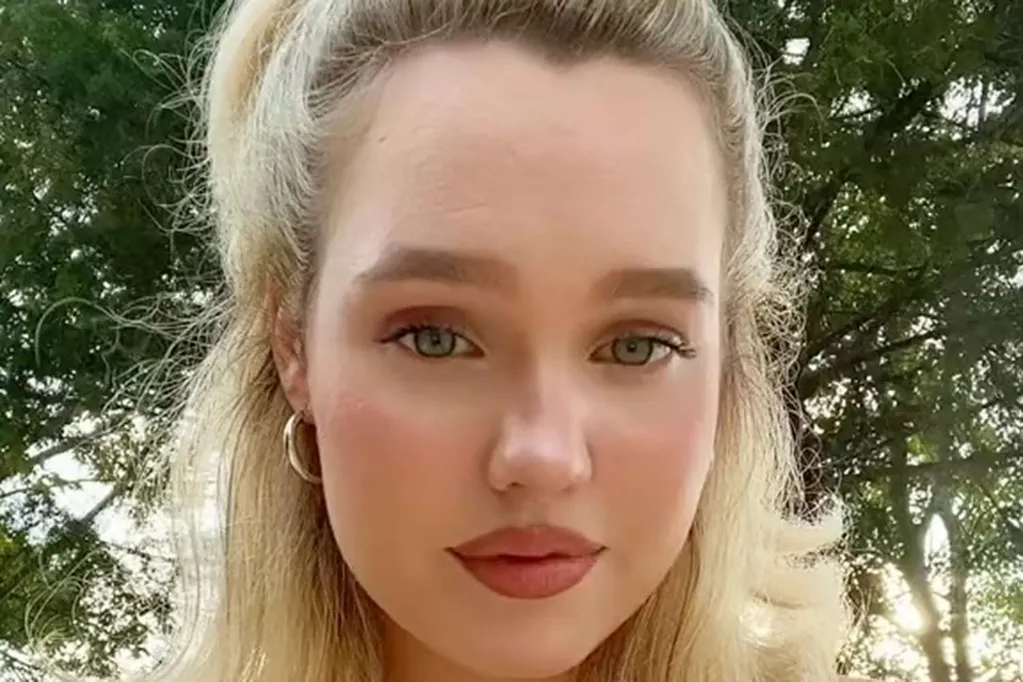
Williams' mother-in-law has continuously shared updates about the infant's condition since doctors discovered she had two holes in her heart shortly after her birth in September.
Influencer Estee Williams has shared a difficult update on her infant daughter's health.
On Wednesday, Dec. 24, the new mom and self-proclaimed tradwife posted on her Instagram Stories, sharing a photo taken in the hospital with her 3-month-old baby's legs in the corner of the frame.
"My little Estelle went into cardiac arrest in the middle of the night. Chest compressions were done for 47 minutes and she's now on full life support (ECMO)," wrote Williams, who has over 300,000 followers between TikTok and Instagram. "Please keep my sweet girl in your prayers. This next week is a scary time as we see what her next option will be."
The content creator and her husband, Conner, welcomed their daughter on Sept. 5, per a GoFundMe started by Conner's mother, Holly Nielsen. According to an update posted to the fundraiser on Tuesday, Dec. 23, Estelle "lost her pulse and never got it back" before she was put on extracorporeal membrane oxygenation (ECMO).
"In less than 24 hours, Baby E experienced multiple dangerous spikes in her lactate levels. She suddenly turned blue, her oxygen had to be increased, and medications were given to try to stabilize her," the newborn's grandmother wrote.
Nielsen first launched the GoFundMe page to help with treatment costs for the heart defects discovered once Estelle was admitted to the NICU hours after her birth. The fundraiser's description explains how the baby's doctors discovered she had two holes in her heart known as ventricular septal defects (VSD).
According to Mayo Clinic, VSD is a common problem present at birth, and smaller defects can close naturally, causing the infant no problems. Infants with larger VSD can require surgery to prevent complications.
Estelle underwent what Nielsen described as an "extremely difficult and delicate open-heart surgery at just 11 weeks old." The surgeons discovered that one of her VSD was exceptionally large -- the "largest VSD he had ever seen or repaired measuring," per the GoFundMe, which Nielsen opened on Nov. 23, three days after the operation.
The other, lower-positioned VSD "was smaller but difficult to reach, positioned between the aorta and pulmonary arteries," the fundraiser description read. "Surgeons had to cut into her heart muscle to attach the patch for the largest hole."
"Conner works full-time and has a part-time job; we don't know when he will be able to return to work. That will depend on when she can come home. No parent should have to choose between being at their critically ill baby's bedside and being able to support their family," Nielsen detailed.
On Dec. 13, she updated the GoFundMe -- which has raised about $15,850 toward its $18,000 goal, as of Dec. 24 -- to share that Estelle required another open-heart surgery, which was determined a success. The infant had her breathing tube removed and was finally able to go home.
The latest update on the child's condition recalled how Williams texted Nielsen around 12:40 a.m., writing "Bad Bad Bad." Minutes later, a social worker phoned on behalf of Conner, informing his mom that medical personnel were performing CPR on Estelle. They successfully placed her on ECMO while Nielsen was on her way to the hospital.
Since the overnight emergency, the concerned grandparent says Estelle’s “lactate levels have steadily improved,” and the infant’s neurological status is now their greatest concern.
“Thankfully, her first head ultrasound showed no bleeding and a normal-looking brain. She will continue to have daily ultrasounds. Even more encouraging, the EEG she is continuously monitored on shows normal brain activity,” Nielsen wrote on the GoFundMe page.
“The next few days are incredibly critical. If she continues to stabilize, the next step would be transitioning to [Ventricular Assist Devices (VAD)]. At that point, she will need to show that her lungs can function fully on their own,” the update continued. “If she can do that, she will be eligible to be placed on the heart transplant list — a process that could take anywhere from 3 to 6 months.”