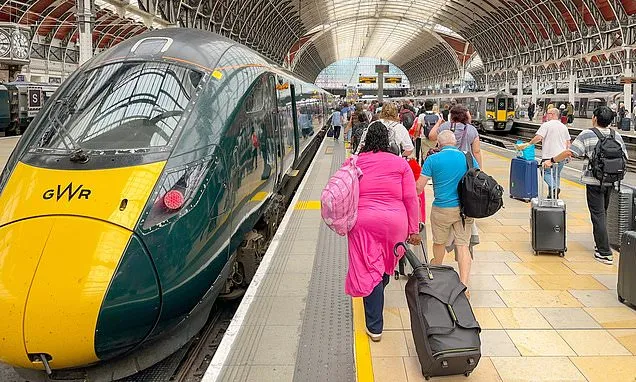
Millions of Brits are still overpaying by hundreds of pounds per journey because of outdated booking habits, a train travel expert has revealed.
Pete Walls, co-founder of Split My Fare, warned that even with the current freeze on rail fares, persistent myths about how to book trains are costing passengers money on every trip.
Pete said: 'People aren't getting ripped off because they're careless.
'They're getting caught out by a system so complex that outdated rules of thumb feel like common sense, but those assumptions are costing them real money, every single trip.'
Here's a rundown of the biggest train myths that are costing passengers extortionate amounts...
Myth 1: Booking earlier is always cheaper
The assumption that the earliest booker wins the best fare is one of the most persistent and costly myths in UK rail travel.
Advance tickets are released in batches, and pricing shifts as departure approaches, meaning you might not get as good a deal booking far in advance as you'd expect.
For example, on the London Euston to Manchester Piccadilly route, booking 12 weeks ahead for the 10.46am service costs £42.90.
However, if you book the exact same train just two weeks out, the fare drops to £14, leaving you £28.90 better off.
This pattern isn't guaranteed on every service - pricing varies by route, operator, and demand - but it happens far more often than most passengers realise. It's worth checking fares at different booking windows rather than assuming earlier is always cheapest.
'Rail operators release tickets in tranches with different pricing strategies,' Pete explains.
'Sometimes, advance allocations closer to travel are cheaper because operators are trying to fill remaining seats. It's also worth checking trains just minutes before or after your preferred time, as we found services priced £29 apart on the very same search within the same hour.'
Myth 2: Return tickets are always better value
Returns used to be the obvious choice, and while they're now frozen until March 2027 as part of the Big Rail Fare Freeze, two advance singles can still cost less than half the price if you're willing to commit to specific trains.
'The return ticket gives you flexibility and won't rise in price during the freeze,' Pete says.
'However, Advance fares aren't covered by the freeze. But if your schedule is fixed, two advance singles can still cost less than half the price of a frozen return, so it's worth checking your options before you default to a return ticket right away.'
Myth 3: Off-Peak means anytime after 9.30am
There is no such thing as a universal off-peak start time, as rules vary by operator, route, direction of travel, and day of the week. Getting it wrong can cost you £40 to £50 on a single journey, not to mention running the risk of penalty fares.
East Midlands Railway, for example, operates a peak window from 4.35pm to 6.47pm from Monday to Thursday, during which only Anytime tickets are valid.
On Fridays, that restriction disappears entirely.
Greater Anglia’s off-peak rules also shift depending on whether your journey is heading into London or not.
Pete explains: 'We've seen people accidentally buy peak tickets for 9.35am trains, genuinely believing they're travelling off-peak.
'The only way to be certain is to check the specific restrictions for your exact route and operator every time.'
Myth 4: You can only split tickets if you change trains
This is, according to the expert, the misconception his team busts most often, and it's entirely false.
Under the National Rail Conditions of Carriage, you can legally split your ticket at any station your train passes through, without getting off.
For example, a standard ticket for London King's Cross to Edinburgh (departing 11.03am, arriving 3.34pm) costs £92.
Split the same journey via Darlington (same train, same seat), and the fare drops to £77.20, a saving of nearly £15 without having to get out of your seat.
'You do not need to get off the train,' Pete explains. 'You just need your train to pass through the split station. It's completely legitimate, and on major routes we regularly see passengers saving 15 per cent to 30 per cent without changing anything about their journey except the number of tickets in their pocket.'
Myth 5: Railcards are only worth it if you travel constantly
Most railcards pay for themselves within two journeys, but many passengers write them off as a commuter perk and lose hundreds of pounds a year as a result.
Railcards work perfectly with the frozen fares, giving you a third off on top of prices that are already locked.
For example, a 26-30 Railcard costs £35 annually and gives one-third off most fares, meaning on a London Euston to Manchester Piccadilly off-peak return ticket, that brings the price down from £79.80 to £53.10, saving £26.70 per trip.
Two trips, and the card has more than paid for itself - and with fares frozen, that saving is guaranteed until March 2027.
Pete adds: 'People assume you need to commute daily to justify a railcard. But the maths are simple. Visit family a few times a year, travel to a handful of away games, or take a couple of weekend breaks, and you're almost certainly leaving £200-300 on the table by not having one - especially now prices are frozen, and your savings are locked in.'