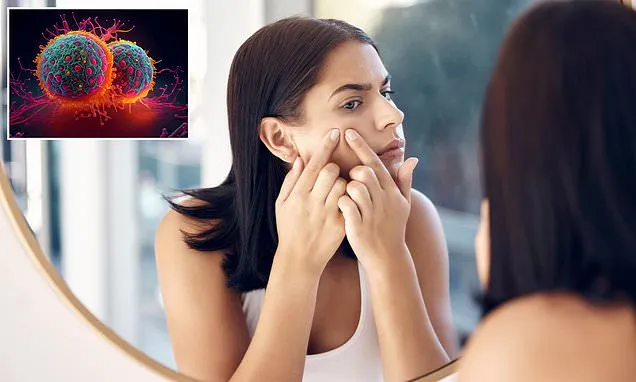
A group of molecules found in trendy anti-aging treatments may actually feed cancer cells, a study has revealed.
Polyamines are natural compounds present in all living cells that trigger autophagy, the body's 'cellular cleanup process' in which damaged components of cells are broken down and reused.
By recycling damaged cell parts, autophagy destroys pathogens and gets rid of parts of the cell that slow the body's overall performance. And during aging, autophagy decreases, leading to a buildup of cellular 'junk.'
To combat the decline of autophagy, many anti-aging skincare products and supplements contain polyamines, specifically subsets called spermidine and putrescine.
Past studies have linked these polyamines to improved lifespans and reductions in age-related memory loss. However, researchers in Japan found spermidine and other polyamines may increase the risk of cancer spreading.
In their 2025 study, experts at the Tokyo University of Science took lab cultures of cervical and breast cancer cells and depleted them of polyamines.
After manually restoring the polyamines with spermidine, they analyzed over 6,700 proteins and found that polyamines activate glycolysis, which rapidly converts glucose into energy and drives cancer progression, rather than typical pathways associated with healthy aging.
Polyamines also increase the expression of certain proteins and the protein EIF5A2, which have been linked to cancer spread.
Additionally, the team discovered EIF5A2 stimulation is usually suppressed by an RNA molecule called miR-6514-5p, but polyamines interfere with this suppression and allow EIF5A2 levels to increase, promoting cancer cell growth.
The researchers wrote: 'Changes in polyamine metabolism are correlated with various pathologies, including cancer and age-related conditions.'
However, how exactly polyamines impact genes related to cancer progression, particularly in breast and cervical cancer, is still unclear.
The findings come as about 324,000 women can expect to be struck with breast cancer this year, according to the American Cancer Society (ACS), while roughly 42,000 will die.
Meanwhile, around 13,000 will be diagnosed with cervical cancer and 4,200 will die in the US in 2026, ACS estimates.
Prior to the study, published last year in the Journal of Biological Chemistry, researchers were aware that there are two forms of the protein EIF5A: EIF5A1, which is widely expressed in normal tissues, and EIF5A2, which is overexpressed in cancers.
However, scientists did not understand why the two nearly identical proteins had different roles.
To investigate this, the researchers took human cancer cell cultures, called HeLa S3 cells, and repleted them of polyamines using drugs to stop them from synthesizing. They then restored the polyamines by adding spermidine.
Polyamines activate both EIF5A1 and EIF5A2. In EIF5A1, polyamines target the cell's mitochondria and trigger autophagy. In EIF5A2, polyamines inhibit miR-6514-5p, which causes cancer cells to spread faster and gene expression to shift toward more pathways related to cancer growth.
Polyamines also increased expression of RNA components called ribosomal proteins. These included RPS27A, RPL36A and RPL22L1, all of which are linked to tumor aggressiveness and spread.
'The biological activity of polyamines via EIF5A differs between normal and cancer tissues,' Kyohei Higashi, study author and biochemist at the Tokyo University of Science, said.
The researchers note that the new study does not prove that polyamines in general cause cancer, but instead the results demonstrate that when cancer has already started, malignant cells can hijack polyamines to survive and spread further.
The team noted understanding the roles of EIF5A and miR-6514-5p may later pave the way for new treatments.
'Our findings reveal an important role for eIF5A2, regulated by polyamines and miR-6514-5p, in cancer cell proliferation, suggesting that the interaction between eIF5A2 and ribosomes, which regulate cancer progression, is a selective target for cancer treatment,' the researchers wrote.