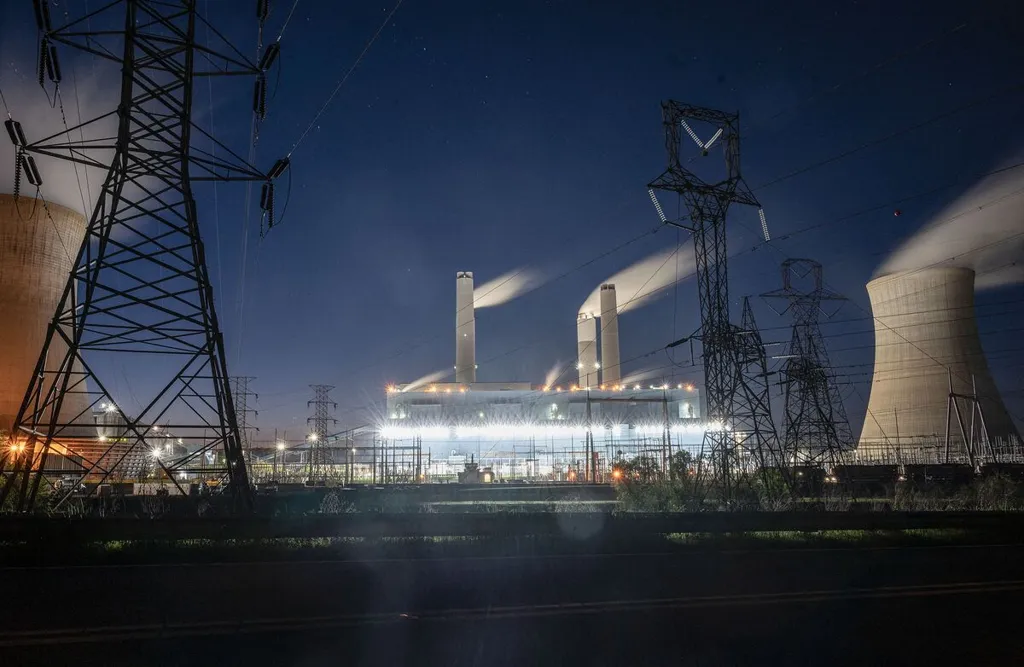
The proposed plant would likely emit about 19.4 million metric tons of carbon dioxide a year, according to Helen Kou, head of US power analysis at BNEF, or 16.2 million tons annually, according to a separate Rhodium Group estimate.
US President Donald Trump's proposal for a massive gas-fired power plant in Ohio would likely create one of the nation's largest sources of carbon dioxide emissions from electricity generation.
While details of the potential $33 billion development are scarce so far, it's intended to be led by SoftBank Group Corp. and is envisaged as having capacity of 9.2 gigawatts, according to a fact sheet from the US Department of Commerce.
That would make the project the biggest US power plant, according to BloombergNEF data, capable of supplying millions of homes with electricity yet also delivering a significant climate impact.
SoftBank declined to comment. The Commerce Department didn't immediately respond to requests for comment.
Assuming the new plant operated at a capacity factor of 65% and deployed typical combined-cycle gas turbine technology, it would likely emit about 19.4 million metric tons of carbon dioxide a year, according to Helen Kou, head of US power analysis at BNEF. A separate Rhodium Group estimate found such a plant might emit 16.2 million tons annually.
The latter estimate is roughly on par with the emissions produced by 3.8 million gas cars over a year of driving, according to the US Environmental Protection Agency's Greenhouse Gas Equivalencies Calculator.
The forecasts compare with total emissions from the James H. Miller Jr. coal-fired plant in Alabama of about 16.6 million tons in 2023, according to EPA data.
The proposed gas plant forms part of Japan's commitment to invest $550 billion in the US under a trade agreement struck last year and extends Trump's campaign to revive and expand the fossil fuels industry. Trump directed the Pentagon this month to purchase more coal power while the EPA scrapped a long-standing policy that underpinned rules on regulating greenhouse gas emissions.
A coalition of 29 environmental and advocacy groups issued a joint statement Friday pressing Japan not to proceed with investment or financing for fossil-fuel projects in the US.
Though the addition of more gas-fired power could potentially displace coal and act to lower power sector emissions, it's more likely that electricity generated from the proposed Ohio facility would meet load growth as the expansion of data centers outpaces supply, according to Nathalie Limandibhratha, an analyst at BNEF.
Ohio and other nearby states produce and draw power from PJM Interconnection, a regional transmission organization seeing particularly strong growth in electricity demand. That pressure is keeping some coal generation operating longer than analysts had expected and has triggered a rush of development of new gas-fired capacity.
US power generation rose to the highest level in two decades last year as data centers and industry boosted demand, BNEF said in a report published Feb. 18 with the Business Council for Sustainable Energy. Coal and gas accounted for about 56% of US electricity generation while power sector emissions rose 3.6% in 2025, the report said.