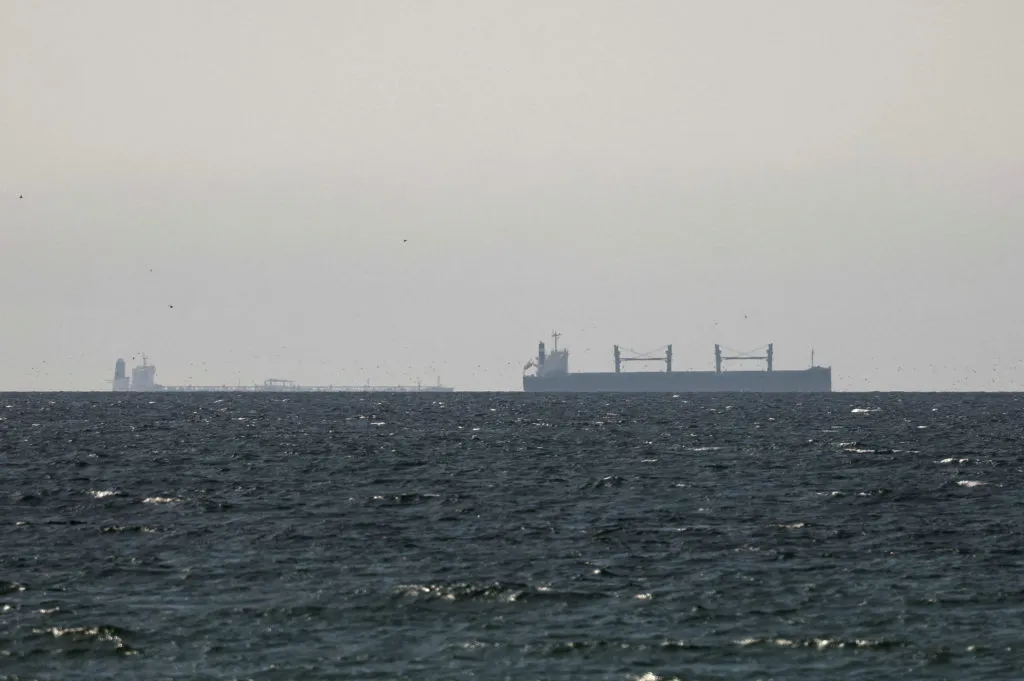
WEST PALM BEACH, Fla. (AP) -- At war with Iran, President Donald Trump is running down an increasingly desperate list of options as he seeks a solution to the crisis in the Strait of Hormuz. It moves from calls to secure the waterway through diplomatic means to lifting sanctions and now moves to a direct threat against the Islamic Republic's civilian infrastructure.
Trump and his allies insist they have always been prepared for Iran to block the strait, but the Republican president's erratic strategy has fueled criticism that he is seeking answers after entering the war without a clear exit plan. On Saturday his last attempt took place, via an ultimatum to Iran: open the strait within 48 hours, otherwise the United States will "annihilate" the country's power plants.
Trump aides defended the threat as a harsh tactic to force Iran into submission. Opponents cast it as the failures of a president who miscalculated what it would take to emerge from a geopolitical quagmire.
"Trump has no intention of reopening the Strait of Hormuz, which is why he is threatening to attack Iranian civilian power plants," said Sen. Ed Markey, D-Mas., adding, "That would be a war crime."
"He's lost control of the war and he's panicking," Sen. Chris Murphy, Democrat of Connecticut, said in response to Trump's message.
Over the course of about a week, Trump repeatedly changed his approach on this crucial waterway for global oil and gas transportation. There is growing urgency for Trump as soaring oil prices shake global markets and pinch U.S. consumers months before crucial midterm elections.
Trump and diplomacy
Trump attempted a diplomatic solution last weekend by calling for a new international coalition to send warships into the strait.
The allies refused it. Trump then said the United States could stand on its own two feet. On Friday, he suggested other countries should take over as the United States considers an exit. Hours later, he said the waterway would "open itself."
"You can't all of a sudden walk away after you've sort of created the event and expect other people to pick it up," said Sen. Thom Tillis, R-N.C. said on ABC's "This Week."
Trump's Treasury Department on Friday made its latest attempt to bring soaring gas prices under control, lifting sanctions on some Iranian oil for the first time in decades. This eased some of the pressure that Washington has traditionally used as leverage against Tehran.
The goal was to send millions of additional barrels of oil to the world market. It is unclear, however, how much this could harm lower prices at the pump or how the administration could prevent Iran from profiting from the recovery in sales.
The administration previously temporarily lifted sanctions on some Russian oil.
An ultimatum to Iran
Trump's ultimatum, issued while he spent the weekend in Florida, carries a remarkable threat of aggression. His previous messages focused primarily on American success in striking Iran's air force, navy and missile production. This time, the target under threat is the energy infrastructure that powers hospitals, homes and more.
His social media post -- 51 words, most in capitals -- did not have the appearance of a message that had undergone the legal scrutiny necessary to justify an attack on civilian infrastructure, said Geoffrey Corn, a professor of military law at Texas Tech University and a retired Army lieutenant colonel who served as a military lawyer.
"There's definitely a sense of stand ready, shoot, aim," Corn said of Trump's shifting strategy.
"He overestimated his ability to control events once he unleashed this torrent of violence."
This type of widespread attack would likely be a war crime, Corn said. For military leaders, it could force a choice between obeying an order to commit a war crime or refusing and facing criminal sanctions for willful disobedience, he said.
Laws governing war do not explicitly prohibit attacks on power plants, but the tactic is only permitted if an analysis finds the military benefits outweigh the harm to civilians, legal experts say. The bar is considered very high because the rules of war are, at their core, designed to separate civilian and military targets.
Iran's ambassador to the UN, in a letter to the Security Council, warned that deliberate targeting of power plants would be indiscriminate in nature and constitute a war crime, according to the official IRNA news agency.
The White House has already faced intense backlash after the United States was blamed for a missile strike on an Iranian elementary school that killed more than 165 people.
Trump's aides justify his latest attempt to bring the crisis under control
Trump provided few details about which plants could be targeted and how. He gave Iran until Monday to reopen the strait or the United States will strike "various POWER PLANTS, STARTING WITH THE LARGEST FIRST!"
Trump's team came to his defense on Sunday, offering a justification for striking Iran's energy network.
Mike Waltz, the U.S. ambassador to the United Nations, said Iran's Revolutionary Guard controls much of the country's infrastructure and uses it to fuel the war effort. He said potential targets include "gas-fired thermal power plants and other types of power plants."
Speaking on Fox News, Waltz said he wanted to preempt "hand-wringing" from the global community, calling the Revolutionary Guard a terrorist organization. "The president is not joking," he said.
NATO Secretary General Mark Rutte, who has allied himself closely with Trump, has tried to ease tensions. He said he understood Trump's anger and stressed that more than 20 countries are "coming together to implement his vision" of making the strait navigable as quickly as possible.
Israel's ambassador to Washington, Yechiel Leiter, warned of a widespread attack like the one threatened by Trump. "We want to keep everything intact in the country so that the people who come after this regime can rebuild and replenish themselves," he told CNN's "State of the Union."
Trump's threat could prove counterproductive: If carried out, Iranian leaders have said they would completely close the strait and retaliate against US and Israeli infrastructure.