When President Trump returned to office last January, he declared the start of a "Golden Age of America." One year into his second term, what we've actually experienced feels less like a golden age and more like a political stress test -- full of speed, spectacle, and sharp division.
To be fair, Trump has delivered on several core campaign promises. He ran on "peace through strength," and his administration helped broker a ceasefire in the Israel-Hamas war. That fragile deal has held and moved into a second phase. On immigration, Trump followed through on his pledge to aggressively crack down. According to the Brookings Institution, the U.S. experienced negative net migration in 2025 for the first time in at least 50 years, largely due to fewer people entering the country. Gas prices are lower than last year. He passed his long-promised bill extending Trump-era tax cuts. These are tangible wins for supporters who wanted this action.
But accomplishment does not equal approval, and that's where the disconnect begins.
A Quinnipiac poll found 57 percent of voters disapprove of how ICE is enforcing immigration laws, a discontent that's spilled into protests following the death of Renee Good in Minnesota. A CNN/SSRS poll released Friday found that 58 percent of Americans say Trump's first year of his second term has been a "failure."
Part of the dissatisfaction stems from promises that collapsed under scrutiny. DOGE, the administration's high-profile government-slashing initiative, promised $2 trillion in savings. After shuttering USAID and laying off thousands of federal workers, Elon Musk acknowledged the effort saved about $160 million in five months -- a fraction of the $2 trillion cut that was sold to voters on the campaign trail.
Then there's the tariff chaos. Trump rolled out sweeping tariffs on nearly all U.S. trading partners on what he dubbed "Liberation Day." Markets recoiled. Stocks lost nearly $3.1 trillion in value in a single day. Despite promises of a manufacturing boom, the final jobs report of 2025 showed hiring cooling across the economy.
And while politicians argue over optics, Americans are still paying more. Inflation is up 2.7 percent year-over-year. The typical household is spending $184 more per month than last year and $590 more each month than they did three years ago, according to Moody's Analytics. Grocery prices are not down in any meaningful way. Energy, medical care, coffee and ground beef all cost more.
Health care? After a government shutdown on his watch last year, Trump finally unveiled his "great healthcare plan" -- a framework so vague that top officials admitted the details were sparse.
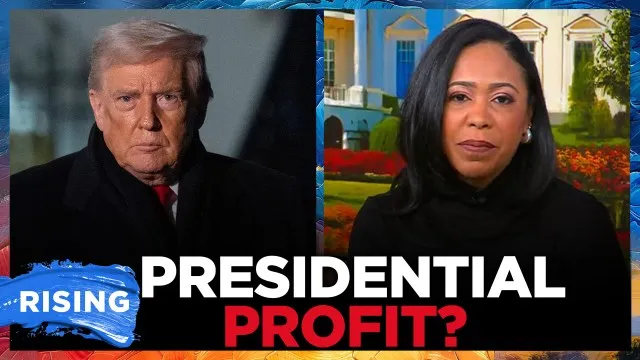
But perhaps the most consistent success story of Trump's second term belongs to Trump himself.
According to an analysis by The New York Times editorial board, President Trump has used the office of the presidency to make at least $1.4 billion, a figure they stress is a minimum. From overseas licensing deals to cryptocurrency sales, the line between public service and private gain has never looked thinner. A hotel in Oman. An office tower in western India. A golf course on the outskirts in Saudi Arabia. These are a few of the more than 20 overseas projects the Trump Organization is pursuing, often requiring cooperation with foreign governments.
One year in, Trump has acted aggressively on his agenda, but polling and economic data suggest many Americans are unconvinced those actions have improved their lives.
Lindsey Granger is a NewsNation contributor and co-host of The Hill's commentary show "Rising." This column is an edited transcription of her on-air commentary.