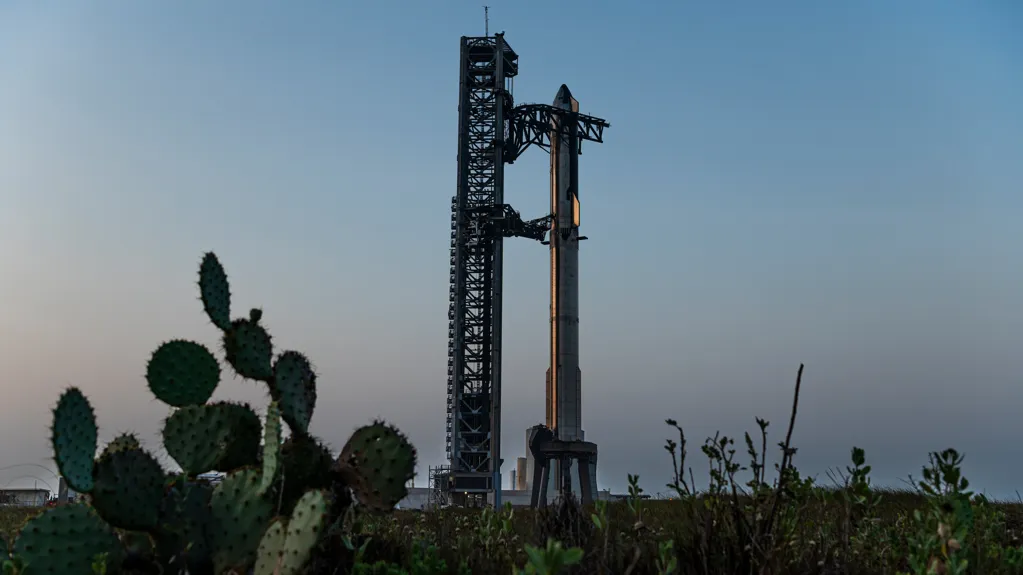
The Trump administration is considering giving nearly 800 acres of land in a federal wildlife refuge in Texas to SpaceX, the rocket and satellite maker run by Elon Musk, according to documents reviewed by The New York Times.
The company would use the land to expand its rocket launch and production site in Cameron County, Texas. In exchange, SpaceX would give the government hundreds of acres of its own property, some of which is about 20 miles from the refuge, the documents show.
The proposed exchange, which has not previously been reported, has alarmed some conservationists and archaeologists. They worry that SpaceX could degrade tracts that are home to numerous endangered species as well as artifacts from a Civil War-era battlefield.
SpaceX's operations in Texas have already harmed the ecologically sensitive area along the Gulf Coast, according to a Times investigation. A rocket launch last year sent debris flying across fragile habitat for migratory birds, crushing nests and doing other damage, the investigation found.
Under the proposed deal, the U.S. Fish and Wildlife Service would give SpaceX 775 acres of land that is currently part of the Lower Rio Grande Valley National Wildlife Refuge, according to the documents. The refuge is a vital sanctuary for endangered species like the ocelot and the jaguarundi.
The parcels include portions of the Palmito Ranch Battlefield, the site of the last land battle of the Civil War, the documents show. They are near an area known as the Massey site, where the company tests components of its Starship rocket.
In return, SpaceX would give the government around 692 acres of property it has purchased elsewhere in Cameron County, according to the documents. Some of these tracts would be added to the Laguna Atascosa National Wildlife Refuge, about 20 miles up the coast.
It is unclear whether the deal would require SpaceX to take steps to protect wildlife or habitats or any cultural resources linked to the land it receives from the government.
Garrett Peterson, a spokesman for the Fish and Wildlife Service, said in an email that the agency was exploring "a land exchange that advances long-term wildlife conservation and aligns with the administration's goals of strengthening American innovation, infrastructure and economic competitiveness."
Representatives for SpaceX did not respond to a request for comment.
In a September email, an employee at the Fish and Wildlife Service expressed concern about giving SpaceX portions of the Palmito Ranch Battlefield that contain "significant" Civil War-era artifacts.
Senior officials at the Fish and Wildlife Service have struck a more positive tone. In an October memorandum, Stewart Jacks, the acting regional director for the agency's Southwest region, wrote that the proposed land swap would have a "net conservation benefit."
The deal would "facilitate greater habitat protections for important fish and wildlife resources," Mr. Jacks wrote in the memo to Brian Nesvik, the director of the Fish and Wildlife Service. He added that SpaceX would divest of lands that "include high-quality habitat for a myriad of species, including the endangered ocelot."
But Sharon Wilcox, the senior Texas representative for Defenders of Wildlife, a conservation group, said she was skeptical of these claims. "With SpaceX present in this place, we have a very explosive force nestled in among all of these really fragile habitats," she said.
Last week, Mr. Nesvik ordered other senior officials at the Fish and Wildlife Service to conduct a "comprehensive review" of the country's 573 wildlife refuges, a possible precursor to more land swaps. He instructed the officials to provide initial recommendations by Jan. 5 and a more detailed report by Feb. 15.
In May, members of the community surrounding SpaceX's complex in Cameron County voted to formally establish a new city called Starbase. SpaceX has indicated that it plans to expand the city and build additional housing for the hundreds of employees who live there.
"Our fear is that they're just going to keep chopping up more and more state and federal land until Starbase is just one huge city," said Mary Angela Branch, a board member of Save RGV, a nonprofit that promotes sustainability in the Rio Grande Valley.
SpaceX agreed last year to a land-swap deal with the Texas Parks and Wildlife Department that called for giving the company 43 acres within Boca Chica Beach State Park. But in September 2024, the company abruptly withdrew from the deal for reasons that remain unclear.
Both Democratic and Republican administrations have previously exchanged land in wildlife refuges with private companies, albeit on a smaller scale.
Last year, the Biden administration gave utility companies nearly 20 acres of public land in the Upper Mississippi River National Wildlife Refuge. The utilities, which wanted to build a power line that would cross that part of the refuge, gave the government nearly 36 acres of nearby property in return.
In October, the Trump administration finalized an agreement that would allow a contentious gravel road to be built through the Izembek National Wildlife Refuge in southwestern Alaska. The deal called for the Interior Department to transfer 490 acres of land in the refuge to King Cove Corporation, a tribal organization that wants to build the road.
"Land exchanges have been done before, often to mutual benefit," said John Ruple, a law professor at the University of Utah who studies management of public lands. "However, the devil is in the details."