President Trump said on Sunday night that Iran had agreed to release 20 more cargo ships of oil through the Strait of Hormuz starting on Monday, in what the president insisted was a "tribute" to the United States and a "sign of respect."
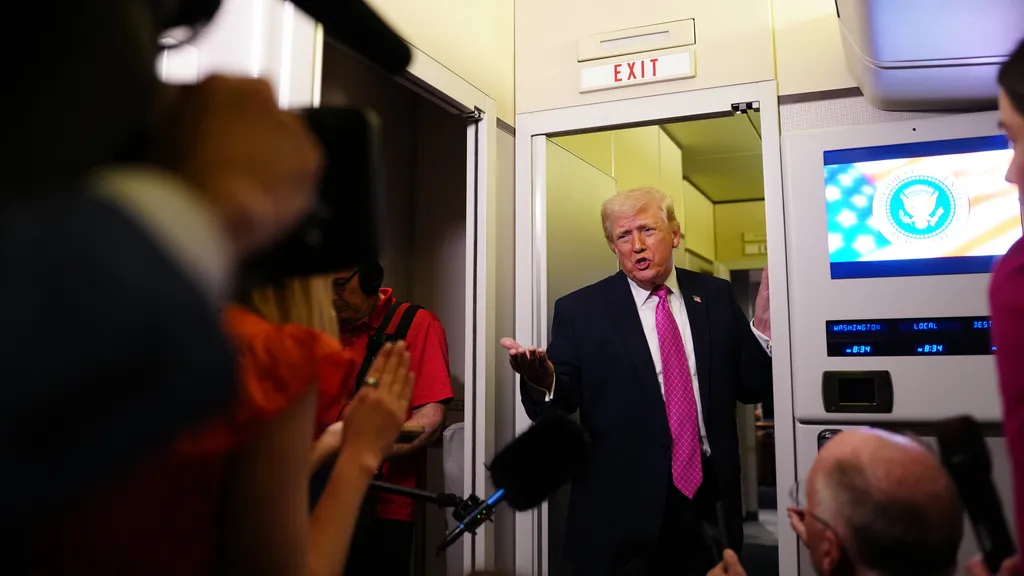
Speaking to reporters aboard Air Force One as he returned to Washington from a weekend spent in Florida, Mr. Trump cast Iran's decision to allow free passage for the ships as a sign that negotiations were underway toward ending the military conflict in the region, in what he said were direct and indirect talks.
But to many outside experts, Iran's ability to turn the spigot of oil deliveries on and off simply demonstrates its power to control the narrow, 21-mile-wide passage. Previously Mr. Trump had said he did not care much about what went through the strait because most of the oil goes to customers in Asia and Europe, and very little to the United States.
It was not clear where the 20 cargo ships were headed. China and India are major buyers of Iranian oil. The ships may also belong to Gulf Arab states. Last week, the Iranians allowed about 10 ships to transit the strait, a development that Mr. Trump also hailed as a sign of progress.
The movement of the oil is an issue that has arisen only after the United States and Israel began their military action on Feb. 28. The core of the negotiations center on the future of Iran's nuclear program, the size and range of its arsenal of missiles and, based on Mr. Trump's earlier goals, the freedom of the Iranian people to protest without being shot in the streets by the government.
Mr. Trump insisted to the reporters, however, that he had already achieved "regime change" in Iran because the leaders in place when the attacks on the country began have been killed, starting with Ayatollah Ali Khamenei, the supreme leader.
"I think we've had regime change,'' said Mr. Trump. "It truly is regime change."
But the government, led by the Islamic Revolutionary Guard Corps and the nation's top clerics, remains in place. Only the leaders have changed.
Mr. Trump made no announcements of a face-to-face meeting between American and Iranian negotiators. Last week, the administration had hoped to send Vice President JD Vance to Pakistan, to lead a delegation to discuss peace terms with Iranian leaders. But the Iranians have insisted that the United States must agree to reparations for attacking the country, acknowledge Iran's sovereignty over the Strait of Hormuz and lift sanctions imposed by a series of American presidents.