The US has redeployed some personnel in Qatar and other American bases in the region due to ongoing apprehension and Iranian threats to target those locations.
President Donald Trump signaled he may hold off on attacking Iran for now after saying he was reassured by sources "on the other side" that the government in Tehran would stop killing people involved in widespread protests.
"We've been told that the killing in Iran is stopping -- it's stopped," Trump told reporters Wednesday in the Oval Office. He said he'd been "informed by very important sources on the other side" about the decision not to proceed with the killings, and that he would be "very upset" if the crackdown continued.
Asked if military action was off the table, Trump said he would "watch it" and "see what the process is."
"But we were given a very good, very good statement by people that are aware of what's going on," Trump said.
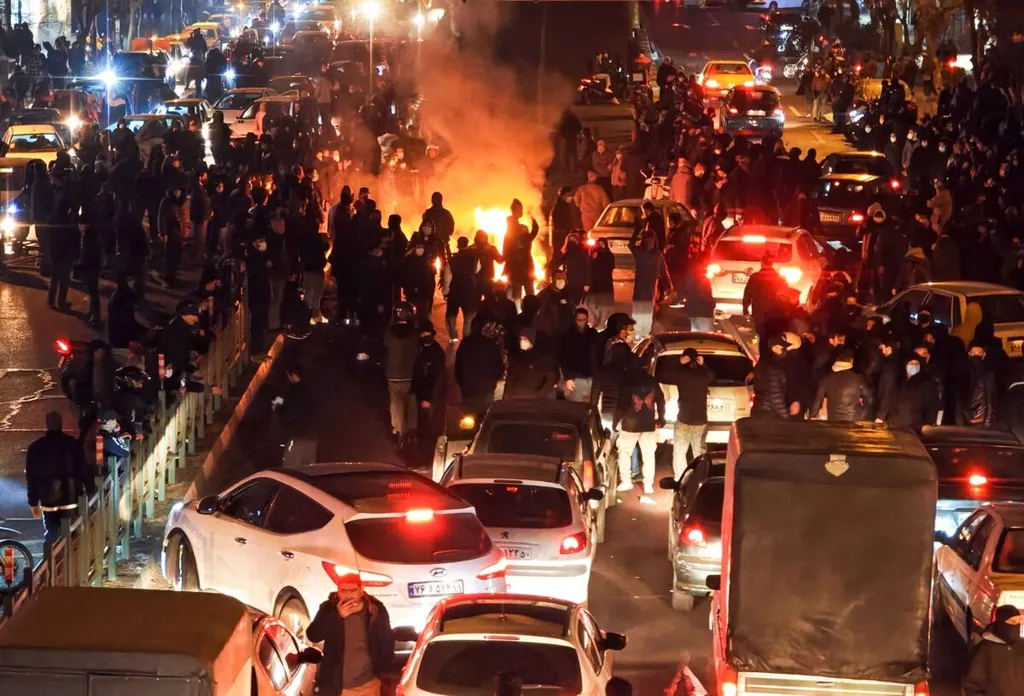
The comments marked a shift in tone for Trump a day after he urged Iranians to continue protests against the government of Supreme Leader Ayatollah Ali Khamenei and vowed to "act accordingly" after being briefed on the killings of protesters. He posted on social media that "help is on the way."
A White House official had said earlier that Trump had been briefed on a range of options for military strikes in Iran, including nonmilitary sites. Vice President JD Vance chaired a National Security Council meeting on Tuesday on Iran while Trump was traveling to Michigan for an economic speech.
And on Wednesday, officials told Bloomberg the US had redeployed some personnel in Qatar and other American bases in the region, due to ongoing apprehension and Iranian threats to target those locations. They asked not to be named discussing private information.
Those developments paralleled steps taken ahead of US airstrikes against Iran in June, fueling speculation that another round of strikes might be imminent. Those threats appeared to be more credible in the wake of the US attack on Venezuela that resulted in the capture of President Nicolas Maduro.
Bloomberg Economics defense analyst Becca Wasser said potential US targets inside Iran could range from strikes on facilities used by Iran's internal security forces, military facilities and missile factories all the way to targeted assassinations of key military figures. The most explosive option would be targeting significant political figures, she said.
"I don't think we have enough information to rule any of these out," Wasser said.
She said any airstrikes would likely come from outside the Middle East -- either from US forces based in Europe or the continental US. Another option could include long-range strikes from US guided-missile destroyers already in the region, she added.
At the same time, outside groups that have condemned the government crackdown in Iran have pressured Trump to intervene.
"Although Iran's future will be decided by its people, the United States can -- and, to maintain credibility given President Trump's public commitments, must -- help the Iranian people bring down the regime," Michael Makovsky, President and CEO of the Jewish Institute for National Security of America, said in a statement.
"History will judge both Trump and the United States harshly if Washington fails the Iranian people in this moment," Ahmad Sharawi, a research analyst at the Foundation for Defense of Democracies, wrote in an opinion piece. "If the mass killing of civilians continues, the United States should be prepared to escalate further and use targeted military options."
Iran has warned the US and Israel -- which coordinated to carry out strikes on nuclear facilities in the country last year -- against any attempt to intervene as the nation faces mass unrest.