The projects are intended to stabilize electricity prices and bolster US leadership in global technology competition.
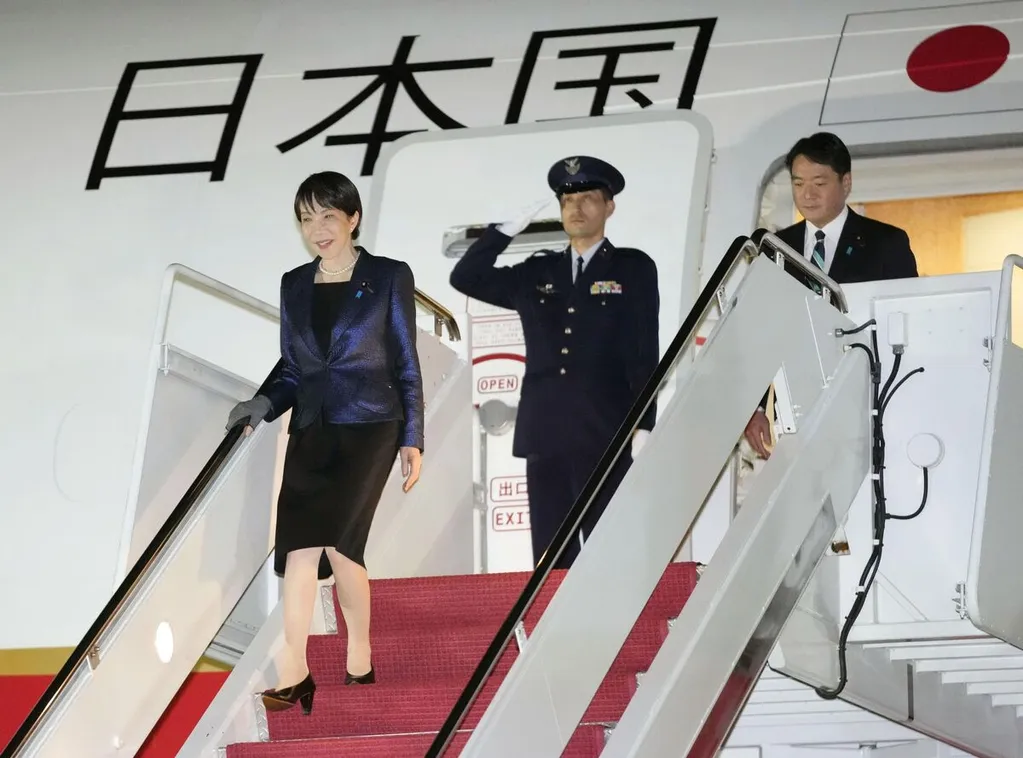
President Donald Trump and Japanese Prime Minister Sanae Takaichi are set to announce a nuclear power project in the southern US, the latest initiative stemming from an investment fund the countries established as part of a trade pact.
At the White House on Thursday, the two leaders are expected to say that GE Vernova Inc. and Hitachi Ltd. will build BWRX-300 small modular nuclear reactors in Tennessee and Alabama at a cost of as much as $40 billion, according to a White House official, who shared the details before the announcement on condition of anonymity.
The projects are intended to stabilize electricity prices and bolster US leadership in global technology competition, the official said, referring to the global race by technology giants to build power-hungry data centers to drive artificial intelligence development.
The small modular nuclear reactors, known as SMRs, would help fuel American industrial growth by adding power that can be generated on demand, the official added. Specific details, including when the reactors would be operational, weren't immediately clear.
While the Trump administration and the nuclear-power industry are taking steps to hasten the development of these reactors, most such designs still need regulatory approval. No SMRs have yet been added to US grids.
SMRs will feature less capacity than traditional reactors, which typically boast 1 gigawatt. But the technology is intended to be developed faster than the decade it usually takes to site, build and finance traditional reactors.
The reactor deal is the latest from the $550 billion fund that the US and Japan agreed to as part of an agreement that saw Trump lower auto tariffs and other levies. The two countries also announced a trio of debut projects totaling $36 billion last month, including a US oil export terminal, gas power plant and synthetic diamond manufacturing facility.
It's not clear what other investments may be announced during Takaichi's visit, though Japanese media have reported that a range of options, including other energy, critical minerals and defense deals, are on the table.
For Japan, the trade agreement codifies ties with the US, locks in a more preferable tariff rate for auto exports and creates a potential fast-track avenue for direct investment -- one that could smooth concerns that swirled over the tumultuous process by a Japanese firm to buy US Steel, which Trump ultimately approved.
For the US, Trump will seek to present the megafund deals as a sign US industrial rebirth and vindication of his frenzied tariff rollout that has strained trade ties and realigned some supply chains.
"The scale of these projects are so large, and could not be done without one very special word, TARIFFS," Trump said in a social media post last month.
The exact process under which the $550 billion will be allotted remains somewhat unclear. The staggering sum also carries potential political risk for Japan if major flagship initiatives encounter challenges.