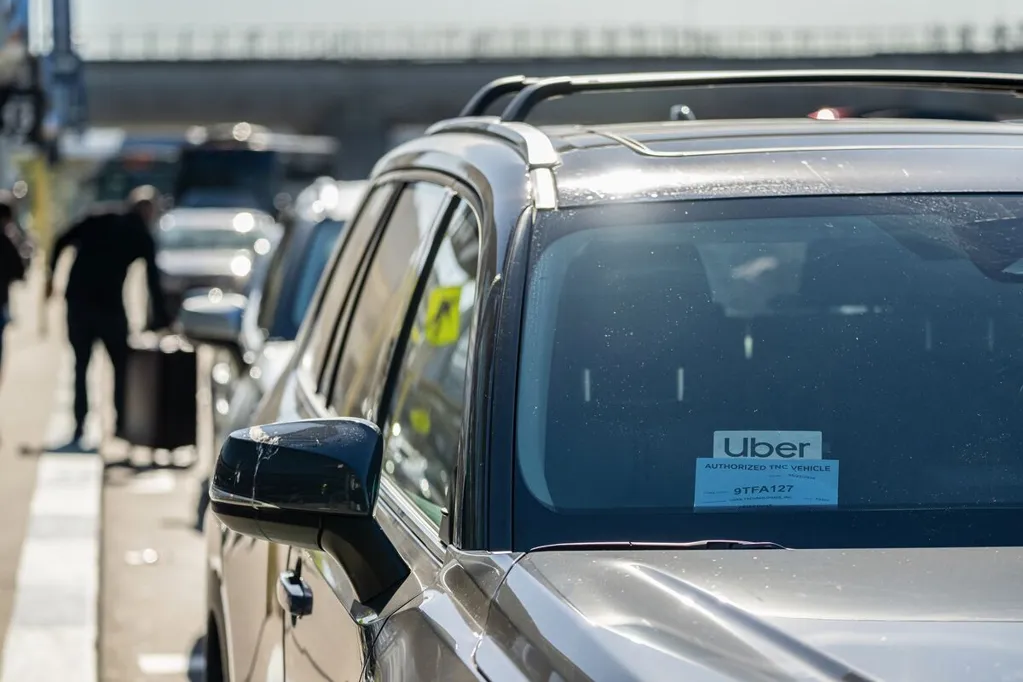
Analysts like Scott Devitt and Conor Cunningham have expressed concerns that self-driving car companies could become a greater threat to Uber's share of the market as the technology ramps up.
Uber Technologies Inc.'s quarterly results will likely take a back seat to the mounting threat posed by the growing self-driving fleets from prominent rivals like Alphabet Inc.'s Waymo and Elon Musk-led Tesla Inc., according to Wall Street analysts.
"While the core business trends remain strong, autonomous vehicle headline risk continues to dominate discussion around Uber and creates ongoing volatility," JPMorgan analyst Douglas Anmuth said.
The stock is down about 22% since closing at a record high in October, including a 4% decline on Tuesday ahead of the results before the market opens on Wednesday.
The San Francisco-based company in November gave fourth-quarter Ebitda guidance that fell slightly short of Wall Street's estimates. Uber is estimated to report net earnings of 79 cents a share, on revenue of $14.3 billion.
Last month, the company said it plans to alter its segment operating performance measures beginning in the first quarter of 2026.
Self-driving car companies can offer the same service as Uber's core ride-sharing business, and they can do it without the added cost of a human driver. For now, few AV taxi services have hit the market, and Uber has delved into the space itself. But as the technology ramps, competition will too, and that could become a greater threat to Uber's share of the market.
Wedbush analyst Scott Devitt said in a Jan. 26 note that the market is "underestimating" the negative impact AVs may have on discounted cash flow values of incumbent rideshares, Uber and Lyft Inc.
"We remain cautious as we weigh the eventual impact of AV disruption on established ridesharing networks as the industry evolves," said Devitt, who estimated that about 40% of Uber's mobility bookings are most exposed to AV risk.
"Shares trade for a premium relative to the mobility group, which we believe may be difficult to retain if the demand environment were to soften," he added.
Though Melius analyst Conor Cunningham said near-term fundamentals show continuing growth for Uber and Lyft, he has become "increasingly cautious" on both stocks given the ongoing expansion efforts from AV companies.
Cunningham holds the only sell rating on Uber after downgrading it in January. The stock has 51 buy ratings and 11 hold equivalents, according to data compiled by Bloomberg.
Gerber Kawasaki's Ross Gerber said he thinks there will be a few more years before Uber stock is fully hit by AVs.
Waymo just raised $16 billion to reach a $126 billion valuation, bringing it close to Uber's $168 billion market capitalization as of Monday's close, even though Waymo has under 3,000 cars on its platform compared to Uber's millions of drivers.
Tesla, for its part, plans to spend $20 billion this year in an effort to ramp up production of its physical AI products, including robotaxis and full-self driving, though they're still far from mass market offerings. Smaller competitors like Amazon.com Inc.'s Zoox and Pony AI Inc. are also limited in scale.
Still, Gerber said his firm recommends that clients sell Uber shares, adding that "they have the most to lose from Tesla and Waymo."