President Donald Trump threatened to raise tariffs on European Union cars to 25%, claiming the European Union "did not adhere to the trade deal."
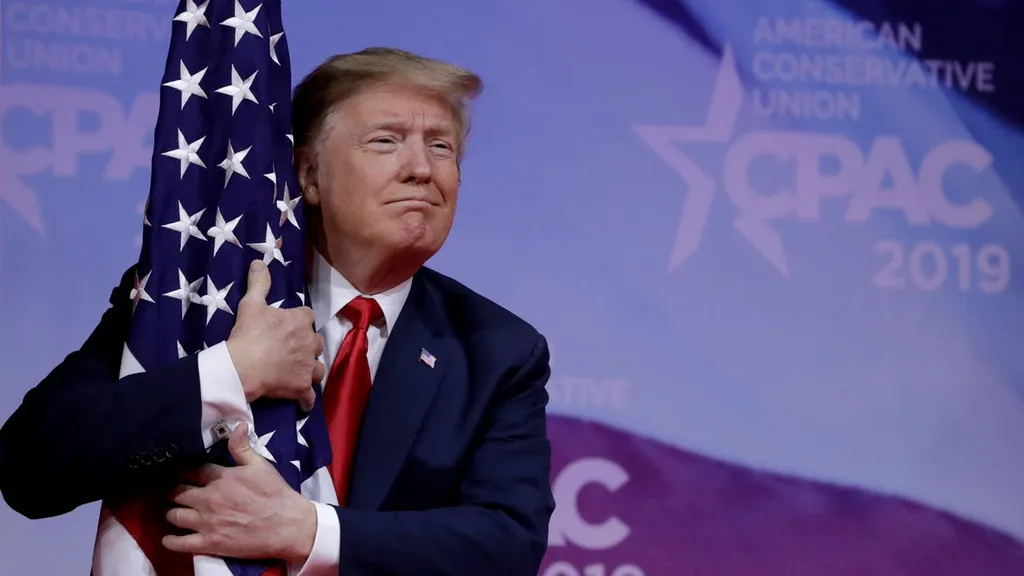
WASHINGTON - U.S. flagmakers say that half the star-spangled banners sold in this country are made in China, so the manufacturers are urging the Trump administration to impose huge new tariffs on imports rather than wave a white flag after the Supreme Court overturned his emergency tariffs.
"The American flag, one of the most recognized and sacred symbols of the United States, is being produced abroad and imposed into the U.S. market at prices that no domestic manufacturer can match," said Jen Christiansen of FlagSource, a manufacturer in Batavia, Illinois.
Flags are just one thread woven into a $1.2 trillion trade deficit with other countries last year that President Donald Trump is trying to eliminate through tariffs that raise money for the government and encourage manufacturers to locate their factories in the United States.
U.S. Trade Representative Jamieson Greer is sorting through hundreds of proposals in hearings about whether to impose new tariffs based on accusations of unfair trade practices abroad.
Greer heard from 60 witnesses last month about allegations that manufacturers overseas relied on forced labor to produce cheaper products. The probe focused on adversaries such as China and Russia, but also on allies including Australia, Canada, the European Union, the United Kingdom, Israel, India, Qatar and Saudi Arabia.
Hearings start May 5 on accusations that other countries produce more products than they need to sell in the United States for less than domestic manufacturers can match.
The American Sugar Alliance, for example, said the industry is "threatened by a glut of low-priced imports from foreign countries whose policies have flooded the world market." Countries such as Brazil, El Salvador, Argentina, Colombia and Costa Rica dramatically increased their sugar production since 2021, according to Census data.
But Chicken of the Sea International told the government to leave canned tuna alone. The company, a subsidiary of Thai Union Group, said tariffs would jeopardize its $20 million processing facility in Lyons, Georgia, that cooks, cleans and packs 10% of all canned tuna in the United States.
Airlines also opposed tariffs for the aviation industry. About 70% of the industry - aircraft construction, engines and other components - is dominated by U.S. companies such as Boeing, with $93 billion more sold in exports than bought in imports last year. But airlines don't want to discourage competitors such as plane-maker Airbus in France.
"The U.S. does not need to fix the 30%," the trade group Airlines for America said.
The hearings come at the same time Trump is threatening to raise tariffs on cars and trucks from the European Union from 15% rate negotiated as part of a trade agreement to a 25% rate. Trump argued that Europeans were breaking the agreement reached last July because it's still not finalized. Europeans are scrambling to complete the deal to avoid higher fees.
The Supreme Court invalidated Trump's emergency tariffs on countries worldwide under the 1977 International Emergency Economic Powers Act. But other statutes allow the president to impose tariffs temporarily under one section of the 1974 Trade Act, to combat unfair trade practices under another section of the Trade Act or to respond to national security threats under the 1962 Trade Expansion Act.
Trump told a meeting of small-business leaders at the White House on May 4 the Supreme Court made an "unfortunate" and "terrible" decision, "but the good news" is that he's able to impose tariffs "another way."
"We have other ways of tariffing," Trump said of raising duties on Chinese imports. "A little bit more complex. I like to keep it as simple as possible. In many ways, it'll be better."
While considering those options, Trump eliminated the tariff on Scottish whisky during a visit last week by the United Kingdom's King Charles III. Trump had imposed a 10% temporary tariff after the Supreme Court decision; however, he removed the duties on liquor to spur trade between Scotland and Kentucky.
Trump's decision came after U.S. liquor exporters reported sales fell more than $90 million last year as Canadians removed American spirits from their shelves and Europeans imported less, according to a March report from the trade group Distilled Spirits Council of the United States.
The American Distilled Spirits Alliance urged Greer to leave liquor out of any new tariffs.
"Distilled spirits are geographically distinct, artisanal products governed by strict legal standards of identity," said Amanda Nguyen, CEO of the alliance. "They are not manufactured commodities subject to overcapacity concerns: Bourbon cannot be made in France and Cognac cannot be made in Kentucky."
Nearly all the 6 million U.S. flags imported each year are made in China, according to industry groups, including the Flag Manufacturers Association of America and the National Independent Flag Dealers Association.
The imported Old Glories typically sell for $8 to $20, compared to $30 to $48 for flags made in America, the trade groups said. Manufacturers are encouraging the administration to impose tariffs of 300% to 500% to combat the imports they contend are swamping the U.S. market.
The current duties on Chinese flags is 24.5%. Christiansen said without "decisive and aggressive action," Chinese imports "will continue to devastate U.S. manufacturers," which employ 5,000 workers whose shifts could be cut or factories shuttered.
China's Chamber of Commerce for Import and Export of Textiles urged against raising tariffs by arguing they could raise costs on American consumers and would do long-lasting damage to importers and distributors.
The chamber also said China has "consistently prohibited forced labor," despite accusations from the U.S. Labor Department and international human-rights organizations.
"Trade restrictive measures cannot resolve domestic challenges faced by the United States; they will only force American businesses and consumers to bear the cost of trade friction," the chamber said.