The rally in US oil futures took another swift move higher, sending prices to the loftiest level in about 20 months as investors increasingly price in a prolonged war in the Middle East that could upend global crude flows.
West Texas Intermediate surged as much as 8.7% to climb above $81 a barrel. Prices touched the highest since July 2024. Brent traded above $85.
Prices of refined fuels are surging too. In Europe, benchmark diesel futures topped the equivalent of $150 a barrel, a level they haven't closed above since late 2022.
Signs are emerging that the Middle East conflict is disrupting crude flows to key buyers, with top importer China moving to conserve fuel as Iran, the US and Israel vow to press ahead with hostilities.
US oil rallied faster than Brent on Thursday as mounting concerns over a prolonged disruption through the Strait of Hormuz, a chokepoint for a fifth of global oil flows, boosted demand for WTI barrels that aren't exposed to potential Gulf bottlenecks.
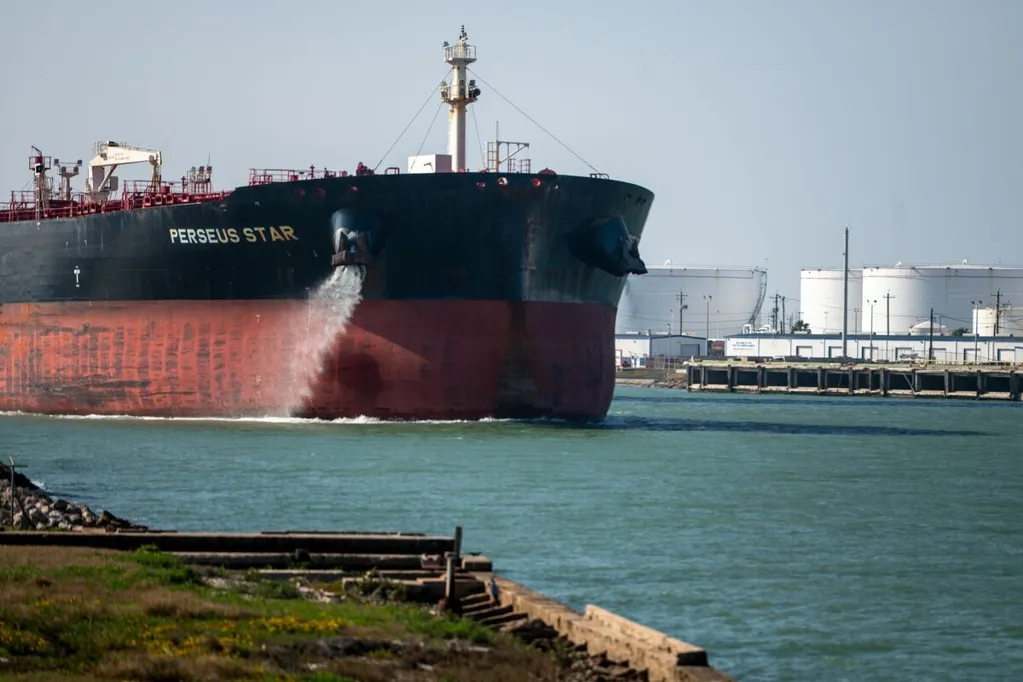
The heightened demand for US oil comes as surging freight rates make American barrels more expensive to ship. Seasonal refinery maintenance is additionally tightening domestic supply, further supporting prices.
That dynamic is also reflected in the prompt-spreads -- the difference between its two closest contracts -- for both benchmarks. The prompt spread for Brent has widened by nearly $4 a barrel in just over a week, while the equivalent WTI measure has increased by only about $1, underscoring the more acute near-term tightness in the North Sea market.
The conflict has roiled oil, gas, and product markets, lifted freight rates, and spawned an ever-widening wave of disruption for producers, as well as importing nations that rely on flows from the region.
Oil climbed as the deepening conflict in the Middle East disrupted crude flows to key buyers, with top importer China seeking to conserve fuel as Iran and the US and Israel vowed to press on with hostilities.
Brent climbed to about $84 a barrel, as the war entered a sixth day and showed little sign of abating. WTI, the US benchmark, was as high as $78.
Beijing told major refiners to suspend exports of diesel and gasoline, reflecting efforts to prioritize domestic needs that threaten to ensnare consumers abroad. Japanese refiners asked their government to release oil from strategic petroleum reserves. Earlier this week, a major Indian processor advised customers it would suspend product exports.
Arab states across the Middle East -- as well as Israel -- reported interceptions of Iranian missiles and drones into Thursday, with Qatar telling residents to remain indoors. Tehran said it struck an oil tanker in the Persian Gulf, underlining the risk to shipping in the energy-rich region.
"If we see even one more successful strike on an oil tanker or infrastructure, or sustained disruption, prices can spike sharply again," said Priyanka Sachdeva, a senior market analyst at brokerage Phillip Nova Pte.
The market's principal concern remains the Strait of Hormuz, through which about 20% of the world's oil flows. Amir Heydari, an Iranian military commanderBloomberg Terminal, told state television that "we do not believe in closing" the route at all. Still, the conduit remains effectively blocked with almost no owners willing to transit -- even as London insurers said cover was available -- bottling up crude supplies and forcing some to start shutting in output.
The conflict has hoisted oil, gas, and product prices, lifted freight rates, and spawned an ever-widening wave of disruption for producers, as well as importing nations that rely on flows from the region.
Brent's prompt spread -- a gauge that shows how much traders are willing to pay up for immediate barrels -- is soaring. Middle Eastern oil futures leaped on Thursday too.
In a bid to break the impasse at Hormuz -- which connects the Persian Gulf to the Indian Ocean -- Washington has proposed a plan to provide insurance guarantees to vessels and possibly naval escorts.
Ship-tracking data compiled by Bloomberg show traffic through the strait has plummeted by well over 95%, with major crude carriers and gas tankers avoiding the route. The few ships still moving are leaving the gulf with location transponders turned off, a common practice in conflict zones.
- Prices:* WTI for April delivery rose 4.5% to $77.94 a barrel at 10:08 a.m. in New York.
- *Brent for May settlement gained 3.1% to $83.94 a barrel.
About 15 million barrels of oil a day transited the strait in 2025, together with an extra 5 million barrels of products, according to the International Energy Agency, the Paris-based body that advises major economies.
"The sheer volume of oil that is exported via the Strait of Hormuz, and the limited options to bypass it, means that any disruption to flows would have huge consequences," the IEA said in a study on its website.
Fuel markets are already seeing the impact from the conflict. In the UK, a major heating oil seller said it was managing deliveries to ensure supply is fairly distributed after a surge in demand. Europe's diesel benchmark is up more than 40% since the conflict began.