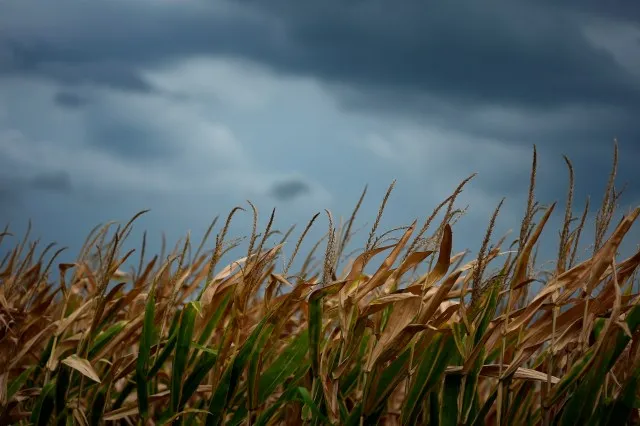
AUSTIN (KXAN) -- A new study from University of Texas at Austin researchers El Niño and La Niña cause extreme water events like droughts and floods to occur simultaneously across distant parts of the world.
The research focuses on the El Niño-Southern Oscillation, or ENSO, as a primary driver of these synchronized events. Using satellite data provided by NASA, the team identified that regions far apart can experience extremes at the same time rather than as isolated incidents. This connectivity allows researchers to better understand how water storage changes over time.
Ashraf Rateb, the lead author of the study, explained the shift in focus toward global patterns.
"We wanted to understand when extremes happen together across the world, not just where a single event occurred," Rateb said.
He noted that focusing only on one region or event provides a limited set of data that makes it difficult to understand changes over time.
Rateb explained that the study removed typical seasonal and long-term storage changes to isolate these events. The study defined droughts and floods by measuring water storage percentiles.
"ENSO event is a major organizer of the extremes across the globe," Rateb said. "So what we did is that we took this 20 years of data and then we removed the normal changes related to seasonal component."
Bridget Scanlon, a co-author of the study, noted that satellite image from NASA's Gravity Recovery and Climate Experiment, or GRACE, mission have expanded the ability to look at water on a global scale since they were launched in 2002.
"It's great that we have this global data now," Scanlon said.
The data revealed that large-scale events tend to align within the same seasons or years.
"What we see is that on the large scale, from two to three years, these large events, the routes are or floods tended to enter extremes in the same season or in the same years because of the -- because of the ENSO," Rateb said.
This global interaction suggests that the timing of water extremes is linked across continents.
These findings have implications for the global economy, particularly regarding food production and trade. Scanlon noted that simultaneous weather events can strain international markets by impacting multiple major producers at once.
"So if Australia and the U.S. is at a drought at the same time because of El Niño, then that would affect the global supply of cereals and stuff like that," Scanlon said.
To read the complete study, visit the Advancing Earth and Space Sciences website.
All facts from this article were gathered by KXAN journalists. This article was converted into this format with assistance from artificial intelligence. It has been edited and approved by KXAN staff.