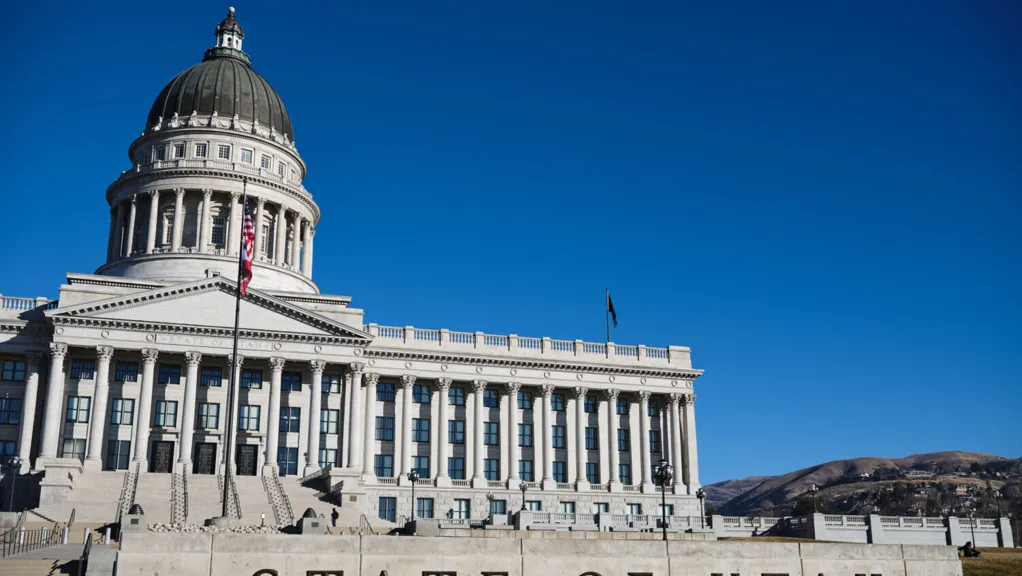
SALT LAKE CITY -- A committee of Utah lawmakers has unanimously approved a bill and a joint resolution that aims to speed up the years-long legal process that comes after someone is sentenced to death.
Rep. Candice Pierucci (R-Herriman) is proposing a number of changes to Utah's death penalty laws, including those related to when and how a death row inmate can claim they're not competent to be executed.
Under the current version of HB 495, death row inmates would not longer to be able to petition for a competency review when they're scheduled execution is 21 days away or sooner -- unless, "a licensed physician or licensed psychologist who has examined the inmate and determined that, in the physician's or psychologist's opinion, the inmate is not competent to proceed," the bill text reads.
Pierucci told the Senate Judiciary, Law Enforcement, and Criminal Justice Committee Tuesday she began working on this proposal last year when Ralph Menzies died of natural causes after spending more than 37 years on Utah's death row.
"The average time between sentencing and execution in The United States for capital felony cases is 22 years, but in Utah it is 34 years," Pierucci said. "These prolonged timelines really increase the financial burden on taxpayers and the emotional toll on victims' families."
Pierucci's bill met a flurry of opposition from several lawyers in this week's committee hearing, including multiple attorneys who've represented death row inmates in Utah.
Lindsay Layer, who was one of Ralph Menzies' defense attorneys, told the committee, "this bill will not make Utah's capital punishment system more efficient, it will make it less so." She continued saying the bill would, "shift litigation from state court to federal court, where it will take longer and be significantly more expensive for the state."
Mark Moffat with the Utah Defense Lawyers Association told lawmakers the death row cases in Utah that've taken much longer to litigate, like Menzies', are outliers.
"The majority of these cases came from a time ... that's a bygone era of death penalty litigation," Moffat said. "Those cases occurred at a time when death penalty litigation was in its infancy, and there were numerous errors made in those cases."
As an example, Moffat referenced when Douglas Carter had his death penalty conviction overturned after 40 years on Utah's death row. The Utah Supreme Court ordered he get a new trial after a lower court found evidence of "serious misconduct" on the part of the prosecution and investigators in his 1985 murder trial.
Layer shared similar sentiments about the state of the death penalty defense system at the time many of Utah's death row inmates were convicted in her comments to lawmakers.
"Most of the men that are currently on Utah's death row had truly terrible representation both at the trial level and in post-conviction proceedings," Layer said. "Many of the issues in their case, they have not had fully litigated."
The committee ultimately voted unanimously to pass both Piercucci's bill and joint resolution. It has already passed in the Utah House, and will now head to the full Senate.
Lawmakers will have until Friday night to vote on these and any other legislation before the 2026 General Legislative Session comes to a close.