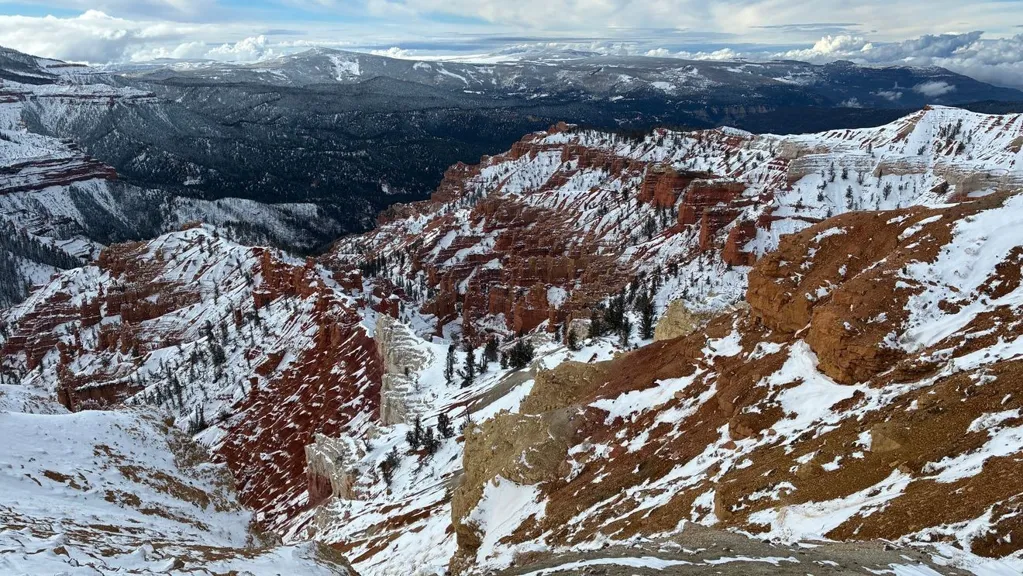
SALT LAKE CITY (KUTV) -- The 2025-2026 winter season isn't quite over, but it's no secret that it's been a rough one when it comes to snow. Right now, statewide snowpack numbers are hovering around 60% of the median.
But you don't have to know those numbers to understand what a strange winter it's been.
"It's kind of good," said Carrie Stewart, who lives in Salt Lake City. "I mean, I like it because I like a milder climate. But I realize this summer is going to be hard."
"I'm not sad I'm not shoveling," said Sally Humphreys of Salt Lake City. "But it's definitely worrying."
State water officials are also worried. The clock is ticking to bulk up those snowpack numbers.
"We're running out of time to get the snowpack that we need," said Jordan Clayton, supervisor of the Utah Snow Survey. "We have about 40 or so days until our typical snowpack peak."
There is still some time to make up lost ground, but the odds aren't great. Clayton estimates a 10% chance of reaching normal by the end of the season.
"Those are terrible odds," he said.
In fact, the odds of having a record low snowpack are greater, sitting at 20%. It's a grim reality that has officials looking toward the summer anxiously.
"I would expect to see watering restrictions outdoors for a lot of places," said Laura Haskell, Utah's drought coordinator.
It's unknown what the next few weeks will bring, but if Haskell had to guess, she doesn't see state reservoirs filling up much from where they are now.
"In the spring when that runoff hits, we do get a noticeable peak in our reservoir storage," Haskell said. "The water just starts coming in. But this year, we don't anticipate getting that."
Haskell says we have enough reservoir storage to likely make it through the summer, but there are other implications to worry about.
Our autumn season was pretty wet. That led to decent soil moisture levels, which can then lead to higher vegetation growth.
"If we then have a snowpack that melts out really early, we'll have a longer than normal summer, if you will, with forage growth that might dry out, and so that's kind of a bad recipe for promoting fire hazard," Clayton said.
Utahns have dealt with low snowpack levels in the past. Many Utahns are familiar with their lawn turning brown because of water restrictions.
"We'll probably just let it go that nice, sandy, golden color that it gets in the summer in a dry climate," said Dea Ann Kate, who lives in Cottonwood Heights.
As we wait to see what the next few weeks bring, people like Carrie Stewart are just reflecting on an unusual winter.
"It is worrying," she said. "We need snow. We've only shoveled once this season, and that's very unusual."
Water officials are now hoping for something else unusual: climbing out of the snowpack hole that's been created.
"But there are no times going back where the snowpack totals for the state were close to where they are right now, and we ended up actually at a normal peak," Clayton said."So while it's possible, it's very unlikely."