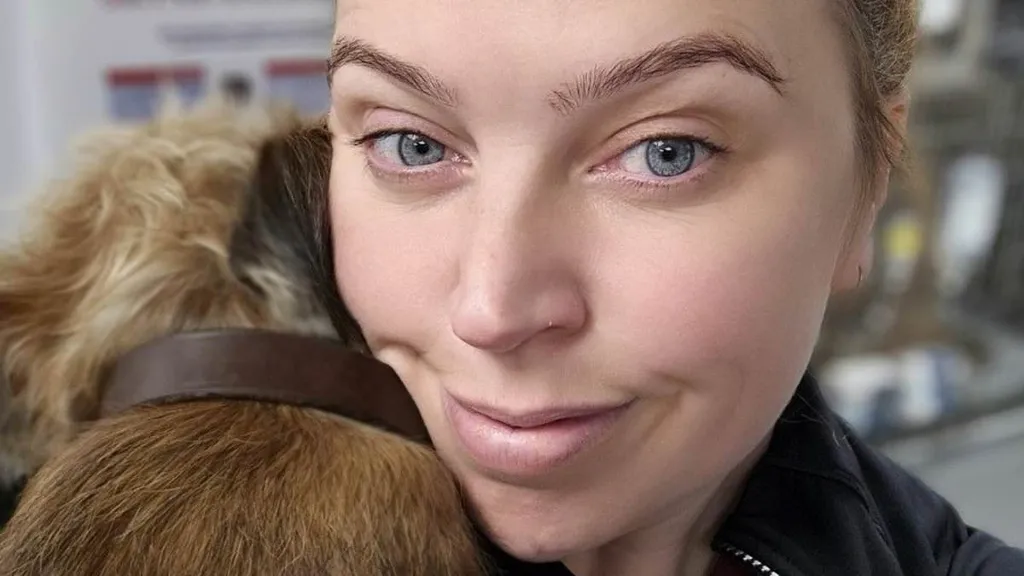
A vet worker who claimed she had epilepsy to challenge her redundancy has lost the tribunal case - after her GP revealed she never once sought treatment.
Lacey Pitcher claimed she had dyslexia, epilepsy and ADHD and was unable to drive because she suffered from seizures - but she had received no diagnosis from her GP, nor medication, and still had a full driving licence.
Ms Pitcher brought about the claims of disability discrimination after being made redundant in her job as a veterinary nurse, as well as claims of discrimination on the grounds of pregnancy or maternity - which she later withdrew.
While the Judge said it was 'entirely possible' that Ms Pitcher had epilepsy at some stage, he said 'that evidence is not before me' and noted that her GP 'seemed doubtful about its existence' too.
Ms Pitcher had claimed that on two separate occasions she had suffered seizures - one in her sleep 18 months ago which her partner witnessed and one while awake, over two years ago.
The vet worker had notified the DVLA of a potential seizure episode, but had been given an unrestricted licence and continued to commute up to three hours to her practice every day.
She had also not received a diagnosis for any of the conditions from her GP, Dr Scott, who stated he had seen no evidence of the conditions which Ms Pitcher claimed had such an impact on her life.
Indeed, Judge Livesey said: 'Even if her daily stated symptoms were not themselves limiting or substantial, was there evidence of a likelihood of a recurrence of a more limiting condition, a seizure and any consequent need to take medication and an inability to drive?
Lacey Pitcher lost her discrimination tribunal against her employer after the Judge found there was 'insufficient evidence' that she had the disabilities she claimed she did.
'There was no such evidence.'
Judge Livesey continued: 'The documentary evidence contained no diagnosis of epilepsy. If such a diagnosis had been given, it seemed unusual for the Claimant not to have been taking any medication to regulate, control or maintain her condition.
'Dr Scott seemed doubtful about its existence and he had clearly seen no evidence of it.
'The continuing symptoms which were said to have been experienced (tingling, deja vu, zoning out and/or fatigue) were unspecific and vague and did not appear to have been particularly significant and/or limiting.'
Ms Pitcher had written blog pieces about being 'neurodivergent' and her mental health.
In one editorial article for the British Veterinary Nursing Association, she wrote: 'We are all so different and there is so much power in harnessing those differences.
'My dyslexia has often made things a little trickier. A diagnosis of ADHD later in life made so many things make much more sense.
'I'd implore anyone who thinks they may be neurodiverse to explore it. Putting a label on things doesn't prevent you growing; it opens doors to learn how.'
The tribunal on January 20 stated that while 'there was evidence the Claimant was concerned that she was neuro-divergent in some respect', 'no ADHD assessment had been undertaken, no diagnosis had been given and there was inadequate evidence of any impairment to her day-to-day activities on the basis of that which had been provided'.
The Judge concluded: 'The Claimant was not disabled at the material time and her claims of direct disability discrimination and discrimination arising from disability are dismissed.
'The claim of discrimination on the grounds of pregnancy or maternity is dismissed upon withdrawal.'