When content creator Joanne Hardcastle - who has 272,000 Instagram followers for her interiors account @hardcastletowers - visited a local salon to have her nails refreshed at the end of last year, she didn't expect anything out of the ordinary.
After all, gel manicures are the most popular beauty service in the UK; for many women nail upkeep is as routine as wearing full make-up or having a hair cut. However, this time, Hardcastle was in for a nasty shock.
She'd been having her nails done for years, and always prided herself on having 'neat, colourful nails'. (For an influencer creating content, with their hands on camera on a daily basis, it was a pretty integral part of the job).
Towards the end of 2025 she decided to try builder gel for the first time: a thicker gel that promises fewer chips and stronger nails.
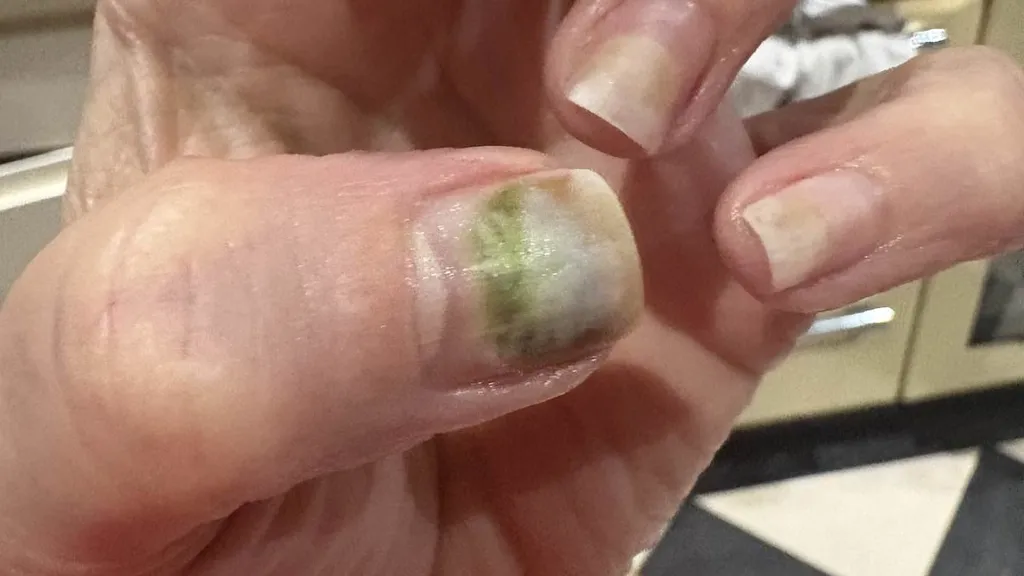
When the first re-application appointment came round, Hardcastle discovered a green tinge had developed on her natural nail underneath. Her manicurist had never seen anything like it, but said not to worry and applied the next builder gel design straight on top. This would prove to be a horrible mistake and lead her to weeks of pain.
When the builder gel was removed during the salon trip, both Joanne and her manicurist were horrified. Not only had her nails turned even more green, but they smelled terrible and the nail had lifted up from the nail bed.
The skin underneath was sore, red and blistered, and she struggled to use her hands for daily tasks. The salon could muster no explanation and no apology; Hardcastle even had to pay for the removal.
'I was absolutely horrified when I saw my nails and couldn't wait to get out of the salon. I was so upset I felt like I had to hide my hands and I didn't want anybody to notice them,' she says.
Joanne Hardcastle, a popular interiors influencer, routinely went to the salon for manicures, as showing her hands on camera was a key part of content creating
The colourful builder gel manicure that turned out to be hiding Joanne's extreme nail infection
Working in a job that is all about visuals made the shocking appearance of Hardcastle's nails even more challenging. She talks of feeling ashamed, and trying to create products for ads while hiding her fingertips (which proved impossible).
Eventually she had to hold her hands up to her 272,000 followers (figuratively and literally) and fill them in to what she'd been through. Cue thousands of people getting in touch to share their similar experiences.
'I had to tell my agent because it affected my work. Then I sent a picture to a friend who is a doctor and she advised medical attention,' says Hardcastle.
She also visited a private podiatrist to seek expert help. A fungal infection test came back negative (and cost £200) and she was eventually given a vague bacterial diagnosis. 'They prescribed me a lotion and advised me to expose them to the air, leave them natural and grow them out,' says Hardcastle.
But how did she get an infection in the first place? The salon was hygienic, she says, with all tools being disinfected in Barbicide - so what could be the cause?
I spoke to Tinu Bello, nail tech, educator and senior brand ambassador for nail brand Mylee, to find out her expert opinion.
'This looks like onycholysis, where the nail lifts slightly from the nail bed, which can be triggered by anything from a small knock to allergic reactions to skin conditions like dermatitis.'
But, says Bello, 'once a gap forms, everyday water exposure can enter underneath, and that is the perfect environment for a bacteria called Pseudomonas - which causes the green-black discolouration under the nail plate... Or what people in the industry call "greenies".'
As Hardcastle found out, once the infection goes deep enough into the nail, it can't be buffed off - you simply have to wait for it to grow out. 'They got worse before they got better, and they were sore,' she says. 'The skin on my fingers blistered and peeled.'
Bello advises sterilising the nails and keeping them clean and dry until the damage grows out. She says, 'the most important thing is that once lifting or discolouration appears, the enhancement should be removed. Nail health always comes first, even if that means taking a break from treatments.'
Bello recommends that if you use gel polish, you can wait for three weeks and then should fully remove it. She says that if the nails underneath are healthy then you're fine to reapply another manicure. For builder gels, you can infill up to four times before you should completely remove it to assess nail health before booking in for another appointment.
And what about the school of thought that nails need a break every once in a while? In Bello's opinion: 'You only need a break if your nails are damaged and need time to recover. Never apply gels onto damaged nails; you must let them heal before reapplying.'
Looking at Joanne's condition, she agrees this is an extreme case and would recommend visiting your GP for a referral to a dermatologist for allergy testing if you experience similar (although as we all know, waiting lists can be long).
For Hardcastle, recovery has meant two months of letting her nails grow, keeping them clean and dry, rubbing oil into them occasionally, and cutting off all the lifted nail as it grows out. Several weeks on, she is nearing the end of her growing out process, with her nails having thankfully attached to her nail bed once more.
I ask whether she'll be going back to brightly coloured gels. Her answer? 'Never again.'