By HANNAH RODGER, CHIEF REPORTER FOR THE SCOTTISH MAIL ON SUNDAY
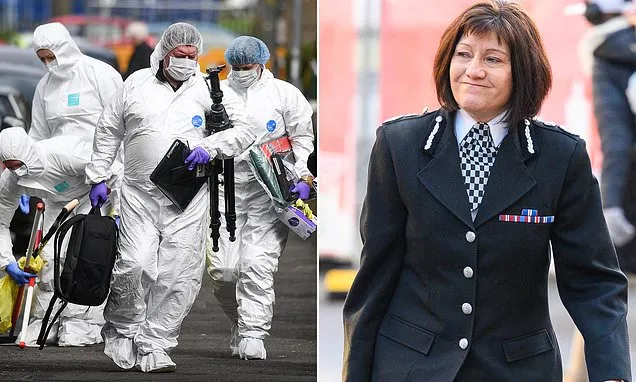
Scottish police officers are struggling to cope with horrific daily scenes like murder, child abuse and car crashes due to the constant strain on the force, according to rank-and-file representatives.
The Scottish Police Federation (SPF), which represents frontline officers, said the pressure officers are under combined with a lack of support is having a disastrous impact on them and their loved ones.
A survey of almost 700 staff, shared exclusively with the Scottish Mail on Sunday, revealed how officers struggle to cope after harrowing daily events with 93 per cent of officers saying their job is having a negative effect on their lives.
David Threadgold, SPF chairman said: Officers at every level of Police Scotland are struggling to cope with what they're witnessing on a daily basis.
'It has always been the case that officers have to respond to calls that are often horrific - murders, abuse cases, car accidents, the death of children, but previously they felt supported by their organisation, would have time to decompress, could take their rest days and wouldn't be constantly overworked by increasing demand with reducing resource.
'The issue we're now seeing is that due to the fall in police officer numbers, the rising sickness absence levels and the fact our capacity is being squeezed so much by demand from health-related calls, officers are at breaking point.'
The SPF's survey asked 628 officers of constable, sergeant, inspector and chief inspector rank of their experiences working on the force and the impact it has on their lives.
Officers gave heartbreakingly candid replies, with 92 per cent believing policing had a negative impact on them, but two thirds (67 per cent) had never been given training or support to manage the trauma they experienced or help to identify signs of trauma in their colleagues.
One officer said: 'I attended a call where a three-year-old child was killed by a driver, CPR was attempted but did not work. I will never forget the child's face.
'I have a child and that night I went home, kissed my child who was asleep and drank alcohol alone.'
Another added: 'A vehicle evaded my road closure and struck a pedestrian sending them high into the air. They landed directly in front of my police vehicle. I still feel guilty because I was unable to stop the traffic and the noise of the impact still lives with me today. I still patrol the route daily'
According to the survey, officers who did take up the force's support services called Trauma Risk Management (TRiM) found the service unhelpful.
Officers who had been referred said TRiM was like a 'tick-box exercise' with 'no value at all'.
One officer stated: 'The process was a sergeant speaking to me but having to leave halfway through our talk as she was running late for something else.
'I received no follow up with regards to counselling and had to take my own steps to get counselling.'
Another said TRiM 'was full of empty platitudes and didn't make me cope or feel better at all.'
Asked if they would agree that Police Scotland was proactively dealing with the trauma associated with being in the force, a staggering 87 per cent said 'No'. Most officers (95 per cent) also said they believed the force’s strategy to have a ‘thriving workforce’ by 2030 was not on track, with one officer commenting: ‘We are not a supportive organisation, and a culture of mistrust is prevalent as everyone appears to be out for themselves. Absence levels are at an all-time high and the stretched workforce is at breaking point.’
Mr Threadgold said: ‘While information on health and wellbeing may be available, the reality is that training courses are almost exclusively delivered online with content that doesn’t translate to the real world.
‘Our officers are in dire need of support. That comes with being properly resourced, properly paid and allowed to focus on the delivery of policing.
‘The current ‘model’ will only continue to see officer absence rise, an exacerbation of the retention crisis now beginning to have such an impact and a continued feeling that officers are not a priority for their own organisation.’
‘This has to change.’
A Police Scotland spokesman referred to Chief Constable Jo Farrell’s comments to the Scottish Police Authority last week, where she said: ‘Our people are our greatest asset and policing can only succeed if they are physically and emotionally healthy and motivated to serve the people of scotland.
‘Building a thriving workforce is a key pillar of our vision and part of that is provding better support services like the employee assistance programme, expanding our trauma risk management service and delivering more Lifelines courses.
‘At the same time it’s crucial we provide the equipment and facilities which can improve experiences such as bodyworn video and better quality working environments, and that we focus our investment on strengthening and supporting the frontline.’