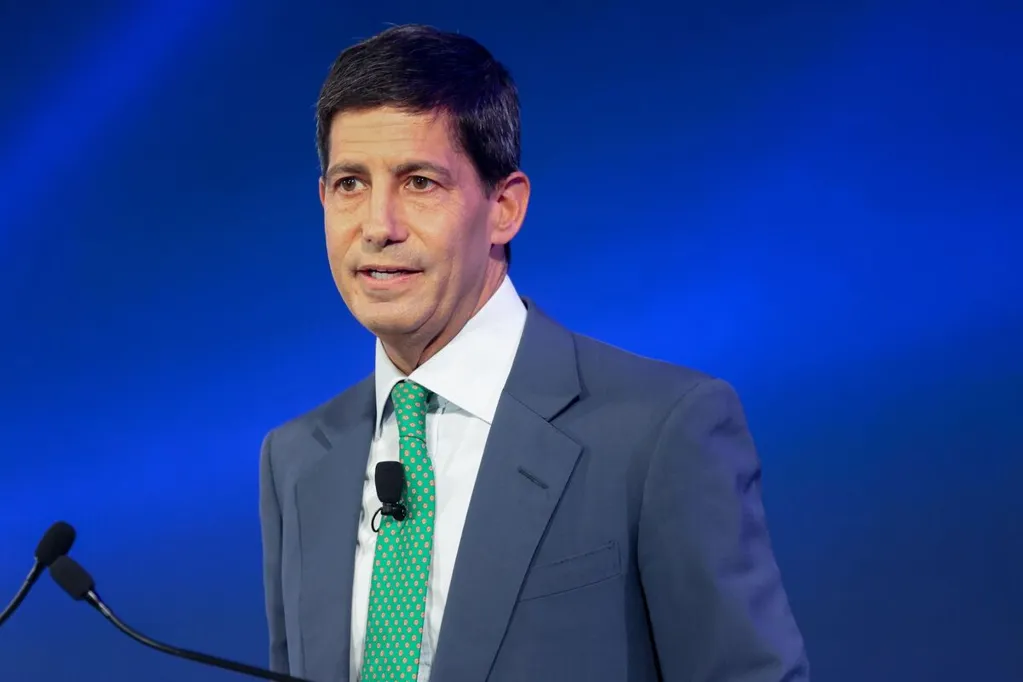
Federal Reserve Chair nominee Kevin Warsh is likely to take a gradual approach to shrinking the central bank's $6.6 trillion portfolio to avoid rekindling money market tensions, according to strategists at Citigroup Inc.
Any attempt by the central bank to resume unwinding its balance sheet -- a process known as quantitative tightening -- could revive pressures in the $12.6 trillion repurchase market, the strategists said. The Fed abandoned the process in December after rates in the repo market -- where banks borrow and lend to each other for day-to-day needs -- surged.
"The bar for restarting QT is quite high given the large volatility that repo markets experienced last year," strategists Alejandra Vazquez Plata and Jason Williams wrote. "Presumably, the FOMC would prefer to avoid a repeat of October 2025 and instead opt to take a gradual approach to balance sheet management."
Warsh, a former Fed governor, has called for dramatically paring back the central bank's financial footprint, which ballooned under successive rounds of asset purchases amid the global financial crisis and Covid-19 pandemic. At its peak in June 2022, the Fed's balance sheet had swelled to as much as $8.9 trillion from just $800 billion nearly two decades earlier.
The Fed stopped shrinking its portfolio after an increase in government borrowing late last year which, combined with the unwind, caused a notable squeeze by siphoning cash out of money markets. It then pivoted to buying Treasury bills each month in a bid to add reserves back into the financial system.
Still, a Warsh-led Fed has options to reduce its footprint, according to the Citi strategists. It could shrink the weighted average maturity of its holdings by rolling longer-maturity Treasury holdings into short-dated debt as the "path of least resistance." The presumptive chair could reach a consensus among policymakers while he prioritizes getting the committee's backing for interest-rate cuts, they said.
The strategists said the Fed could also opt to decrease the pace of its T-bill purchases from about $40 billion a month currently, or stop them altogether. Other options include letting its holdings of mortgage-backed securities roll off.
An analysis from Citi shows that even if the Fed ended its purchases as early as June, reserves are unlikely to move significantly lower by December 2026. They expect policymakers to reduce the pace of purchases to about $20 billion per month starting in mid-April through the rest of the year.
The New York Fed's open markets desk has anticipated that reserve management purchases will remain elevated for a few months to offset expected large increases in non-reserve liabilities during the tax season in April. After that, the pace of total purchases will likely be significantly reduced.
The minutes of the December Federal Open Market Committee meeting showed participants expressed their preferences for purchases to be in T-bills so that the composition of the Fed's portfolio would begin to shift toward that of Treasury securities outstanding.
Treasury would likely be comfortable with the additional source of demand for T-bills from the Fed and lean even more on issuing short-dated debt while pushing out increases of longer-term coupon offerings, the Citi strategists said.
"As a result we expect coupon increases to begin in November 2026 with a risk to February 2027," they wrote.