Bad ideas, like bad legislation, never die. Case in point: the Rail Safety Act.
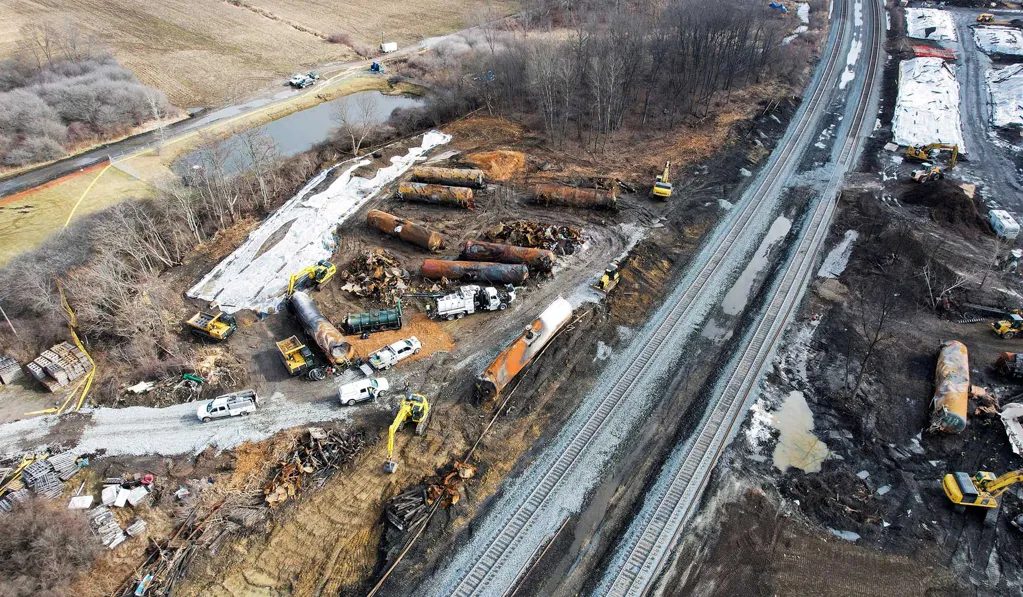
A little background. In 2023, after the derailment in East Palestine, Ohio, Congress rushed to pass a sweeping rail "safety" package. The politics were obvious. A dramatic accident. A plume of black smoke. A shaken community in a state trending Republican. Newly elected Senator JD Vance moved quickly. Senator Sherrod Brown, facing reelection in an increasingly red Ohio, joined him.
The bill was praised for being bipartisan, but the actual text, the substance, told a different story. Although Vance was an original cosponsor, the bill bore the unmistakable imprint of Brown, a longtime ally of organized labor. As I wrote at the time, the Rail Safety Act quickly became a vehicle for labor priorities that had circulated in Washington for years without success. As National Review's editorial board noted at the time, the legislation incorporated Department of Transportation wish-list items unrelated to the East Palestine accident, significantly expanded regulatory authority, and delivered long-sought concessions to rail unions, which unsurprisingly endorsed it and continues today to press for its revival.
The clearest example was the provision freezing crew staffing levels nationwide. Minimum-crew mandates have long been a top union priority, despite government data that do not support the claim that mandating two-person crews would improve safety. Such mandates would raise operating costs, reduce flexibility, and impose rigid federal standards across a diverse national rail network. The bill also created a new rail jobs bureau without a clear nexus to accident prevention.
This is what crisis legislating often looks like: emotionally satisfying, politically convenient, and substantively disconnected from the root problem.
The Rail Safety Act did not pass. It stalled because it could not withstand economic, operational, or political scrutiny. The House declined to advance it. Moderate Republicans balked. In the end, it reaffirmed a basic truth: Legislation built in the heat of a media cycle rarely survives sustained examination.
That history matters now, as renewed efforts are underway to revive a version of the same framework. Also, rumors of a regulatory end-run from within a White House pledging to reduce costs should alarm us all.
Republicans gain nothing by delivering regulatory victories to organized labor that they failed to secure legislatively. New research shows these rail unions are especially partisan, and not in a good way for the GOP. Conservatives gain little by embracing mandates that raise costs and expand federal authority without clear evidence that they improve safety. An administration that has pledged to reduce regulatory burdens should be wary of resurrecting proposals that do the opposite.
Political actors often use accidents to advance preexisting agendas. The fact that a tragedy occurs does not automatically justify expanding federal mandates unrelated to its cause. The worst part is that it gets in the way of achieving more durable and safety-enhancing policies and regulations. But that requires distinguishing between targeted reform and opportunistic expansion. It requires attention to second-order effects, such as how mandates increase costs, reshape incentives, and ripple through supply chains. It requires identifying where the real opportunities for safety enhancement are (hint: The guiding regulations of the Federal Railroad Administration are as old as the agency itself, over 60, and are often disconnected from the current technological operational advancements).
Washington already attempted to transform a derailment into a broad labor regulatory package. Congress rejected it. Reanimating the same framework through executive maneuver would not make the rail system safer. It would merely show that, when faced with legislative failure, some policymakers prefer to try again rather than to rethink.