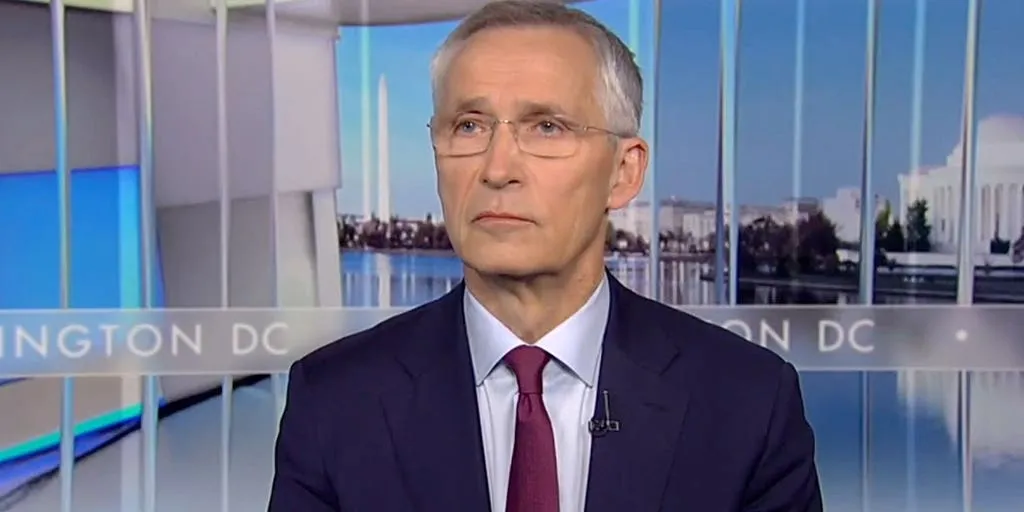
Former NATO Secretary General Jens Stoltenberg signaled clear limits on the alliance's role in the Iran conflict, saying it should not be pulled into supporting U.S. military operations even as President Donald Trump ramps up pressure on European allies -- exposing a growing divide over what NATO is meant to do.
"NATO is a defensive alliance," Stoltenberg, now Norway's finance minister, told Fox News Digital in an interview Wednesday. "The strikes or the war against Iran were never an attempt to make that into a NATO operation."
Stoltenberg framed the disagreement not over whether Iran poses a threat, but over how to confront it, with European governments favoring sanctions and diplomatic pressure over direct military involvement.
"We all agree the Iranian nuclear program is dangerous," he said. "The question is how we achieve that goal."
The divide reflects a deeper mismatch between Washington and its allies: Trump has treated the conflict as a test of NATO support -- urging countries that benefit from the Strait of Hormuz to help secure it militarily -- while European governments have largely rejected that approach, arguing the war falls outside the alliance's mandate.
Trump has sharply criticized NATO allies for refusing to back U.S. operations tied to the conflict, at times questioning the alliance's value and warning it had failed a key test as tensions escalated in the Strait of Hormuz.
"NATO wasn't there for us, and they won't be there for us in the future," Trump said Wednesday on Truth Social.
The president has alternated between pressuring allies to step up and downplaying their importance, at one point calling NATO's response a "very foolish mistake" while also insisting the United States "doesn't need any help."
Major European powers have resisted Trump's push to provide military support.
"The feeling is, this is not Europe's war,"
European Union foreign policy chief Kaja Kallas told Reuters in an interview published March 17.
Spain blocked U.S. aircraft involved in the Iran conflict from using its airspace and denied access to key bases at Rota and Morón, forcing American forces to reroute missions. France has provided limited logistical support but restricted certain overflight requests tied to military operations, reviewing them on a case-by-case basis.
Stoltenberg pushed back on the idea that Europe has broadly abandoned the United States, arguing most allies have still provided logistical support behind the scenes.
"The majority of European allies have made sure that their bases and infrastructure were available for the United States,"
he said. "There are some exceptions, but most have contributed."
Countries like the United Kingdom and Romania have allowed U.S. forces to use bases for refueling, surveillance and defensive operations even as they declined direct combat roles.
The tension underscores a broader split inside the alliance: Trump has framed the Iran conflict as a test of NATO support, while NATO leadership has drawn a clear distinction between formal obligations and political expectations, maintaining the war falls outside the alliance's core mission.
The Iran conflict began in late February after U.S. and Israeli strikes on Iranian targets triggered retaliation from Tehran, including the closure of the Strait of Hormuz, a critical global shipping lane that carries roughly a fifth of the world's energy supply. The U.S. has since launched airstrikes and imposed a naval blockade aimed at increasing pressure to reopen the strait.
The economic fallout from the conflict is also shaping how European countries view the war and their role in it.
European natural gas prices surged -- jumping around 50% early in the conflict and, at times, nearly doubling as LNG supply disruptions intensified.
For Norway, however, the impact is more mixed. As one of Europe's largest oil and gas exporters, the country stands to benefit from higher prices even as broader economic instability creates risks at home.
"There are two effects,"
Stoltenberg said. "When prices are going up, our oil and gas revenues will increase. But at the same time ... when inflation increases and economic growth slows, it will affect our economy."
The White House could not immediately be reached for comment.