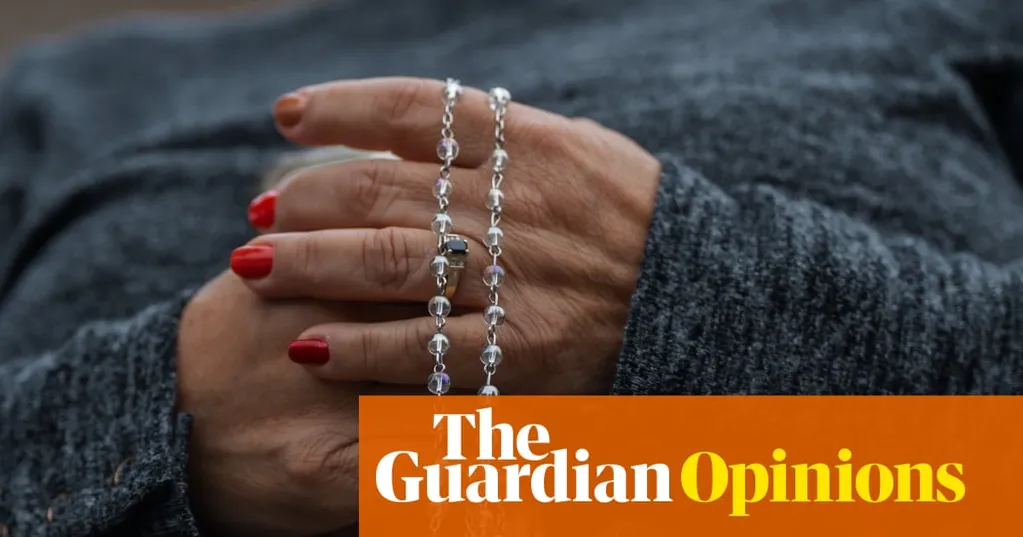
Donald Trump wants us to believe that the "war on Christianity" is spreading across the globe. The US president recently sounded the alarm on the "mass slaughter" of Christians in Nigeria while threatening a US invasion of the African nation. We shouldn't be surprised. This falls right in line with Trump's ongoing attempts to project Maga Christianity on to the global stage and crack down on religious freedom.
Maga Christianity represents a self-serving, commercialized version of the Christian faith - putting power over service and empathy - and it is everywhere in our federal government. In February, Trump announced a taskforce led by Pam Bondi with the goal of rooting out "anti-Christian" bias. In September, Trump announced his plans to protect prayer in schools. Later that month, he issued a memorandum identifying anti-Christianity as a potential driver of terrorism. These are not just one-off incidents. This is a national effort to push the Maga Christianity agenda on Americans, and we're already seeing the consequences.
Despite the Bible's clear call to "love thy neighbor", the Maga movement has used its version of the Christian faith to oppress immigrants, oppose the rights of women and condemn the LGBTQ+ community. At the same time, we've seen shootings at places of worship and arrests of faith leaders at peaceful protests.
As faith leaders, our greatest strength during Trump 2.0 and the rise of Christian nationalism is our local congregations. It's our ability to physically come together in our communities, communicate with one another, support our neighbors in need and elevate our own Christian values that set us apart.
Faith leaders have a powerful role to play, especially as the Trump administration continues to use religion to divide us.
In Oklahoma City and Minneapolis, we have been working with our congregations to uplift our own visions of the Christian faith and mobilize our communities from within - and we're making progress.
In Oklahoma City, these efforts date back to 2017, when the first Trump administration issued the Muslim ban and Islamophobia soared throughout the country. In response, a small group of faith leaders and community members, led in part by the pastor Lori Walke, began to meet regularly to see how they could join the sanctuary movement. With the understanding that there's no clear to-do list when joining a resistance, the group dove headfirst into action and started a weekly vigil to support local immigrants.
Over the years, the vigil took place through rain, snow and sleet, and changed locations from outside churches to in front of ICE agencies and the US Citizenship and Immigration Services office so participants could accompany undocumented people to their appointments.
This year, with the resurgence of attacks on immigrants, the group has reignited our weekly vigils and started immigrant-justice training sessions to educate community members on everything from what ICE is, what warrants look like and the rights of observers to the rights of people being detained and how community members can support them.
These vigils and training sessions aren't just building hope; they're making real change. Individuals and families now have relationships with pastors and church members who are accompanying them to immigration hearings, assisting with paperwork and providing moral, spiritual and financial support. Vigils have translated into rapid response trainings in local congregations, equipping communities to offer more effective support of their immigrant neighbors. Earlier in November, they also organized a letter-writing campaign and hand-delivered more than 500 messages to the Oklahoma governor, Kevin Stitt, and the senator James Lankford urging them to protect immigrant neighbors.
In Minneapolis, following the shooting at Annunciation Church that killed two children and injured more than 20 others, the pastor Doug Pagitt's organization Vote Common Good worked hand-in-hand with Moms Demand Action and a broader faith-led coalition to demand the state ban assault weapons and high-capacity magazines. The group brought these demands directly to the door of the Minnesota governor, Tim Walz, who recently announced he'd be holding a series of town halls to speak with his constituents about gun violence and the impact on children and families across the state. In Chicago, despite the presence of the national guard, faith leaders have continued to protest and stand their ground. In Florida, the faith community has been outside "Alligator Alcatraz" for weeks on end, demanding its closure.
Progress is not linear, and securing rights for immigrants and protections against gun violence will not come easily. But local actions will be a driving force that leads to change.
Across the country, faith leaders and their communities are showing up in droves to stand up for their beliefs and push back against the hateful and divisive rhetoric that is a core emblem of Maga Christianity. Faith leaders and congregations are taking important steps to fight back and support our neighbors, and we need others to continue to join us to promote our good Christian values and put love before hate.
In Oklahoma, a state that consistently ranks in the bottom 10% of just about everything in which Americans want to "be best", glimmers of hope can be seen in Voices Organized in Civic Engagement (Voice) OKC, a broad-based organizing coalition primarily made up of faith communities that range from Roman Catholic to United Church of Christ. Voice OKC is in the middle of its 1,000 Conversation campaign, an effort to strengthen relationships among member institutions, more deeply understand the pressures facing families in our communities and organize those who are willing to act together to build relational power. Voice's commitment to finding common ground at the parish level through stories of shared experience and shared values is a model for finding our way forward as a nation. It's not time to grow weary in working for good.