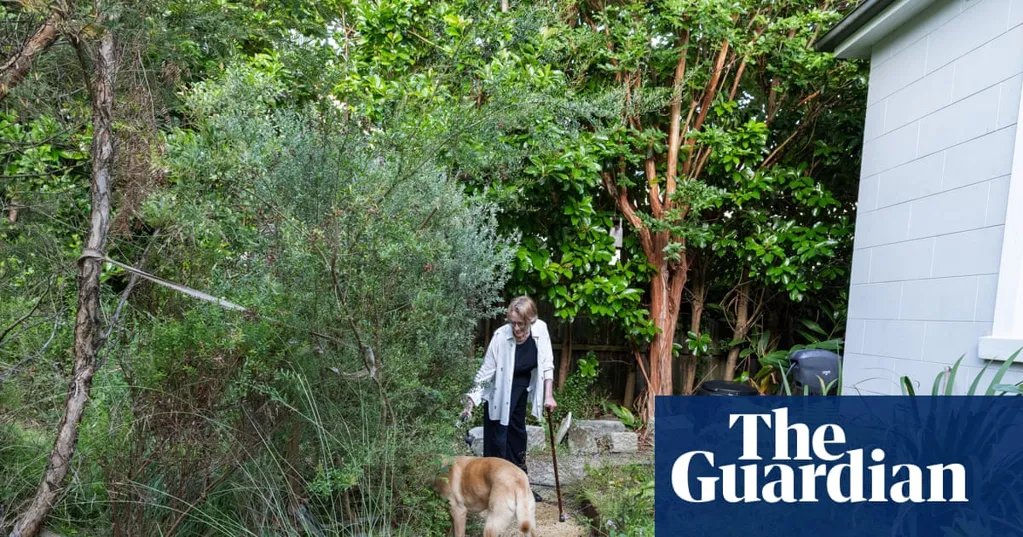
Wild gardening is about shedding obsessions with tidiness, embracing a looser aesthetic, and providing a home for 'the most important creatures on the planet'
On a recent wintry January day in Manchester, I crossed University Green, navigating a paved path behind our hotel through lush patches of lawn. It was the start of the inaugural "Wilding Gardens" conference. For two days, scientists and practitioners were gathering to discuss new ways to think about gardens and nature, about what nature needs to thrive, and the untapped potential of gardens - if we step back and allow ecological processes to unfold - to help counter climate change and biodiversity loss.
Clumps of snowdrop flowers poked through the unmown grass and a grey squirrel streaked across it, from one bare-branched tree to another. Probably common alders, going by the University of Manchester Tree Trail. The world's first industrial city seemed an apt venue for a talkfest on the urgency of rewilding suburban gardens to help save the planet from precisely what drew Marx and Engels there to study, 180 years ago: the impacts of industrialisation.
What madness made me travel all the way from Sydney, now in the grip of a heatwave that was probably devastating my own beloved garden? Having escorted me and my wheelchair safely to the lecture theatre, my husband and son had left. I was alone, quite possibly the only Australian in the overheated room. And then she walked past. Isabella Tree. Less than a metre away.
Rewilding pioneers Tree and her husband, Charlie Burrell, had (unknowingly) enticed me there. Beginning in 2000, the couple transformed Knepp, their 3,500-acre failing farm in West Sussex, into a thriving wilder landscape by famously handing control back to nature. Selling their farming machinery, doing away with chemical sprays and fertilisers, ripping out fences, leaving dying oaks to their own devices, releasing free-roaming herbivores similar to those that existed centuries before, Tree and Burrell witnessed the wildlife return. I'd read the books, seen the film - these people, I'm embarrassed to admit, are rockstars in my eyes. This conference was about applying some of those rewilding principles to gardens.
I wanted to be a part of it. Afterwards, I planned to visit Knepp, to witness the magic for myself.
My obsession with a wilder kind of gardening started before I'd ever heard of Knepp. In 2019, when eastern Australia was being ravaged by bushfires, stricken with anxiety about our planet my family and I created a frog pond in our Sydney garden. We'd been living in the house for a year and had been struck by the silence of our manicured garden, which back then comprised regularly clipped lawn, several closely pruned camellia hedges and rows of obedient gardenias. Where were all the chirruping crickets? Statistics on amphibian losses are horrifying, so helping the frogs seemed a tangible way of making a difference - even if it was only in our small patch.
Soon my ambitions widened; I wanted to attract other creatures too: insects, small birds, lizards. To my husband's dismay we began tearing out the lawn and planting local native plants (on which the insects rely). We stopped using toxic pesticides and herbicides, installed bird baths and sourced old clay pipes for lizards. It didn't take long for the wildlife to find us - eastern water skinks, native bees, striped marsh frogs, dragon flies and blue-tongue lizards - and for the sounds of nature I remembered from my childhood to return.
That period coincided with Covid and home schooling - a time of uncertainty that was made more harrowing by my husband's cancer diagnosis. The flourishing of our new plants, the ruby-like buds of the native daisies, the cylindrical flowers of the hairpin banksia that glowed orange, the winter blooms of the silky hakea as delectable-looking as coconut ice, allowed me to see beauty in creation when around me everything was going to sludge. I found connections with certain plants - like the narrow-leaved paperbark, the most dependable of our plantings. It first bloomed in spring 2023, when spikes of stalkless flowers weighed down its branches like a thousand giant snowflakes. The paperbark was fixed in place - like me in my wheelchair - yet around it a multitude of lizards, insects, birds and bats danced and swarmed. I saw a kindred spirit.
Some of the changes I was making in our garden did not sit well with others and at one point I was told - by a professional gardener, no less - that I was lowering the value of my property. Undeterred, I ploughed on; studying horticulture online. It was here I experienced something of an awakening: the outmoded practices I was learning from the people I assumed were experts were in direct conflict with what I was trying to achieve in my garden; namely creating a refuge for local wildlife.
Back at the conference, the talks were under way about how gardening more wildly can help the planet. Wild gardening is about shedding our obsessions with tidiness, "embracing a looser aesthetic", Tree said. Wild gardening is really about insects, said Erica McAlister, entomologist. "The most important creatures on the planet have six legs." James Hitchmough, a former professor of horticultural ecology, spoke about the collapse of the insect world, upon which all life depends. "Just stop using insecticides because that's a madness." Mike Edwards, an environmental educator, said part of the problem was we live in a visual culture; that we need to start gardening with our ears. "What do we want our gardens to sound like?" The challenge, said landscape designers Adam Hunt and Lulu Urquhart, who took a rewilded landscape design to the 2022 Chelsea Flower Show, was how to make scrub (vital refuge for smalls animals) "sexy". John Little, an expert in green spaces and social housing, highlighted three key features for encouraging biodiversity in gardens: structures (bad sheds, rock piles), topography ("don't make everything flat") and dead things (leaves, branches, trees and more).
In the breaks I met some lovely gardeners, including a couple from Hampshire who surprised me by pulling from their bag a beehive hosting solitary bees (ginger mining bees, grey faced mining bees, and resin bees). I also met Tree, embarrassingly tearing up while speaking to her. The speakers were preaching to the converted. We were 500 wild gardeners worshipping at the altar of insects.
Rainclouds threatened as we headed down the A24 towards Horsham. Tree herself had warned me that Knepp would not be at its best in the middle of winter, but I didn't mind as the roads became more narrow, the hedgerows closed in on our vehicle and the bird life became more abundant. This was, for me, a holy pilgrimage. Suddenly we were there, at the cattle grid; the sign on the wooden gate that read "Knepp Castle Estate". We entered. Fields of slushy green either side of us; waddling ducks; spookily bare oak trees; tangles of fallen trees; scrub allowed to grow wherever it wanted to thrumming with the song of small birds; signs warning us of free roaming cattle; pigs; deer and horses; and overhead; streaking across that silvery grey sky; red kites with their forked tails; and white storks; symbols of hope and renewal.
We spent two days at Knepp. On the first, we toured the castle's walled garden with Josh, one of Knepp's gardeners. Once a silent croquet lawn, the walled garden was now an undulating mosaic of plants and meandering gravel paths - naturalistic, stark, all stages of life and decay. Operating on the principle that stress or low fertility improves plant diversity, a team of gardeners oversees the garden mimicking the herbivores that naturally keep growth in check; leaving “weeds” (plants that turn up by themselves) so long as they are useful (serving wildlife; soil; pleasing to the eye); ensuring no plants are allowed to dominate. The garden wasn't perfect; but the biodiversity of insect species has increased by a third in three years.
On our final day we followed one of the public footpaths that carve through the rewilded Knepp estate. The rain had cleared and under a dazzlingly blue sky the three of us explored. Fields of scrub; constant birdsong; a copse of young trees; a shaggy band of Exmoor ponies. My son led the way; in his blue beanie and fleece; a huge smile on his face. He told us he loved being there; in nature; and I thought; this is why wilding our gardens matters - for the generations to come.