President Donald Trump claimed Iran has stopped killing protesters and vowed strong action if executions resume.
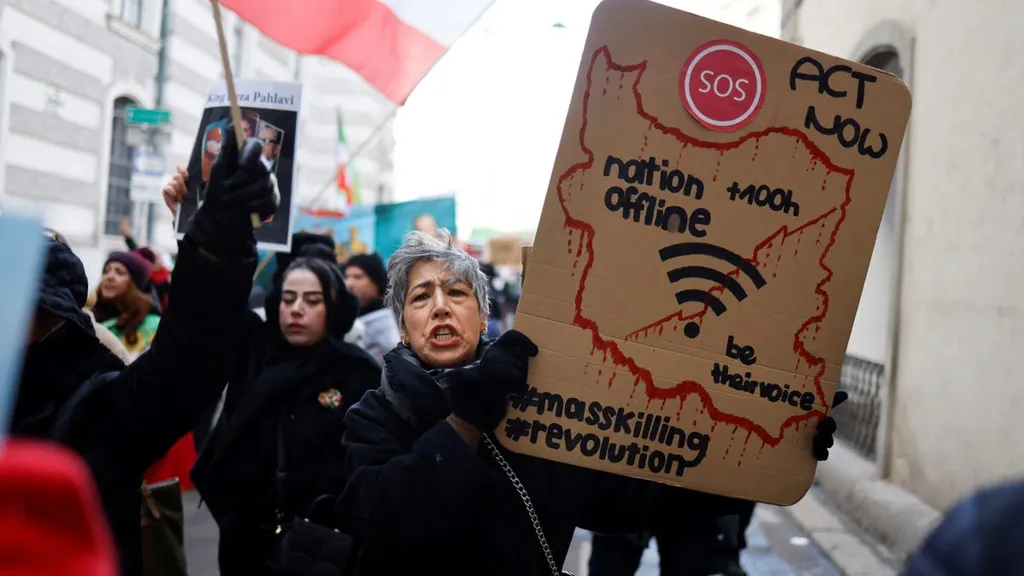
The death toll from the Iranian government's crackdown on nationwide protests continues to climb as officials and aid organizations gain more access to information amid an internet blackout.
Since the protests began three weeks ago, President Donald Trump has repeatedly threatened military intervention, including possible strikes, unless Iran stops the violence against anti-government demonstrations. The president said in an interview with Politico on Jan. 17 that "it's time to look for new leadership in Iran."
Trump and officials in the country traded other barbs and accusations over the weekend as aid groups released updated reports tracking the extent of the unrest. But Trump has changed his approach at times, signaling a willingness to negotiate with Iranian leaders. He said last week that authorities had stopped killing anti-government protesters.
What is happening in Iran?
Iranians took to the streets in late December as their currency, the rial, suddenly crashed, and inflation reached over 40%. The economic pressure has reignited many longstanding grievances with the Islamic Republic's clerical establishment, marking the most expansive civil unrest in the country in several years.
The protests and violent response are reminiscent of the "Woman, Life, Freedom" protests that rocked the country in 2022 and 2023, ignited by the death of Mahsa Amini. The 22-year-old woman died while in police custody after being detained for allegedly violating dress codes.
Iranian leaders have accused the United States and Israel of fomenting the ongoing demonstrations. The clerical establishment regularly blames unrest on foreign enemies.
Several leading human rights and watchdog organizations have condemned the violence against demonstrators by government forces. The United Nations' independent fact-finding mission in Iran said in a Jan. 10 statement it received reports that security forces were ordered to carry out a "decisive" response without restraint on the protesters.
Residents and state media have said the government's violent crackdown appears to have broadly quelled the unrest, according to Reuters reports on Jan. 18.
Tension still high between Trump, Iranian leaders
Iran's supreme leader Ayatollah Ali Khamenei said in a public speech on Jan. 17 that Trump is a "criminal" and responsible for the protests' casualties due to his support for the demonstrations. That same day, the U.S. president said the country needed "new leadership" in the interview with Politico.
"What he is guilty of, as the leader of a country, is the complete destruction of the country and the use of violence at levels never seen before," Trump said.
Masoud Pezeshkian, Iran's president, issued his own rebukes of Trump on social media in response, defending Khamenei.
"Any aggression against the Supreme Leader of our country is tantamount to all-out war against the Iranian nation," he said in a post on Jan. 18.
"If the people of Iran face hardship and difficulties in their lives, one of the main reasons for it is the longstanding enmity and inhumane sanctions imposed by the United States government and its allies," he said.
The Trump administration urged U.S. citizens to leave Iran immediately last week and began withdrawing some personnel from its largest Middle East air base in Qatar, according to the country's media office.
How many protesters have been killed in Iran?
More than 3,700 people have died in the protests since they began, according to the latest figures from the U.S.-based human rights group, Human Rights Activists News Agency.
A Norway-based group, Iran Human Rights, said it has recorded more than 3,400 deaths connected to the unrest, calling the toll an "absolute minimum" as it continues to collect and verify information. The government-imposed internet blackout has cut off much communication with those inside the country since Jan. 8, impeding the flow of information.
Various human rights reports from the two groups, and the Center for Human Rights in Iran, have chronicled dozens of eyewitness and first-hand accounts of authorities using brutality and lethal force used against protesters.
Iran has not provided any official figures, though they have in recent days acknowledged there have been mass casualties. In a description of his weekend speech on Khamenei's official website, the leader accused America of being responsible for the deaths of several thousand people.
Contributing: Reuters.
Kathryn Palmer is a politics reporter for USA TODAY.