Time is running out on a fragile ceasefire between the U.S., Israel and Iran, increasing pressure on mediators to get both Washington and Tehran back to the table for a second round of talks to end the nearly two-month war.
Ahead of the scheduled ceasefire expiration on April 22, Pakistani officials are carrying out a flurry of in-person visits across the region to win a second meeting between U.S. and Iran that would likely see negotiators return to Islamabad.
Pakistan Field Marshal Gen. Asim Munir, serving as a trusted intermediary for President Trump, led a rare delegation to Iran on Wednesday. Iran's Foreign Minister Seyed Abbas Araghchi posted a video on social media of him warmly embracing Munir after he descended his plane.
"Expressed gratitude for Pakistan's gracious hosting of dialogue, emphasizing that it reflects our deep and great bilateral relationship," Araghchi wrote.
Pakistan Prime Minister Shehbaz Sharif is also traveling the region, meeting with officials in Saudi Arabia, Qatar and Turkey this week.
Separately, the United Nations secretary-general's personal envoy for the Middle East Conflict and its Consequences, Jean Arnault, traveled to Oman to speak with officials from countries affected by the war.
Arnault is "sounding out their various views and seeing what points of agreement there are, and where we can play a role," Farhan Haq, deputy spokesperson for the secretary-general said on Wednesday.
White House Press Secretary Karoline Leavitt said that Trump is relying on Pakistan as the primary intermediary, and that the White House "feels good" about prospects of a deal.
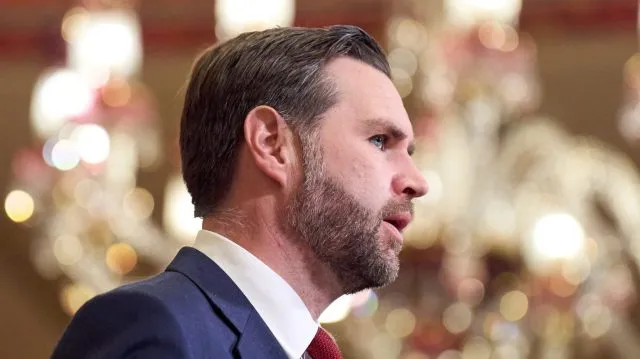
"We remain very much engaged in these talks, you heard from the vice president directly and the president this week that these conversations are productive and ongoing," she said.
"It's obviously in the interest of Iran to meet the president's demands. I think he's made his red lines in these negotiations very clear to the other side and so we're continuing to see how these conversations go."
Israeli Prime Minister Benjamin Netanyahu said in a statement Wednesday that Jerusalem and Washington are in lockstep with their demands that that Iran hand over its stockpile of 970 pounds of highly enriched uranium, part of the fuel needed for a nuclear weapon.
He also said the U.S. and Israel "want to see the cancellation of enrichment capabilities within Iran, and of course, we want to see the opening" of the Strait of Hormuz.
Netanyahu's goals represent a pared down version of the original war aims when the U.S. and Israel launched strikes against Iran on Feb. 28.
At the time, both Trump and Netanyahu said the strikes were meant to create the conditions for regime change in Iran, to prevent Iran from ever obtaining a nuclear weapon and to end its ability to threaten the region - from its ballistic missiles to support for proxy fighting groups in Lebanon, Gaza, Iraq and Yemen.
"I'm a little worried that the red lines that we laid out in Islamabad actually didn't include ballistic missiles," Mark Dubowitz, CEO of the Foundation for Defense of Democracies, which is hawkish on Iran, said on the podcast "Call Me Back with Dan Senor".
"That worries me that we're not insisting on severe restrictions on their ability to reconstitute that deadly program."
Another part of the negotiations includes halting Israeli strikes against Hezbollah in Lebanon. U.S., Israeli and Lebanese officials emerged from an historic in-person meeting at the State Department on Tuesday claiming the first-round of talks were positive.
The U.S. does not have the appetite to resume the full-scale war with Iran, Michael Herzog, former Israeli ambassador to the U.S., said on a panel hosted by the Washington Institute for Near East Policy on Wednesday.
"While we're fighting, the U.S. and Israel, we're 100 percent aligned. When it comes to a diplomatic era, you already see some gaps," Herzog said.
"For Israel there's a big emphasis on regime change in Iran following the war. And I believe that for the U.S. government, it's more about behavior change than regime change in Iran."
Regime change has not occurred in Iran but Trump is describing the surviving officials leading the Islamic Republic as "pretty reasonable."
Still, Trump denied reporting that he was interested in a 20-year moratorium on nuclear enrichment, in an interview with the New York Post on Tuesday.
"I've been saying they can't have nuclear weapons," he said, "so I don't like the 20 years."
Experts are not surprised that the 21-hour-long negotiations between Vice President JD Vance and Iran's Speaker of Parliament Mohammad Bagher Qalibaf over the weekend failed to achieve a breakthrough. The scope of issues, their complexity and the animosity from the war guaranteed an agreement would not be reached.
"Getting all of those other things... the nuclear program, the missile programs, and the proxies that we have wanted out of the Iranians for years out of one meeting in Islamabad was never realistic," said Dan Shapiro, distinguished fellow with the Atlantic Council and formerly deputy assistant secretary of Defense for the Middle East, said on the "Call Me Back" podcast.
"It's not surprising that those talks did not produce that outcome."
To further pressure Iran, Treasury Secretary Scott Bessent said that the U.S. is working to add more sanctions on Iran's paramilitary group, the Islamic Revolutionary Guard Corps (IRGC). Bessent has coined Treasury's activity "Operation Economic Fury," alongside the military operation, Operation Epic Fury.
Trump has said he believes talks will resume within the next few days, but is sending more troops to the region and ordered his own blockade against Iranian ships transiting the Strait of Hormuz.
"This was a curious reaction to the failed reopening of the Strait of Hormuz after last week's ceasefire announcement," Max Boot, senior fellow for National Security Studies at the Council of Foreign Relations, wrote in a recent article.
"The Trump administration's calculation seems to be that the rest of the world is already feeling the economic pain from the Iran war -- now it's Iran's turn."