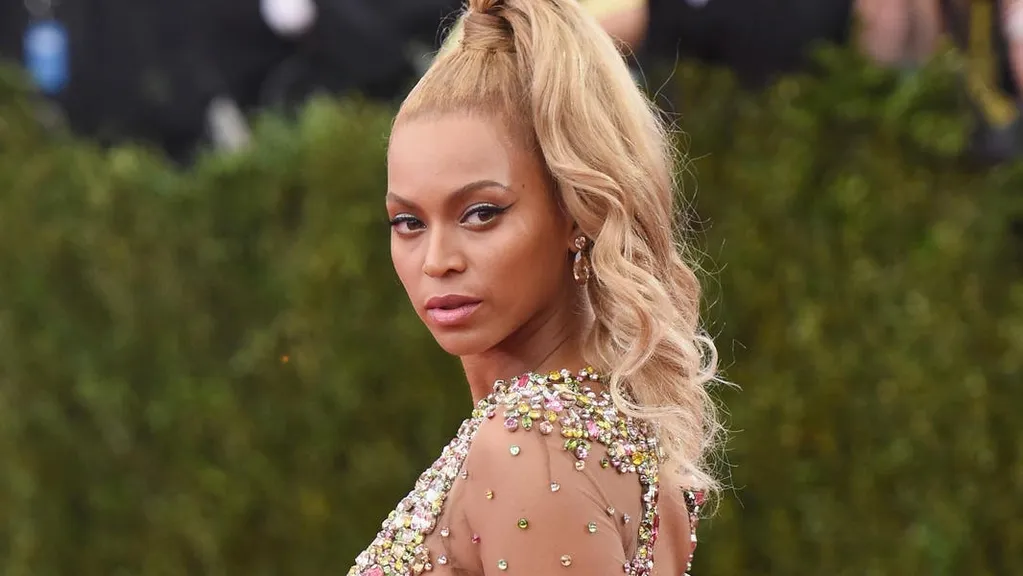
Ten years away from fashion's biggest night, Beyoncé returns not as a guest, but as a co-chair. For The Costume Institute, that distinction is worth millions.
What happens when the most culturally potent force in music steps into fashion's most powerful fundraising room? You stop asking whether the night will be memorable. Depending on your role, you start asking how much it will raise.
Met Gala Co-Chair Power
The role of the Met Gala co-chair is supremely misunderstood, even by people who watch fashion closely. To most observers, it is understood as ceremonial. Within arts and culture philanthropy, the role is rather a cipher for what a single individual's gravitational pull can convert into institutional support.
To be frank, not every celebrity who has held the title has truly leveraged it. The co-chair role dates back to 1973, and since Anna Wintour assumed chairmanship in 1995, it has rotated through cultural royalty. Rihanna in 2018, Kim Kardashian in 2022, Pharrell Williams in 2025. Each had their time. But to be frank, the true measure of a co-chair has never been about the spectacle of it all. It has always come down to whether they could make a donor feel like their money placed them inside something the rest of the world could only watch from the outside.
That is where Beyoncé operates differently. And it is a matter of structure.
Consider the "Beyoncé Effect," a term often used by cultural critics to describe what happens when she simply attaches herself to something. When she and JAŸ-Z filmed the music video for "APESHIT" as THE CARTERS inside the Louvre, the museum's visitor count rose to 10.2 million. This is the highest visitor count in the Louvre's recorded history. The Met Gala, which raised a record-breaking $31 million in 2025, is possibly about to be bombarded by a level of cultural attention it has arguably never seen from a single co-chair.
On the other hand, it is worth being precise about what the co-chair role actually entails. Wintour has never fully detailed the duties publicly, but those familiar with the philanthropic world understand the shape of it. For the most part, co-chairs influence the evening’s theme, the guest selections, the dinner, and the performances. The fundraising power of the role lives entirely in that perception.
BeyGOOD's Transformational Fundraising
Objectively, BeyGOOD is a fundraising apparatus that has moved with intention through some of the most urgent moments of the last decade, including Hurricane Harvey relief, COVID-19 grants for Black-owned businesses, and mental health initiatives. What makes it relevant to the Met Gala conversation is the method.
The Formation World Tour alone became a vehicle for civic action, with fans donating as they bought tickets and collectively directing over $6 million toward Flint Water Crisis relief. Mental health services across Houston, New York, Detroit, and New Orleans received $6 million through BeyGOOD’s targeted community investments, funneled specifically through community-based organizations already embedded in those cities rather than through distant institutional intermediaries. In 2025, $2.5 million went directly to California wildfire victims within days of the disaster. And in 2023, the foundation distributed over $3.2 million across 94 separate grants.
Beyoncé Returns To The Met Gala
Beyoncé has not attended the Met Gala since 2016, a full decade of deliberate absence from fashion's most visible fundraising night. When someone of that stature steps back into a room after ten years, they do not simply re-enter. Placing Beyoncé in that seat is a statement about what 2026 is meant to accomplish. Wintour is supremely deliberate about that chair, and she has never filled it without a clear sense of what she expects it to return.