The Brits have a lot on their minds this week. They have many of the same worries as everyone else -- the shifting global order, deglobalization, fractured supply chains, unpopular political leadership, the end of Pax Americana and a desperate need to bump up defense spending. That sort of thing.
But those worries are slightly more intense in the UK than elsewhere. Note that only this week a former NATO chief pointed out that the UK's armed forces are so depleted that Britain simply isn't safe. The UK also has more domestic worries than most. First, the country has been added to a club no one would voluntarily join: the "BIF." The market has lumped together Britain, Italy and France as economies that have seen the biggest rise in bond yields since the US and Israel started their war with Iran, and so are the ones most vulnerable to debt crises (a more derogatory term surfaced for weak economies in the run up to the European debt crisis).
Britain is now paying the same on 10-year gilts as in the dark days of 2008. That doesn't sit well with the need to spend on defense. Second, the Brits turn out be much poorer then they thought. A new survey shows that around half of UK voters think they are as rich -- in terms of GDP per capita -- as Switzerland. They also think they are at least as rich as Australia, Germany, Australia and the US. This is, sadly, all nonsense.
In GDP-per-capita terms (which is all that really matters, since talking about GDP without reference to population is pointless), the UK is poorer than all of them, and a good 40% poorer than the US and Singapore. This comes with all sorts of consequences, but mostly it's just a bit depressing. And unlikely to get any better any time soon: the International Monetary Fund just downgraded its forecast for UK growth this year to 0.8%. Add in a bit of population growth, mostly by immigration, and there's little chance of GDP per capita rising (again).
There's a lot of shifting sand to confront in this for UK voters. But there is one more thing dawning on the nation, something that might be even more uncomfortable for some than vulnerability to war. It is house prices.
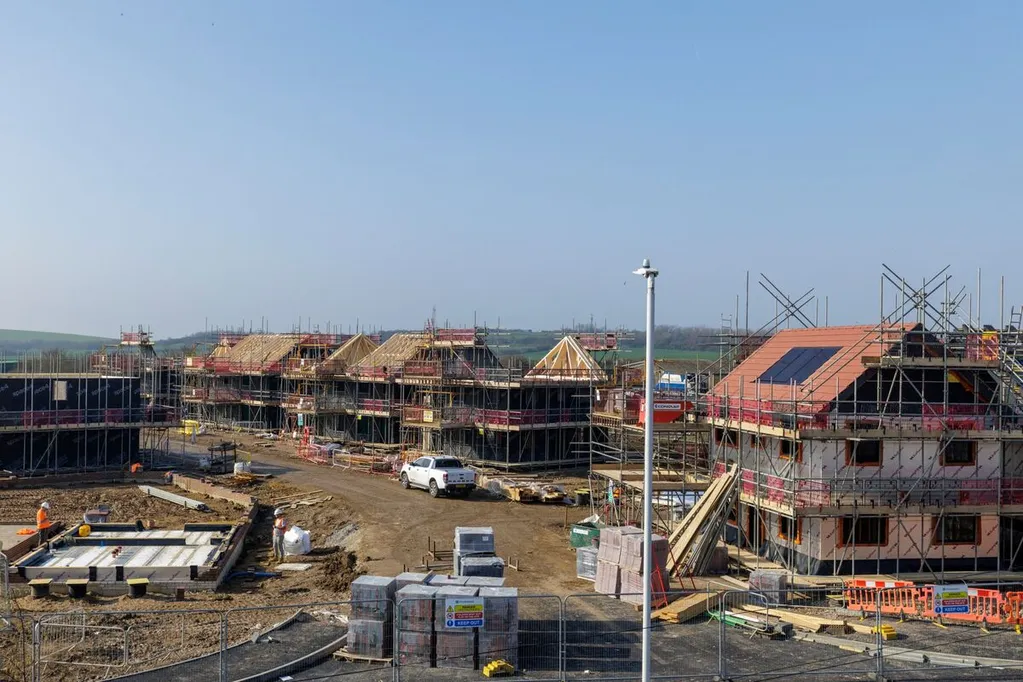
There has been a long-term view in the UK that you cannot lose with property. Turns out you can. Big time. Over the last 20 years, UK prices are up 75% (on Bank of England inflation numbers). House prices in most of the UK have not kept pace.
According to Nationwide data, they rose 68% in the southwest and 64% in the Midlands, for example. Only in London would buying a house have made you money in real terms -- prices were up 79% in Greater London (and much more in tip-top central areas). However, look at the last ten years and even buying in Greater London would have lost you money. Inflation has been 39% and prices are up only 18%. Most other regions in the UK underperformed inflation, too -- albeit not by quite so much (UK residents can look up your region here).
Much of the decline has come since 2022, when interest and mortgage rates rose sharply, proving (were proof necessary) that house prices are a function of little but the price of credit. The more the nation can borrow to buy, the more prices will rise. And vice versa. What next? With interest rates (and hence mortgage rates) rising and a relentless tsunami of property taxes on the go, it seems unlikely that there will be much of a turnaround anytime soon.
You might say that not enough new houses are being built and a supply crunch will force prices back up. But then you will come back to the fact that prices are about the cost of capital and you will see that marginal supply makes little difference. You might also say that there is some good news in that, based on price-to-income ratios, houses look less expensive than they have for a while, something that should bring buyers back in.
That's sort of fair. But with the sharply rising tax burden in the UK (42% of GDP!) and those most likely to want to buy (graduates) paying an effective nine percentage points in extra tax in loan repayments, it's hard to really say affordability is up. In real life, it isn't. Which is why home listings are up, new buyer inquiries are down and most analysts are forecasting nominal price falls this year of anywhere from 2-4%.
Add in inflation and that tells you real prices are going to be down 7%-plus this year. Brits used to worry they would never be able to buy a house. Now they worry they will never be able to sell the one they already have. Nasty. We searched for a silver lining on the Merryn Talks Money podcast this week. It wasn't easy, unless you have £20 million ($27 million) or so to spend in prime London, which maybe some listeners do.
Merryn Somerset Webb is Bloomberg UK Wealth's editor-at-large. Your feedback is welcome.
This week in the world of money
- A dozen young job hunters on what it takes to get hired.
- NYC luxury real estate brokers blast proposed second home tax.
- What centuries of mistakes can teach about saving for retirement.
- Bloomberg Opinion: See Latin America oil boom for energy security.
- Bloomberg Opinion: Iran's so far away, stocks can hit a record.
Three things to keep an eye on
- Private equity: You know how you get better returns over the long term if you buy private assets? You don't. Institutional investors love private equity. Aviva's most recent private markets study shows respondents allocating around 21.5% of their assets to it. Which might be a mistake. Look to recent research from Noel Amenc and his colleagues at the EDHEC Business School, says Panmure Liberum's Joachim Klement. They've reviewed comprehensive quarterly private equity data from 2013-2024 and calculated the risk of investing in this asset class for different time horizons. The news isn't all bad: On average, they found private equity provides almost double the return of a risk free asset. Unfortunately, it also comes with higher volatility and pretty similar returns to listed equity. "So private equity really isn't such a great deal compared to listed equity," Klement says.
- Price controls: Campaigning is under way for the May 7 election in Scotland. And the absurd policies just keep coming. Britain is known for its indirect price controls -- the mountains of regulation shot through everything and anything you try and do. But the Scottish National Party is taking it one step further with a plan to actually put maximum prices on around 50 basic food stuffs and on bus fares (to be limited to £2) despite the millennia of evidence showing this never works.
- New highs: The Nikkei is up 23% in six months. The S&P 500 is higher than it was before the Iran war began. Can it really be possible for markets to "look through" the biggest energy crisis of our generation? Maybe stay defensive, as Alex Chartres advises.