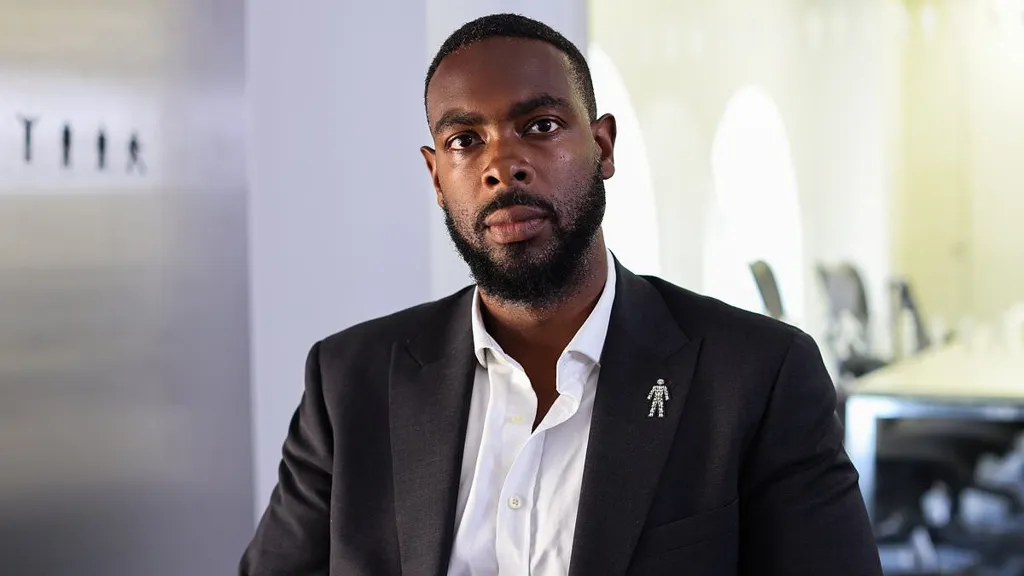
One in four black men will get prostate cancer. For the rest of the population, it's one in eight. These are shocking statistics but, as a black man in my forties, these aren't just numbers to me.
I've lost count of how many friends, family members and colleagues have been diagnosed with this often life-threatening disease.
Prostate cancer has been thrust into the spotlight recently, and rightly so. It is the most common cancer in men, with more than 63,000 diagnoses and 12,000 deaths each year in the UK. Early diagnosis can make all the difference, yet it remains the most common cancer without a routine screening programme.
I don't just have a personal interest in this topic, but a professional one too. As associate director of Black Health Equity at Prostate Cancer UK, I have dedicated my life to this issue.
So, when the UK National Screening Committee announced its recommendation yesterday not to introduce routine screening for most men - even those such as black men, who are at much higher risk - I was deeply disappointed. But I am certainly not deterred.
The committee has, for the first time ever, recommended screening for one group: men with BRCA gene variations, which increase a man's risk of developing aggressive prostate cancer.
This is an important step forward and reflects something we have believed for years - that advances in diagnosis, particularly MRIs and improved biopsy techniques, are transforming what screening could look like. The evidence base is shifting, and we are helping to shift it.
The committee also acknowledged that black men - who are diagnosed late at higher rates - are more likely to benefit from screening, and that the only reason they could not make a recommendation is because of uncertainty in the current data.
'One in four black men will get prostate cancer. For the rest of the population, it's one in eight. These are shocking statistics but, as a black man in my forties, these aren't just numbers to me,' writes Keith Morgan (pictured)
Former prime minister David Cameron (pictured) revealed last week that he had been treated for prostate cancer
That is exactly why Prostate Cancer UK has already committed £1million to real world evidence studies - which draw on sources such as health records, medical insurance claims and disease registries - to rapidly strengthen what we know about risk in black men.
It is also why we are leading the £42million Transform trial, the largest and most ambitious prostate cancer screening study in two decades.
The trial will begin delivering results in as little as two years, which could finally make safe and effective screening for all men a reality. I understand the concerns that have shaped the committee's decision. Prostate cancer is not always life-threatening and treatment can have serious side effects.
However, diagnosis has changed dramatically in recent years, with more accurate tests, clearer risk assessments and better information to guide decisions. We are not where we were ten, or even five, years ago.
Until the evidence is strong enough to secure a screening programme, too many men will continue to face late diagnoses, too many will be unaware of their risk and too many families will feel the consequences.
We owe it to all men, especially black men who face double the risk, to keep pushing forward, and that's exactly what we'll do. Prostate cancer is curable when it is found early, and we are committed to delivering the evidence that will make screening a reality for everyone who needs it.
Keith Morgan is associate director of Black Health Equity at Prostate Cancer UK