Executive candor
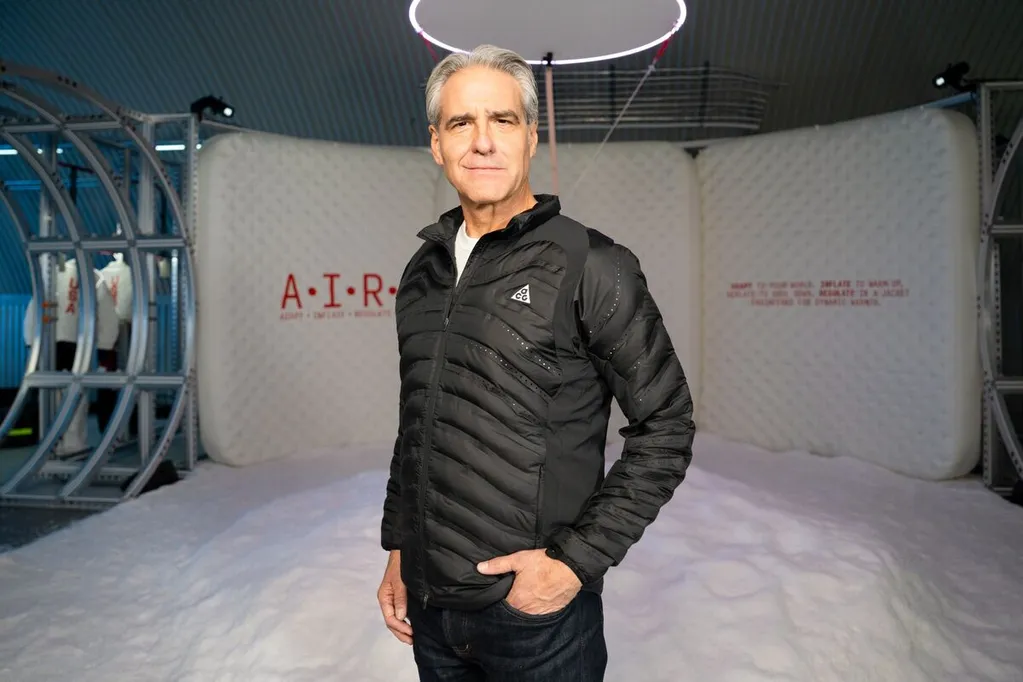
It's hard not to feel for Elliott Hill, the erstwhile Nike Inc. intern who spent his whole career with the company and came out of retirement in 2024 to become chief executive officer.
Expectations were high that Hill would help Nike return to its roots as an innovator, after former CEO John Donahoe focused more on its potential as a cost cutter. Hill initially got high marks for stabilizing morale and crafting a rescue strategy. But his plan has been overshadowed by weakness in China and in the Converse shoe brand, which conspired to drag down the company's sales estimates for the year.
After issuing the disappointing forecast, Hill blew off steam this week during his regular quarterly all-hands with staff, Bloomberg's Lily Meier reported.
"I'm so tired, and I know you are too, of talking about fixing this business," Hill said in a recording of the meeting reviewed by Bloomberg News. "I want to move to inspiring and driving growth and having fun."
It was an unusual moment of candor and vulnerability for a CEO, and it raises questions about what happens when leaders get real with people about their frustrations. Does it motivate them? Worry them? Build trust with them? And, perhaps hardest to measure, does it have any impact on performance?
A half-century of academic literature says yes to all of the above. In a review of 260 papers about leader communication, researchers from Bocconi University, Johns Hopkins University and Imperial College Business School found that leaders "are perceived as more effective when they communicate transparently with followers," and that when leaders display happiness or optimism, it often aids "general levels of performance." With negative emotions like sadness or anger -- arguably we can include Hill's sense of frustration in this category -- things get more complicated.
Here, the researchers found that the impact depends on the context for the negative emotions and the personality types of the followers. For instance, they note, "leaders' expression of sadness has been associated with higher levels of follower performance on analytical thinking tasks," while anger also "can motivate followers, particularly those with low agreeableness." (Take heed before you lash out, however: Another paper included in the review found that anger enhanced perceptions of effectiveness, but "only when the anger was understood to be communicating urgency about the immediate task at hand, rather than as a trait of the leader," the researchers noted.)
But let's bring it back to Hill and his relatable venting over the situation at Nike. The research suggests that in a crisis situation, CEOs who express sadness typically elicit empathy, but they also risk being seen as less competent. Hill has an important hedge against that at Nike, with the goodwill he has built up over 30-plus years at the company. Whether he can maintain a similar advantage with Wall Street is another matter.
Either way, how Hill communicates with employees through the inevitable ups and downs will be essential to his strategy. As the aforementioned academics noted: "Ultimately, to accomplish their objectives, leaders need to influence others to act."
-- Heather Landy
"If Meg fails to repair BP's trajectory, I think it's a sign that BP is terminally doomed to basically no longer be a major. If anyone can fix it, I think it's her."
Saul Kavonic
Head of energy research, MST Financial
The analyst will be watching to see what Meg O'Neill can accomplish as CEO of BP Plc, where she took the helm this week and became the first woman to run an oil supermajor.
Getting America AI-ready
The US Labor Department has launched an AI literacy course explaining what large language models are and how they work, so I of course had to try it. The course -- dubbed "Make America AI Ready," natch -- is delivered entirely via text message in daily, 10-minute increments.
Officially intended to advance the Trump administration's "commitment to equip American workers with foundational AI skills needed to succeed in an AI-driven economy," the texts are full of emoji and punctuated with millennial-cringe gifs from television shows like New Girl and Unbreakable Kimmy Schmidt.
"Think less sci-fi robot plotting for world domination, more really smart digital assistant," the first text reads. "One that works at 2 AM, never judges you for asking the same question 3 times, and never asks 'did you Google it first?'????"
Another suggests AI is just a tool, not a threat. "AI (Artificial Intelligence) is a system that looks at massive amounts of data, finds patterns and makes predictions," the text says. "???? That's it. That’s the secret: PATTERNS IN, PREDICTIONS OUT."
It's far from rigorous training. But that's not the point. More than anything, the course seems designed to allay anxiety about AI at a moment when backlash is brewing over job losses, data centers and the technology sector's impact on society.
- Jo Constantz
By the numbers
412%
The increase in annual job applications per recruiter since 2022, according to an analysis of 640 million applications from more than 6,000 employers in North America. Hiring platform Greenhouse, which produced the findings, notes the rise is due to both more applicants and fewer recruiters.
What else we're reading
- The Women, Money & Power Report for elevating the perspectives of women leaders and experts shaping global finance
- Tech In Depth for analysis and scoops about the business of technology
You have exclusive access to other subscriber-only newsletters. Explore all newsletters here to get most out of your Bloomberg subscription.